
Regulators are brewing new rules, and some landfills will start on-site PFAS treatment
Amid growing public concern over PFAS health risks and upcoming new regulations, landfills across the United States are beginning to consider or build on-site PFAS treatment facilities. Casella Waste Systems is constructing an on-site treatment facility at its Coventry, Vermont landfill to address PFAS in leachate. On the regulatory front, Vermont is adopting limits on five PFAS substances, and the U.S. Environmental Protection Agency (EPA) significantly lowered its drinking water health advisory levels for PFOS and PFOA in 2022. Industry experts note that state actions are ahead of federal ones, putting pressure on landfills, but treatment technologies are costly and may not be economical for small and medium-sized landfills.
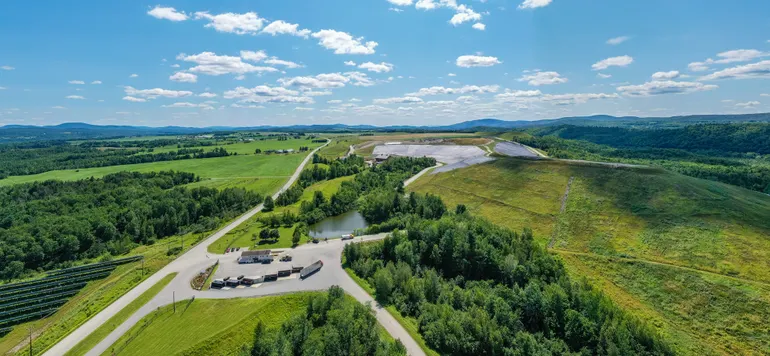
After years of sending leachate from its Coventry, Vermont landfill to municipal wastewater treatment plants for processing, Casella Waste Systems is now building on-site treatment facilities to handle its runoff. With growing public concern over the health risks of per- and polyfluoroalkyl substances (PFAS) and new regulations enacted or in the works at both the state and federal levels, more landfill operators across the country are considering similar moves.
As evidence of the risks PFAS pose to human health and the environment continues to mount, Vermont regulators are adopting limits on five PFAS substances, including PFOS and PFOA. New federal restrictions are also advancing. In 2022, the U.S. Environmental Protection Agency (EPA) announced it would significantly lower federal health advisory levels for these two substances in drinking water, from 70 parts per trillion (ppt) set in 2016 to 0.02 ppt for PFOS and 0.004 ppt for PFOA.
Casella's progress on building its own leachate treatment facility at the Coventry landfill coincides with plans to expand the site. The company had begun studying options for removing PFAS from leachate well before the Vermont legislature passed a law in 2019 requiring the development of new drinking water standards.
In a 2019 analysis commissioned by Casella—which the company says was among the first of its kind in the nation—engineering firm Sanborn Head found that the "vast majority" of materials entering the Coventry landfill contained PFAS, said Samuel Nicolai, Casella's vice president of engineering and compliance. Specifically, the report showed that 95% of waste samples analyzed contained PFAS, with concentrations ranging from 0.043 to 2030 parts per billion (ppb). The analysis also found that 99% of PFAS remained within the landfill, while the rest entered the leachate.
"We got ahead of the regulations," Nicolai said. "Our effort now is to manage that last 1% of PFAS in the leachate, thereby essentially controlling 100% of all PFAS coming from these wastes."
The following year, a report from the Vermont Department of Environmental Conservation found that discharges from two wastewater treatment plants in Montpelier and Newport—both of which treated landfill leachate—had higher concentrations of PFAS than other treatment plants in the state.
Concerns over PFAS have also crossed the border. In 2021, Canadian officials detected PFAS in an intake drawing from Lake Memphremagog, which serves as the drinking water source for 175,000 residents in southern Quebec. It is unclear which side the PFAS came from, but some suspect discharges from Vermont wastewater plants may be at least partly responsible.
Until recently, the Coventry landfill had been sending its leachate to the Newport wastewater treatment facility, located on a tributary of the lake. Under an agreement with state regulators, a subsidiary of Casella now sends its leachate to the Montpelier facility, which discharges into the Winooski River, part of the Lake Champlain watershed. A permit issued by the Vermont Agency of Natural Resources on December 21 allows Casella to continue sending leachate to Montpelier while it develops a pretreatment facility at the Coventry landfill.
An evolving regulatory landscape
Other states, including California, Michigan, New Jersey, and Washington, are also taking steps to restrict PFAS, prompting more landfills to consider on-site treatment of these chemicals. While leachate has historically been handled by publicly owned wastewater treatment plants, some facilities have stopped or plan to stop accepting such waste due to PFAS concerns.
"This is more of a state issue than a federal one. And frankly, states are far ahead of the federal government in implementing regulations that affect the solid waste industry," said Kevin Torrens, national practice leader for landfill liquids at Brown and Caldwell, an environmental engineering and construction firm specializing in wastewater infrastructure and treatment. "So landfills and solid waste facilities are under pressure."
He added that the issue has brought new challenges to the landfill industry, with more operators seeking solutions. "Before PFAS started surfacing, we had a reasonable understanding of leachate management, and then PFAS came along. Now it's part of almost everything we do."
While landfills are a smaller source of PFAS compared to others such as military bases and airports, they are widespread and easy to regulate. As state and federal regulators crack down on these "forever chemicals," effectively managing PFAS in leachate will become increasingly important—and potentially costly.
In September, the EPA proposed designating PFOA and PFOS as hazardous substances under the Superfund law. If finalized, the rule would require facilities to report releases of PFOA and PFOS and allow the EPA to require cleanups and recover cleanup costs.
"The EPA anticipates that the final rule will encourage facilities handling PFOA or PFOS to adopt better waste management and treatment practices," the agency said at the time. In December, it also issued guidance for states on how to monitor and reduce PFAS in discharges from specific permitted facilities before wastewater enters treatment plants.
A persistent and contentious issue
PFAS are difficult to control and remediate for two main reasons: ubiquity and persistence. There are more than 5,000 types of these compounds, found in hundreds of products, including nonstick cookware, pizza boxes, electronics, waterproof clothing, cleaning products, and some cosmetics. The strong carbon-fluorine bonds that define PFAS—among the strongest in chemistry—mean these chemicals break down slowly. They also accumulate over time in air, water, and soil, as well as in animals and humans, according to the EPA.
Studies have found that exposure to certain types of PFAS is linked to an increased risk of certain cancers. Other potential effects include suppression of the human immune system, reduced ability to fight infections, low birth weight in infants, and developmental delays and behavioral changes in children, as well as high blood pressure in pregnant women.
PFOA and PFOS—two of the most widely used types of PFAS—were banned in the United States in the 2000s. But they still appear in imported goods and persist in the environment and in household cabinets. When consumers discard old items containing PFAS, these chemicals end up in landfills and can enter leachate.
"The challenge with PFAS is that leachate contains a very wide range of contaminants," Torrens said. Typically, landfill leachate is treated at wastewater treatment plants. But conventional treatment methods cannot intercept PFAS and may even worsen the problem, putting more pressure on landfills to treat PFAS on-site.
During wastewater treatment, oxidation can convert compounds such as fluorotelomer carboxylates into non-biodegradable perfluoroalkyl acids—a type of PFAS that is less studied than PFOA or PFOS but highly toxic. Some studies have found that PFAS concentrations in treated leachate are higher than in its original form. A February 2022 study published in the journal Water Research on sources in Michigan found that PFAS concentrations in effluent from all 10 sampled wastewater treatment plants were up to 19 times higher than in the wastewater entering the facilities. The same study analyzed 171 various contaminated sites and found that landfills were one of four major PFAS sources accounting for 75% of total contamination. The other three were firefighting foam, metal plating plants, and automotive metal stamping facilities.
Given all this evidence, waste industry operators are preparing for change, but also say they need more guidance.

"I think everyone sees the regulations coming and wants to get ahead of them," said Kurt Shaner, vice president of engineering and sustainability at Waste Connections, which had two on-site PFAS treatment facilities come online in 2022. Over the past two years, the company has increased the amount of leachate it treats on-site by 10%. It plans to treat at least 50% of its leachate on-site by 2033, up from the current 37.1%.
"I think the biggest challenge is knowing what the target is," he said. "We have these options, but we can't implement them until we know the target."
In a joint letter submitted to the Senate Environment and Public Works Committee last May, the National Waste & Recycling Association and the Solid Waste Association of North America said that regulating PFAS waste under the Superfund law could have unintended consequences, including raising management costs and forcing landfills to restrict PFAS-containing waste. The organizations also said that since municipal solid waste landfills do not produce PFAS, they should not be held responsible for PFAS contamination. Instead, the letter said, they can be "part of the long-term solution for managing these compounds."
The EPA said it has received 60,000 public comments on the proposal and will soon publish its response. A draft rule is expected to be released in the coming weeks, with a final rule expected by the end of the year, EPA Deputy Press Secretary Khanya Brann said in an email. The agency is also developing a rule to limit PFOA and PFOS in drinking water.

Emerging treatment methods
Because PFAS are so widespread and complex, designing methods to effectively remove these substances has proven difficult. But recent research and projects have yielded several approaches for treating landfill leachate and drinking water.
The Coventry landfill is testing several of the most promising methods for its on-site facility. One is foam fractionation, which exploits PFAS's preference for the interface between water and air, using bubbles to "pull" PFAS out of the water and reconfigure them into foam, which then concentrates the PFAS. The company is also studying reverse osmosis, a technology used for years in desalination plants, which has been shown to remove more than 90% of PFAS.
Another option is an electrochemical process that first separates PFAS through electrocoagulation and then breaks them down through electro-oxidation. This method is essentially a chemical combustion of compounds in water, involving passing PFAS-containing water through an array of electrodes. They trigger complex chemical processes that break PFAS molecules into shorter molecules and ultimately into carbon dioxide. In tests by Montreal engineering firm Golder, the method removed 100% of PFOS and 100% of PFOA. The company says the process is energy-efficient, economical, and scalable.
The Coventry facility may employ more than one technology in its final design, Nicolai said. "We're not going to choose a technology that only treats specific compounds or only treats compounds to a certain level," Nicolai said. "Our goal is to try to get levels in the leachate down below laboratory detection limits, typically in the 1 to 2 ppt range. We believe we will be successful in doing that."
Each of these methods could cost "millions" of dollars. "That's also part of our evaluation, trying to determine the ultimate cost," he said, adding that whatever the cost, it will be reflected in disposal prices adjusted for customers.
The most commonly used technologies in the industry to date all have certain drawbacks. For example, in reverse osmosis, the membranes used to remove chemicals are susceptible to fouling by other contaminants and require disposal of the PFAS-containing waste produced. Ion exchange resins are also frequently used, but the resins must be incinerated and can only be used once. Another approach involves using granular activated carbon filters, which have high operating costs because the filters need frequent replacement. Used filters must be incinerated at approved facilities to destroy the PFAS.
"Landfill leachate contains many other background constituents that can affect a given treatment process," EPA's Brann said in an email. "These other constituents are often present at high concentrations, so they can strongly influence the effectiveness of a given treatment process, among other factors." According to the agency, all these factors, combined with the on-site leachate treatment of PFAS using currently available technologies, could make it economically unaffordable for some landfills.
"For small and medium-sized landfills, the volume of leachate generated is often too small to make PFAS treatment cost-effective," Brann said.
The ultimate goal is to develop a technology that can destroy the strong carbon-fluorine bonds that make up PFAS, essentially destroying rather than removing them. This is difficult to achieve, but two technologies—electrochemical oxidation and plasma—appear capable of doing so. While these methods show promise, water officials and waste industry representatives say more research is needed on all PFAS to effectively regulate these substances and develop the best treatment methods.
"To date, most research has focused only on PFOA and PFOS, leaving serious data gaps for the thousands of other PFAS compounds," the Association of State Drinking Water Administrators said in an April 2022 letter to the EPA's Office of Ground Water and Drinking Water. "We need reliable information on health effects, analytical methods, and treatment effectiveness to address additional PFAS in drinking water and other media."
Despite lingering questions about how to effectively control PFAS, Nicolai said a proactive management approach—including banning high-concentration PFAS materials such as firefighting foam and contaminated soil from entering the landfill—has benefited Casella. "I think the early strategy helped us really focus on how to best manage the remaining waste," he said. "We are now in the final stages of installing this treatment plan, which we believe will provide us with the ultimate solution for managing PFAS."