
Renewable Energy Is Not 'Zero Impact': Veolia, First Solar and Others Tackle Environmental Challenges of Wind and Solar Power
The U.S. Energy Information Administration projects that renewable energy's share of electricity generation will rise from 18% in 2018 to 31% by 2050. As scale expands, environmental concerns regarding solar and wind power in manufacturing, land use, wildlife impacts, and recycling disposal are drawing increasing attention. Companies such as Veolia, First Solar, and Statkraft, along with research institutions, are seeking solutions through technological improvements, ecological certification, and recycling programs.
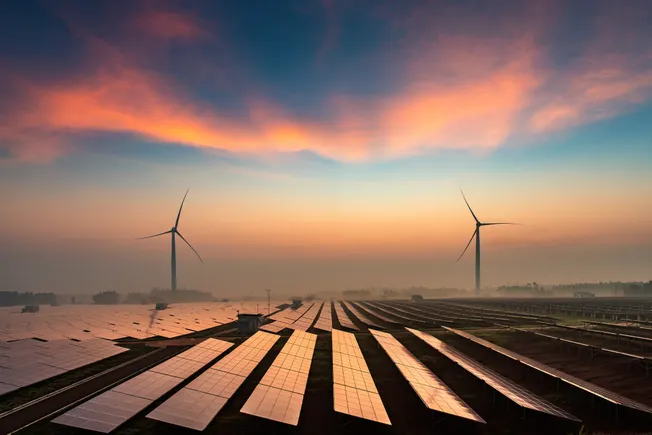
Renewable energy is highly regarded for its ability to reduce greenhouse gas emissions in combating climate change, but this does not mean it has no impact on the environment. Projections from the U.S. Energy Information Administration (EIA) show that by 2050, renewable energy's share of U.S. electricity generation will rise from 18% in 2018 to 31%. As installed capacity grows, so does the scale of its environmental impact, and industry and public awareness of these challenges is also deepening.
Current environmental issues receiving the most attention include toxic substances and wastewater generated during the production of some photovoltaic cells; land-use changes and wildlife habitat destruction caused by solar and wind projects; and the significant recycling and disposal challenges posed by solar panels and wind turbine blades.
Dustin Mulvaney, an environmental studies professor at San Jose State University, has conducted research and consulting on solar environmental standards. He believes that renewable energy does have environmental impacts and is not perfect, but overall, it is still better for the environment than other forms of electricity generation—not only in terms of emissions but also across other stages of the life cycle. Nevertheless, solar and wind energy should not enjoy a "green halo" exemption. Mulvaney said: "There's been this narrative that the industry's emissions are negligible compared to other energy sources, so it doesn't matter—that has always been frustrating. If we don't pay attention, as the scale grows, these issues will surface."
"We don't want to cut down fruit-bearing or grain-producing trees to install solar panels, but we must examine the value and use of land, and how to account for that."
Vasilis Fthenakis
Director of the Center for Life Cycle Analysis, Department of Earth and Environmental Engineering, Columbia University
However, the renewable energy industry is stepping up efforts to clean up production and recycle materials, and researchers and third-party certification bodies are also driving accountability. For example, the Green Electronics Council (GEC) and NSF International have released new solar eco-standards over the past year that assess metrics such as recycled content, not only for solar panels themselves but also for solar inverters. Recently, they also included solar panels and inverters in the EPEAT eco-label registration system, providing manufacturers with a direction to strive for and helping buyers identify the most sustainable products.
Evelyn Butler, Senior Director of Standards and Codes at the Solar Energy Industries Association (SEIA), said: "I think (over the past five years) we've made progress. We don't shy away from answering these questions." SEIA is encouraging its 1,000 member companies to meet the requirements for inclusion in the new EPEAT standard.
The following takes an in-depth look at some of the challenges that solar and wind energy stakeholders are working to confront directly, as well as some potential solutions.
Manufacturing Byproducts
Depending on the age of manufacturing equipment and technology, photovoltaic production can generate hazardous byproducts, including silicon tetrachloride, silane, hydrofluoric acid, and large quantities of acidic and alkaline wastewater that require treatment.
Vasilis Fthenakis, founder and director of the Center for Life Cycle Analysis at Columbia University's Department of Earth and Environmental Engineering, studied these issues early on. In 2003, he began leading the newly established National Center for Photovoltaics Environmental, Health and Safety at Brookhaven National Laboratory. The center is highly regarded for early research that established the gold standard for environmental health and safety at solar production facilities.
Fthenakis said that with increased awareness and technological advances, manufacturing issues have improved over time. First Solar is one example of technological progress, with annual capacity of 5.7 gigawatts at its factories in Ohio, Malaysia, and Vietnam. According to Andreas Wade, the company's Global Director of Sustainability, First Solar no longer uses polysilicon but instead produces solar panels using cadmium telluride (CdTe)—a waste byproduct of copper mining. Wade said: "The resulting waste is extremely limited." In thin-film CdTe technology (copper indium gallium selenide, or CIGS, is another), the semiconductor material deposited on glass is 3 microns thick, compared to a typical industry thickness of 160 microns. Additionally, First Solar recycles wastewater during production and further purifies it through ion exchange (removing heavy metals inherent in the process) and reverse osmosis before final disposal.

Markus Sickmoeller, Chief Operating Officer of Singapore-based Maxeon Solar Technologies, which was spun off from U.S.-based SunPower in August, said the company has found another way to handle wastewater. Its manufacturing process uses hydrofluoric acid for surface etching, and fluoride treatment is difficult. Sickmoeller said: "The sludge from treatment is sold to concrete manufacturers because fluoride residue can make concrete better. We try to do this with as many materials as possible."
Researchers point out that manufacturing efforts in the solar industry have already yielded results in reducing environmental impact. Fthenakis said: "In the production phase, things have improved. I don't see any regression in environmental health and safety."
Impacts on Animals and Land
During operation and power generation, solar panels and wind turbines are often scrutinized for land use and wildlife impacts. Fthenakis said: "We don't want to cut down fruit-bearing or grain-producing trees to install solar panels, but we must examine the value and use of land, and how to account for that."
Agrivoltaics—the simultaneous use of the same land for solar power generation and agriculture—has helped alleviate some land concerns and gained public favor for solar development, especially in rural areas more accustomed to farming. Such models typically involve grazing sheep and cultivating pollinator habitats at solar plants. The National Renewable Energy Laboratory (NREL) projects that such land will cover 3 million acres in the U.S. by 2030 and 6 million acres by 2050.
Developing "floating solar" on water rather than land is another path being explored to reduce concerns about land clearing and wildlife habitat loss. This year, Norway's state-owned Statkraft AS—Europe's largest renewable energy producer—is developing a $2.4 million, 2-megawatt floating solar project at the Banja Reservoir in Albania.
As pilot projects launch, one of the key questions will be how to assess the impact of the large membranes supporting floating solar panels on algae and growth beneath them. Bjørn Iuell, Senior Environmental Advisor at Statkraft, said: "I think the main purpose is to see if we can use these large reservoirs to increase electricity production. Anything that improves conditions or adds value to the reservoir is beneficial."
"Today we have billions of solar panels, and people are gradually realizing that one day we will have to deal with the waste these panels become. We don't want to end up in a second e-waste crisis."
Andreas Wade
Global Director of Sustainability at First Solar
Beyond land-use changes, renewable energy can also disrupt wildlife habitats. One impact of great concern is the effect of wind turbines on birds, and Statkraft has recently seen promising research in this area. A 2013 estimate suggested that turbine blade strikes cause 140,000 to 328,000 bird deaths annually. Although this figure is far lower than the hundreds of millions of deaths caused by collisions with buildings, vehicles, and power lines, local impacts on specific populations can be significant.
Statkraft's Smøla wind farm is one of Norway's largest, with 68 turbines spread over 7 square miles, surrounded by 45 to 50 breeding pairs of white-tailed eagles. An average of 6 white-tailed eagles die from collisions each year. Deaths of these raptors, with wingspans of up to 8 feet, have intensified domestic opposition to wind power in Norway.
Statkraft has invested $4.5 million in research and development to reduce bird collisions over more than 10 years, using tools ranging from GPS to radar to video surveillance. Statkraft has also piloted ultraviolet coatings, hoping that a coating invisible to humans could be detected by raptors and keep them away from turbines, but Iuell said the pilot was "not very successful."
A more promising study, with results published this year, involved painting one blade black on each tested turbine at Smøla to reduce "motion blur" in birds' vision. Statkraft began painting in 2013 at a cost of $75,000. Researchers found that bird mortality at painted turbines decreased by 72%, and no white-tailed eagle deaths were recorded.
Despite the seemingly positive results, Iuell is not satisfied. He said: "Seeing that this simple measure can reduce bird mortality, I should be very happy. But it hasn't been proven yet. The study indicates that the conclusion needs to be replicated to verify whether it is site- and species-specific." Developers in the Netherlands and South Africa have expressed interest in conducting similar experiments.
Disposal Challenges
Perhaps the most scrutinized issue is the recycling and disposal of end-of-life solar panels and wind turbine blades. The International Renewable Energy Agency projects that global solar panel waste could reach 8 million metric tons by 2030 and nearly 80 million metric tons by 2050. Solar panels have an expected lifespan of 25 to 30 years. Wind turbine blades can last up to 20 years but are often removed after half that time to be replaced with newer, more powerful models. Large amounts of waste end up in landfills, and as more panels and blades approach the end of their life, pressure to find recycling solutions is increasing.

First Solar's Wade said recycling "is a key determinant of the industry's future growth. Things have changed over the past five years. Today we have billions of solar panels, and people are gradually realizing that one day we will have to deal with the waste these panels become. We don't want to end up in a second e-waste crisis." The value of CdTe is high enough that First Solar has located recycling facilities next to its manufacturing plants, recovering up to 95% of semiconductor materials and 90% of glass for reuse.
For wind and solar, the mixing of multiple materials increases recycling difficulty. In 2018, Veolia Group's North American division, Veolia North America, headquartered in Paris, received its first inquiry about recycling wind turbine blades. After analyzing the materials, Veolia found a mix of fiberglass, carbon fiber, wood, metal, foam, and plastic. Bob Cappadona, Chief Operating Officer and Executive Vice President of Environmental Solutions and Services at Veolia Group, said: "Mixed materials are the hardest to recycle. That's the challenge we face."
The company began shredding, cutting, and grinding blades located in the U.S., assessing their calorific value to find other potential applications. Veolia found the calorific value too inconsistent to serve as a waste-to-energy source. Ultimately, management designed a mechanical process to grind the giant blades into powder. They now supply the processed material to lime kilns and the cement industry as a fuel or material substitute. Veolia processes 60 to 70 blades per day on site, currently handling hundreds per year, and expects that to grow to thousands in the coming years.
Transporting blades up to 150 feet long is a major challenge. To address this, Veolia is building processing capacity at "multiple locations in the middle of the U.S." Cappadona said: "Like other commodities, there's still work to be done. I don't think this is a one-size-fits-all solution for everyone right now."
"Once everyone reaches 10% recycled glass content, raise the standard to 20%, with the goal of reducing the carbon footprint and overall emissions of solar panels. It's a macro circular economy vision."
Dustin Mulvaney
Professor of Environmental Studies at San Jose State University
In the long term, NREL researchers recently demonstrated that using cheaper, lighter materials to manufacture wind turbine blades can improve their sustainability. In a study published in the journal Renewable Energy, researchers showed the feasibility of using thermoplastic resins instead of the typical thermoset resins. Currently, wind turbine blades are primarily made of composite materials such as fiberglass, infused with thermoset resins. Thermoplastic resins can be melted back into liquid resin and used to make new blades, making recycling more feasible.
The solar industry also faces end-of-life issues and is preparing for the coming wave of old panels. SEIA's Corporate Responsibility Council has a recycling working group that is partnering with EnergyBin, a B2B solar industry exchange network with 1,000 members, to strengthen the market for solar panel reuse.
The association is also working with recyclers in different regions, including Dynamic Lifecycle Innovations in Wisconsin, Echo Environmental in Texas, Cascade Eco Minerals in Minnesota, Cleanlites Recycling in Ohio, and Green Century in Oregon. These partners are currently actively recycling photovoltaic modules and preparing to expand future capacity. Butler said this forward-thinking "is not common in the recycling industry. Usually recycling infrastructure is built due to mandates. We're saying, 'Let's be proactive.'"
The new EPEAT solar standard gives credit for containing 10% recycled glass content. Mulvaney said this will incentivize companies to use more recycled glass, thereby achieving higher ratings in EPEAT registration. He said: "By requiring recycled content, you create a market for materials piling up in landfills. But how do we manufacture with fewer chemicals, less lead and cadmium? I hope the standard will gradually raise requirements. Once everyone reaches 10% recycled glass content, raise the standard to 20%, with the goal of reducing the carbon footprint and overall emissions of solar panels. It's a macro circular economy vision."