
'Never to Zero': Organic Waste Recyclers Face Tough Choices in PFAS Pollution Response
Thirteen types of PFAS were detected at a composting facility in Ann Arbor, Michigan, drawing industry attention. Composters and biosolids processors face dual challenges of regulatory pressure and rising costs, with differing views on the path forward.
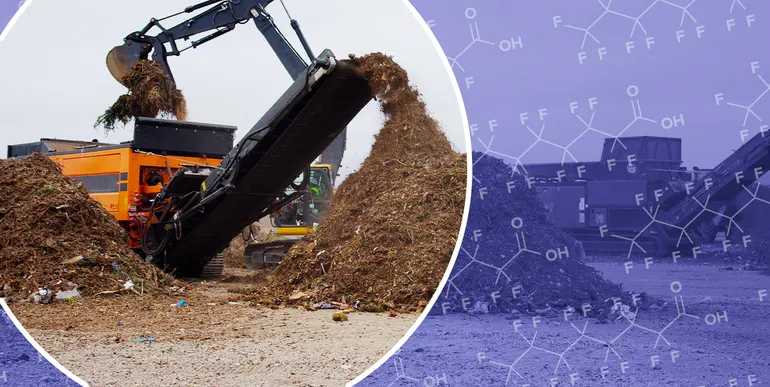
In January 2020, the city of Ann Arbor, Michigan, released a troubling finding: traces of the toxic chemical PFAS were detected in the city's composting facility. Samples collected by municipal officials months earlier tested positive for 13 types of PFAS.
Levels in the compost samples were low, while water samples taken from two retention ponds at the facility detected 12 types of PFAS. The city released test results completed by an independent laboratory and pointed to PFAS-containing items—including greaseproof paper and fast-food containers—which, although explicitly banned by Ann Arbor's composting program, still frequently ended up in drop-off bins.
Officials noted when releasing the data that there are currently no national health guidance standards for PFAS in compost, and related research remains limited.
Food packaging becomes a top challenge for composters
PFAS can enter organic waste processing facilities through various pathways, but composters handling food waste generally believe that packaging is the primary source of PFAS in their facilities.
In July 2020, several chemical manufacturers announced a voluntary agreement with the U.S. Food and Drug Administration (FDA) to phase out the use of a PFAS compound known as 6:2 fluorotelomer alcohol (6:2 FTOH) starting in January 2021. The decision was based on FDA research on specific PFAS in food packaging. AGC Chemicals Americas, Archroma Management, and Daikin America agreed to participate in the adjustment; a fourth company, Chemours, had previously exited early.
"This phase-out is significant," said Rhodes Yepsen, executive director of the Biodegradable Products Institute (BPI). He also noted that the agreement's coverage of food packaging extends beyond compostable products themselves. "Do we want it to cover all fluorinated chemicals to avoid regrettable substitutions again? Of course. But this is still progress."
Yepsen is no stranger to the issue of PFAS in food packaging. He said the issue surfaced in 2016, about a year after he joined. As of this year, BPI has stopped certifying any product or packaging with intentionally added PFAS as compostable, requiring manufacturers to sign declarations, undergo full ingredient technical reviews, and test for fluorine content not exceeding 100 ppm.
Yepsen said BPI's actions stemmed from communications with San Francisco's environment department. At the time, PFAS was not yet a major issue for composters, but San Francisco officials discovered PFAS in products certified as compostable—a decision made by manufacturers that most in the composting industry were unaware of at the time.
"We don't certify most products entering composting facilities, so what can we do? What role can we play?" Yepsen recalled of his initial discussions on the topic.
That thinking quickly shifted. Over the years, lawsuits and public protests accumulated, and reports of cancer clusters in places like Parkersburg, West Virginia, brought the health impacts of PFAS into public view. Due to growing concerns about PFAS in compost, BPI hired a technical consultant in 2017 for advice, and the consultant noted that state-level regulations might be on the horizon. Ongoing communications with composters, municipal departments, and environmental organizations also reached a similar conclusion: the organization needed to act quickly to prevent a potential crisis.
BPI then mobilized rapidly, and its members and board voted in November 2017 to approve rule changes excluding PFAS-containing products from certification. BPI-certified products not meeting the limit were to be phased out by 2019.
According to Yepsen and BPI's marketing director Wendell Simonson, many BPI-certified products themselves do not contain PFAS. Compostable products typically achieve grease resistance through biopolymers such as polylactic acid, polyhydroxyalkanoates, or compostable waxes. But the potential major long-term issue outweighed these practical considerations. The decision increased the organization's workload, including communicating with every BPI member, and led to approximately 2,000 products being removed from the organization's database of about 10,000 products.
BPI's efforts seemed prescient to many in the industry. In August 2019, The Counter (then known as New Food Economy) published an investigative report finding PFAS in fiber bowls labeled as compostable and used by fast-casual chains like Sweetgreen and Chipotle.
The Counter's report also cited a study published in May 2019 in Environmental Science & Technology Letters. The study examined 10 composting sites across three West Coast states as well as Massachusetts and North Carolina, all commercial except for one backyard compost pile. Sites accepting food containers had PFAS levels 10 times higher than other sites. The Counter's own testing with laboratory assistance showed fluorine levels 10 to 20 times higher than BPI's 100 ppm threshold.
These findings were released as San Francisco was rolling out regulations targeting PFAS in food packaging, and at least one company had already made adjustments. Sweetgreen spokesperson Maude Michel said the company partnered with compostable packaging company Footprint to pilot PFAS-free bowls at its San Francisco locations in January. "Our goal is to roll out this new packaging to all restaurants nationwide by the end of 2020, at which point the packaging will also be produced domestically and made from post-consumer recycled paperboard."
Many stakeholders said such changes in the composting sector came relatively early, more in response to public awareness than to a full-blown public health crisis. "PFAS is quite prevalent in the environment, almost everywhere," said Neil Edgar, who has worked in the composting field for decades and serves on the U.S. Composting Council's legislative and environmental affairs committee and as policy liaison for the California Organics Recycling Council.
Like others in the industry, Edgar views organic recycling as an environmentally friendly waste management method that also helps address pressing issues like climate change. He said PFAS could limit the industry's growth and could cause organics to be sent to landfills at a time when states like California are ramping up food waste diversion programs.
"Customers using compost typically have a sustainability mindset; they're trying to do the best for the environment," Edgar said, noting that PFAS is beginning to complicate that picture.
Edgar has not yet noticed significant financial impacts related to PFAS concerns, but he is outspoken about potential issues, especially given compost's use on vegetable and fruit farms. He said the problem is more severe for the entire organic recycling sector, particularly for operations dealing with wastewater treatment plants. The struggles of these adjacent sectors provide a preview of what the waste industry might face as public scrutiny intensifies.
Biosolids stakeholders grapple with escalating issues
For the Northeast Biosolids & Residuals Association (NEBRA), few issues in recent years have consumed as much energy as PFAS.
"It overshadows all the positives; people are ignoring the benefits of organic recycling," said Janine Burke-Wells, NEBRA's executive director.
Her colleague, Ned Beecher, NEBRA's special projects manager, said PFAS consumed about 50% of his time in 2019 and remains a major focus this year. NEBRA is a nonprofit organization dedicated to supporting and advancing the recycling of biosolids and other organic residuals in New England as well as New York and eastern Canada.
PFAS repeatedly appears in biosolids, partly because it is present in landfill leachate that enters wastewater treatment plants. The growing backlash around these chemicals has prompted NEBRA to devote significant resources to addressing PFAS—providing training for members, encouraging dialogue with clients and communities, and lobbying government officials to reconsider treatment approaches.
Burke-Wells traces the timeline back to 2016, when the U.S. Environmental Protection Agency issued non-binding health advisories for PFOS and PFOA in drinking water at 70 parts per trillion (ppt). Since then, northeastern states have led the way in adopting stricter standards. Most of this focus has been on drinking water, but wastewater and groundwater are becoming areas of growing concern.
The strictest state regulating PFAS in biosolids is Maine. In March 2019, the state issued a memorandum setting limits for PFOS and PFOA in land-applied biosolids at 2.5 ppb and 5.2 ppb, respectively—levels several experts say biosolids typically cannot meet. This followed the detection of PFAS in milk from a Maine dairy farm, where land-applied biosolids were identified by the state as a possible source.
Maine's Department of Environmental Protection subsequently required all sludge and biosolids permit holders and related composting facilities to test for PFOS, PFOA, and another chemical, PFBS. Later reporting by The Intercept showed that all sewage sludge tested by Maine's DEP contained at least one of these three PFAS compounds.
Maine's approach to PFAS in biosolids stems from the same driver that led to scrutiny of PFAS in food packaging: proximity to food and thus to human ingestion. Some PFAS are bioaccumulative and can persist in the human body for long periods. According to EPA data, about 60% of municipal biosolids nationwide are land-applied, using their nutrient-rich properties to help farmland. Studies have found that PFAS can accumulate in crops grown on these lands, creating long-term issues for biosolids stakeholders as regulations tighten.
At the heart of the issue are the wastewater treatment facilities that produce biosolids. "There's no wastewater without these chemicals," said NEBRA's Beecher. The organization has focused on communicating with legislators about drinking water and groundwater standards because NEBRA fears that setting low limits for PFAS will have 'indirect effects.'
"When drinking water standards are set, they become groundwater standards, and then they enter wastewater discharge permits," Burke-Wells said.
Broad impacts remain unclear as some costs continue to rise
Assessing the financial impact of PFAS on organic recyclers remains difficult, relying largely on specific data points from individual municipalities.
One example is Lapeer Township in eastern Michigan. The township was ordered in 2017 to stop hauling biosolids to farms due to PFAS contamination. The township now expects to spend about $3 million to send waste to another facility for treatment before disposal in a landfill. Other municipalities in Wisconsin and Maine have reported similar impacts.
NEBRA is assessing the overall costs and benefits of addressing PFAS, noting that the burden is falling on municipalities and utilities.
A preliminary NEBRA survey in 2019 collected statements from wastewater treatment operators indicating that their biosolids management costs had risen by 50% to 200%. One member said it had switched to landfilling residuals rather than composting, while another reported receiving less septic waste. Respondents, mostly NEBRA members from municipal wastewater treatment plants in Maine, Massachusetts, and New Hampshire, generally expressed concerns about regulation, public perception, and rising costs.
Although only Maine has enacted regulations for PFAS in biosolids management, the prospect of similar standards has already prompted many wastewater treatment facilities to make choices based on risk levels and potential liability.
In Concord, New Hampshire, sludge management costs increased by $500,000. The city previously paid less than $50 per wet ton; it now ships biosolids to Canada at over $100 per ton as a precaution—a significant expense at a time when budgets are tightening due to COVID-19.
Other municipalities and wastewater treatment plants have submitted testimony to legislators outlining estimated cost impacts related to regulations. In New Hampshire, the North Conway Water District said state PFAS limits could cost local ratepayers and taxpayers over $500,000 annually. In the same state, the town of Merrimack estimated that if PFAS forced officials to find alternative disposal for wastewater sludge, it would add $2.5 million annually, and costs would be 'significantly higher' if incineration were pursued.
Outside NEBRA, others in the industry are also seeking clarity. Bill Brower, project manager at Denali Water Solutions, said the company recognizes PFAS contamination as an 'important area' to monitor. The company's WeCare Denali subsidiary operates organic recycling facilities, including the one in Ann Arbor where PFAS was found in compost.
Brower said he has contacted about 17 operators nationwide to ask about PFAS impacts, and most reported little change in business beyond internal discussions. However, he links increased public awareness to things like the 2019 film Dark Waters, a Hollywood thriller about PFAS contamination that also spurred broader national discussion. Brower also noted that state or federal regulations could completely change companies' cost calculations.
"If things tighten up, we might have to make different choices," he said, which could lead some organics to be sent to landfills or incinerators, with environmental impacts and higher costs. "People need to recognize the trade-offs. I don't think it makes sense to incinerate all the nation's organics."
Regulatory paths and priorities diverge
Nearly all stakeholders in the organic recycling sector agree that PFAS is a problem that needs solving, but they differ on the best path forward.
"What we're seeing in the composting industry is that PFAS is widespread in various composts," said Craig Coker, a consultant and senior editor at BioCycle, who supports organic recycling businesses. "But we can't know what it means. There's no epidemiological evidence showing us the link between PFAS in compost, how compost is used, and potential environmental health and public exposure."
Research on PFAS in organic recycling remains limited. How PFAS affects anaerobic digestion and other processes is still largely unknown, although at least one preliminary 2015 study found that the presence of PFOS increased methane production over the long term and suggested the chemical may act as a metabolic uncoupler. Given PFAS's persistence in the environment and existing products, whether PFAS can be completely removed from water or waste is also unclear.
Environmental groups and many communities say setting maximum contaminant levels (MCLs) for drinking water and similarly strict standards for waste sites are essential to protect the public. Industry insiders, meanwhile, largely argue that the focus should be on phasing out PFAS production, holding manufacturers who introduced these chemicals into products and the environment accountable.
"We do know that phase-outs will reduce exposure," said NEBRA's Beecher. "Right now, that's the only cost-effective approach."
The Water Environment Federation—a global professional association for water quality—maintains that officials should stop PFAS at the source, and the organization has been in discussions with the EPA about biosolids. Companies are also seeking balance.
Denali Water Solutions' Brower said the company is trying to be 'part of the solution,' supporting BPI's certification requirements and similar measures taken by the Compost Manufacturing Alliance. He also said PFAS should be addressed at the manufacturing stage and questioned the effectiveness of requiring near-total bans on these chemicals in water sources.
"Some of the biosolids applied to fields have lower concentrations than what's in our blood," Brower said, a refrain repeated by many in the industry.
Supporters of strict regulation say both approaches are essential—cutting off PFAS production at the source while also regulating its presence in water, food, and waste.
"It's not an 'either/or' question," said Melanie Benesh, legislative and regulatory attorney at the Environmental Working Group (EWG), an advocacy organization focused on PFAS. "We certainly have to think about remediation, about how to remove PFAS from the environment. But we also can't keep adding new discharges to the existing contamination."
EWG has found that PFAS is persistent in biosolids, and there is currently no clear solution. Speaking about PFAS in organic recycling, EWG senior scientist Olga Naidenko said more research is needed, but action at all levels is necessary to avoid a health crisis.
"In past decades, we didn't know about PFAS; now we do," she said, adding that 'composters should be entitled to compensation, but that doesn't mean we should allow the food supply chain to be contaminated.'
Other stakeholders share this view. Jen Duggan, director and vice president of the Vermont chapter of the Conservation Law Foundation (CLF), said addressing PFAS contamination requires 'upstream and downstream solutions,' including banning production while ensuring standards are set for all media such as drinking water, groundwater, surface water, sludge, and soil. Like others in the environmental community, she agrees that chemical manufacturers should bear the cleanup costs. Two of those manufacturers, DuPont and Chemours, did not respond to requests for comment, and a third, 3M, declined to comment.


