
WasteExpo 2024: Battery Electric, Hydrogen, and CNG Trucks, Industry Players Say 'All of the Above'
WasteExpo 2024 showcased that alternative fuel choices for heavy-duty trucks are becoming increasingly complex due to multiple regulations. Compressed natural gas remains the mainstream alternative, but battery electric vehicles have significantly risen in prominence, and hydrogen fuel cell trucks also made their debut. Industry giants like Republic Services are heavily investing in electric, while WM remains cautious due to range and weight concerns.
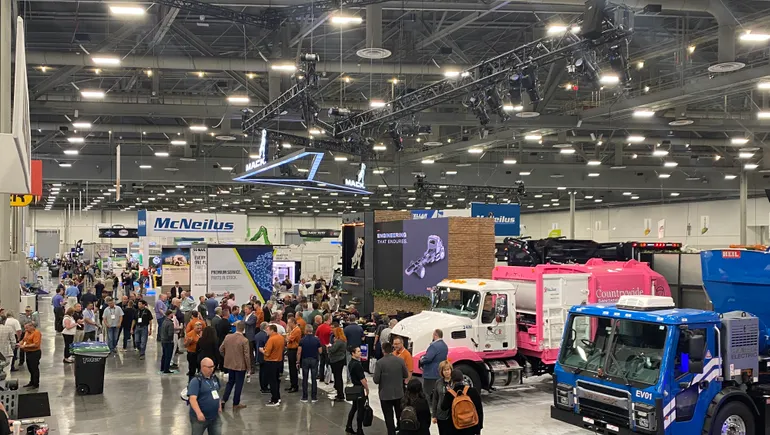
Choosing alternative fuel solutions for heavy-duty trucks has become quite complex, partly due to overlapping and staggered regulations. The signals from WasteExpo 2024 were that the industry will face more choices in the future, while some leading companies have shown clear divergence in their investment plans.
Compressed natural gas (CNG) remains the industry's most mainstream diesel alternative, but battery electric vehicles (BEVs) also held a prominent position at the show. The expo also witnessed the debut of hydrogen fuel cell trucks. These newer technologies are still considered to be in early development stages.
During the conference, discussions at the investor summit and other breakout sessions revolved around common themes such as range, cost, and the availability of charging or refueling infrastructure. Such discussions are not new at WasteExpo; last year's event already saw a flood of opinions regarding California's zero-emission vehicle production and usage requirements. These requirements will ultimately force waste companies to use zero-emission vehicles by 2042, and several other states are advancing similar mandates on different timelines.
The show took place just as the U.S. Environmental Protection Agency (EPA) finalized its own rules requiring heavy-duty fleet manufacturers to reduce emissions from new models starting in 2027 and continue improving through 2032. The implementation of these rules could be affected by multiple lawsuits, but original equipment manufacturers (OEMs) and waste companies alike stated they would move forward regardless.
For example, Volvo's Mack Trucks has set a target of selling 35% zero-emission vehicles by 2030. Jonathan Randall, president of Mack Trucks North America, said the company's new and upcoming diesel engines are "extremely clean," but the future seems to belong to electric vehicles. More than 50 authorized Mack dealers have already received electric vehicle repair certifications, and the number is growing. Peterbilt is also showing a similar trend due to regulatory requirements.
"This isn't just about California. Five more states will follow in 2025, more will join in 2026, and by 2027 electric vehicles will be a reality in all 50 states," said Jason Skoog, Peterbilt general manager and PACCAR vice president. "So every one of our dealers sees this... They won't miss this opportunity."
Finding the right application for each market can be quite complex, so many speakers noted that this will not be a "one-size-fits-all" approach. Recology has reported significant progress in reducing emissions from its own fleet and advises other peers to keep an open mind and be patient as technology evolves.

"The real goal is to be able to match any available alternative fuel type... and make it perform like any diesel truck," said Jim Mendoza, Recology's director of equipment procurement and maintenance. "We want diesel vehicles to perform the same as electric, CNG, or hydrogen vehicles, but there will always be some trade-offs here."
Scaling up battery electric vehicles
Battery electric vehicles are gaining widespread adoption, as confirmed by the 2024 State of Sustainable Fleets report shared this week at ACT Expo. The report noted that orders for electric buses, trucks, and vans doubled between 2022 and 2023. But electric vehicles used in heavy-duty refuse collection are still in early adoption stages.
Autocar president James Johnson said it took a long time to perfect CNG technology, and he believes electric vehicles are not yet mature for refuse collection applications. His company built a hydraulic hybrid vehicle about 20 years ago, but it was costly and limited in function, and he feels the current electric versions on the market are still more for "show."
"We tend to call them 'parade trucks'... because all they really do is drive around for show," he said, citing questions about infrastructure and maintenance.
Mack Trucks holds a different view, pointing out that multiple customers are currently operating electric vehicles across the country.
"We've moved beyond the stage of 'I'm buying this for PR purposes,'" Randall said. "Fleets now recognize this trend is inevitable, and they need to figure out how to integrate it into their operations."
Beyond cost, one of the biggest recurring themes at the event was comparing the range of electric vehicles to diesel or CNG vehicles.
"Range anxiety is one of the biggest challenges... I use the word 'anxiety' because it truly is," said Kelleigh Ash, chief technology officer at Battle Motors. "Obviously it depends on the specific application, but in most cases, our smaller battery packs can fully meet the range needs, so one of the challenges is proving that."
Battle has grown steadily since acquiring Crane Carrier in 2021, offering battery packs in multiple sizes and featuring a patented enclosure system. Ash said this system helps address unique weight distribution challenges. The company also produces CNG and diesel vehicles but sees significant growth opportunities in the electric vehicle space.
Ash said some customers adjust their operating schedules to accommodate charging times, in some cases switching to staggered shifts of 8 to 10 hours to allow for roughly a 4-hour charging window. As battery technology evolves "rapidly," more powerful versions are expected to hit the market in the coming years, and this landscape will continue to change.
Randall said that for many customers, the goal is to complete an entire route within 10 hours on a single charge, which for some could mean 125 miles and 1,200 stops, but overall "we haven't reached that level yet." He said there are indeed isolated cases that have achieved it, but it entirely depends on the specific application. For example, urban markets with denser routes and shorter mileage might be better starting points.
"When you consider battery electric, you can't just look at it from the perspective of buying a truck or an asset. You have to look at it from the entire ecosystem and its supporting components," he said. "You have to understand the routes and determine which ones make the most sense."
WM CEO Jim Fish cited range and weight as key barriers preventing his company from making significant investments in electric vehicles beyond small-scale pilots, also mentioning the 125-mile threshold.
"I'm absolutely not against electrification, but at this stage we neither have the infrastructure nor viable vehicles that suit us," he said.
On the other hand, Republic Services is making a strong bet on electric vehicles. The company currently has 15 electric vehicles on the road and expects to reach 50 by the end of this year.
"For the trucks currently in operation, we are very confident we will make large-scale purchases," said CEO Jon Vander Ark. He said that as a first mover in this space, the company has made "mistakes" along the way, but now understands "this isn't just a truck, it's a system" and is ready to scale up significantly. Earlier this month, some regional presidents and local leaders attended a demonstration in Phoenix to learn more about the vehicles.
"Just this year alone, we will invest $100 million in electric trucks and infrastructure," said Chief Financial Officer Brian DelGhiaccio. "When you start thinking about growth, you can imagine the upside because we can achieve lower energy costs and lower maintenance costs."
A dedicated team has spent years securing incentives at the local, state, and federal levels to help offset costs. They have also mapped out how factors such as terrain, weather, and distance will affect charging and performance needs across all of the company's routes.
"Of the utility companies we've applied to for power, over 90% have been approved, and in those cases the early bird gets the worm," Vander Ark said.
Waste Connections CEO Ron Mittelstaedt said the company is piloting electric vehicles in three markets, with better results in areas with lower driving demands such as New York City. He said these trucks are "not quite ready for large-scale deployment," citing similar factors related to range and charging infrastructure limitations.
"Electric vehicles will eventually mature, but it won't happen overnight," he said. When asked to predict where the industry will be in 15 years, Mittelstaedt estimated that a "large percentage" of fleets could be some combination of electric, hybrid, or hydrogen.

High hopes for hydrogen
Recology says it is encouraged by advances in electric vehicle technology but is also looking at other possibilities.
"The performance of battery electric has changed dramatically compared to a few years ago," Mendoza said, adding that "we are very excited about the prospects for hydrogen fuel cells."
During the expo, New Way and Hyzon jointly unveiled what they say is North America's first hydrogen fuel cell-powered electric refuse collection vehicle. Recology will pilot the truck, and Hyzon expects it could reach commercialization by the end of 2025.
"Our biggest advantage is power density. We have the highest power density fuel cell on the market," said Steven Boyer, vice president of commercial business at Hyzon.
Boyer said hydrogen fuel cell vehicles are lighter than electric vehicles, perform well in cold weather, have refueling times similar to diesel, offer longer range, and provide a user experience similar to CNG. He noted that the federal government plans to invest billions of dollars in building hydrogen refueling hubs across the country, and networks in Canada and California are also growing. Pilot projects to produce hydrogen from landfill gas are underway through partners like Hyzon's Raven SR, but the infrastructure is still in its infancy.
"Hydrogen is expensive right now," Boyer said, citing prices of about $30 to $34 per kilogram at some California refueling stations. He expects prices could drop to around $15 per kilogram by the end of this year, making it more comparable to diesel, and said further price reductions would help offset total cost of ownership.
"When we get into '26 and '27, we expect hydrogen prices to drop to single digits. When prices reach single digits, the total cost of ownership (TCO) will be on par with what we're seeing now," he said.
Boyer also said that fleets currently using CNG would have a similar maintenance experience with hydrogen after certain updates, such as adding hydrogen sensors. He also cited existing on-road test cases, including a partnership with Performance Food Group in California.

CNG still growing
Meanwhile, CNG remains a popular choice. The State of Sustainable Fleets report noted that refuse collection vehicles led new orders in that category in 2023, accounting for 33% of all Class 8 truck purchases, and the sector is expected to resist the overall decline in popularity of such choices.
"Natural gas use in refuse collection and freight transport is likely to persist, driven by its strong applicability and performance in services that are difficult to electrify," the report said.
WM estimates that about 61% of its collection fleet runs on CNG and plans to expand that share. Waste Connections says it is currently around 25% and could see slight growth. GFL Environmental is currently around 18% and plans to reach 50%; but like others, the company does not see conversions in rural markets as cost-effective.
Hexagon Agility, a company that manufactures CNG storage tanks for vehicles including the refuse collection market, says this market has developed over decades and still has room to grow.
"We still see a long bridge ahead for CNG and the natural gas industry as a whole," said Craig Kerkman, refuse market segment manager. "We don't think it's going away anytime soon."
Kerkman said the ability to predict stable CNG fuel costs is "huge" for fleet operators, and prices could be lower than retail if waste companies have on-site refueling infrastructure. The State of Sustainable Fleets report said CNG retail prices were 50% cheaper than diesel in 2023.
Local governments are increasingly requiring CNG fleets in collection contracts, even as major cities like New York and Los Angeles look toward future zero-emission fleet goals, and certain states will eventually impose the same. Meanwhile, Kerkman said Hexagon remains "bullish" on CNG but is also developing its own electric vehicle and hydrogen applications.
With all these options under consideration, fleet equipment manufacturers and operators at WasteExpo echoed the importance of taking a multi-pronged approach.
"There will be multiple zero-emission technologies in the future. Battery electric just happens to be the first one today," Skoog said.
Disclosure: WasteExpo is organized by Informa, the owner of Industry Dive, publisher of Waste Dive. Informa has no influence over Waste Dive's coverage.