
Baltimore's trash collection and disposal infrastructure faces high-cost challenges
Baltimore's latest ten-year solid waste plan draft proposes reducing reliance on incineration facilities, but alternative solutions such as expanding transfer stations are expected to cost nearly $90 million, while also facing pressure to restore recycling services and hire staff.
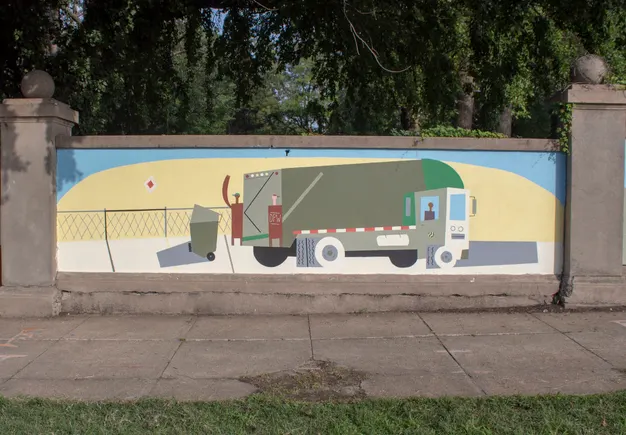
For decades, most of Baltimore City's trash has been handled by a waste-to-energy incinerator operated by WIN Waste Innovations. However, in the city's latest draft ten-year solid waste plan, which is expected to be voted on later this year, city leadership is seeking to divert as much waste as possible away from the facility, even as they acknowledge it will likely continue operating.
Environmental and community advocates in the city have long criticized authorities for a lack of action on improving pollution issues and closing the plant, formerly known as BRESCO. Marvin Hayes, founder of the Baltimore Compost Collective, frequently visits schools near the facility for educational outreach. He says he asks students two questions: what is your favorite fruit or vegetable, and have you or your family been affected by asthma or cancer.
"In these school communities surrounded by incinerators, 95% of students are affected by asthma," Hayes said. "We have to build infrastructure here so we can separate these materials and handle them in a sustainable way that doesn't cause harm to people's health."
WIN Waste, for its part, says there is "no association" between emissions and asthma, and defends its record in the community. Although the facility has been cited as one of the main sources of industrial emissions in the area, independent reports have also found that vehicles are the largest source of overall air pollution in Baltimore. WIN Waste market manager Michael Dougherty described the incineration facility as a "Ship of Theseus," noting that since it began operating in 1985, the facility has undergone numerous equipment upgrades and modifications, including renovations completed this summer. These $45 million upgrades, which WIN Waste agreed to after a legal dispute with the city, have reduced emissions of nitrogen oxides, lead, and other pollutants.
Although the incinerator remains a focal point, the city is also driven by climate action goals to reduce landfill emissions and a state-mandated 35% recycling rate target. These goals, along with a renewed focus on waste prevention and sustainable materials management, form the framework that the Bureau of Solid Waste, under the city's Department of Public Works, plans to follow through 2033.
Building alternatives to the incinerator will require funding and time. Proposals in the city's draft plan include: bringing a new Eastside transfer station online by 2030, opening a larger regional transfer station later in the decade, and increasing in-city MRF processing capacity. The city has kept open the option of allowing private contractors to operate new facilities and anticipates that capital expenditures for expanding transfer capacity alone could approach $90 million.
After receiving approval from the Maryland Department of the Environment, the Baltimore City Department of Public Works now needs to submit the solid waste plan draft to the City Council for approval.
Despite activists' long-standing calls to close the incinerator, WIN Waste believes it has a role in Baltimore's future. The company says it provides a net benefit to Baltimore by reducing the volume of city waste and has partnered with local organizations like 4MyCiTy to offer alternative solutions for food waste.
After a May tour of the facility showcasing recent emissions upgrades, Dougherty said the area provides "more than enough" waste to keep the facility running at full capacity for some time.
"We strongly support the path to zero waste. But the road to zero waste is long, and we believe we will play an important role on that road," Dougherty said.
The Future of Incineration and Landfilling

The Bureau of Solid Waste's roadmap for diverting waste from landfilling and incineration has drawn some praise, although advocates are unhappy that the plan anticipates the WIN Waste facility will continue operating.
In 2021, Baltimore handled 414,000 tons of waste, with 136,000 tons sent to the incinerator and 210,000 tons sent directly to the Quarantine Road Landfill. WIN Waste's ash is also sent to that landfill under its contract with the city.
The bureau's waste accounts for only about 20% of the total volume sent to the WIN facility. As a result, the bureau's plan takes a cautious approach to the future of incineration. While the city's current contract with WIN extends through 2031, the ten-year plan anticipates that WIN Waste will continue doing business with Baltimore County and private haulers.
"Unless waste diversion practices are widely coordinated across the public and private sectors, the facility will likely continue to operate at or near its current throughput," the plan's authors wrote.
In addition to moving away from the controversial incinerator, the plan's authors also seek to reduce the amount of waste sent to the Quarantine Road Landfill, even as the bureau moves forward with expanding that facility. Such an expansion, which aims to connect the facility with the nearby Millennium Landfill, could cost $99.5 million and is expected to extend the landfill's lifespan from 2028 to 2035.
For Brenda Platt, who has long served as co-director of the Institute for Local Self-Reliance and was involved in the city's 2018 report "Less Waste, Better Baltimore," much of her dissatisfaction with the Bureau of Solid Waste stems from its tendency to perpetuate disposal destinations rather than committing to reducing, recycling, and reusing materials.
"There's always money to expand landfills," Platt said. "But somehow, there's never enough money to do the things that really need to be done, to reduce waste at the source and save landfill capacity. I think that's the crux of the issue."
She is pleased to see more focus on waste diversion practices in the plan but believes these ideas fail to address the fundamental grievances of environmental justice advocates: that the incineration facility has operated in underserved communities for too long.
"Suppose the city succeeds in reducing material flow. So what? We'd still have out-of-city waste from Baltimore County coming into that community, incinerating waste in an environmental frontline community? That doesn't really make sense," Platt said.
Jennifer Combs, public relations coordinator for the Department of Public Works, did not directly respond when asked about the draft plan's lack of specific mention of environmental justice concerns related to continued incineration. Instead, she pointed to the plan's waste diversion initiatives, saying they include "calls for coordinated cross-departmental efforts to reduce waste and adopt more sustainable materials management practices."
"Throughout the plan, the city has identified and committed to expanding waste diversion initiatives over the ten-year planning period," Combs said in an email. "As these initiatives are implemented, the city expects to reduce its reliance on incineration and landfilling, while recognizing the environmental impacts of both waste management practices."
The plan's ideas for diverting waste from landfilling and incineration, or at least from the in-city facility, are ambitious. In addition to waste reduction strategies, the plan calls for increasing the daily processing capacity of the Northwest Transfer Station and expanding long-haul transfer capacity to reduce reliance on the WIN Waste facility.
The proposed new regional transfer station would include a rail spur and have an annual processing capacity of up to 640,000 tons, capable of handling all of the city's residential and commercial municipal solid waste. The plan estimates the facility will cost approximately $70.5 million and anticipates it could begin operations around 2037.
The plan's authors note that even with the expansion, the Quarantine Road Landfill could reach capacity by 2035, and the regional transfer station would provide "a long-term method for managing its solid waste." They say the station could facilitate the transfer of Baltimore's waste to regional landfills or "even more distant facilities if needed," thereby diverting it from the incinerator.
The bureau lists several potential sites for the proposed regional transfer station, including two locations at the Port of Baltimore and one at a Baltimore County western reception facility. Meanwhile, a related Eastside transfer station proposal would, for the first time, allow small haulers, mixed waste loads, and single-stream recycling collectors to consolidate waste volumes in southern and eastern Baltimore. If approved, the facility could be built by 2030 at a cost of approximately $18.6 million.
Despite concerns, Platt says the plan is "a step in the right direction" compared to the city's previous proposals.
ILSR hopes to finalize a contract with the city to provide residents with composting education materials, Platt said. She is encouraged by the city's robust educational programs planned for schools, communities, and through specialized training facilities. But she notes that while the plan looks good on paper, it will need strong support to achieve the bureau's goals.
"If you compare this plan to the previous ten-year plan, it's like night and day," Platt said. "What really matters is the implementation and funding of the plan."
A Strained Collection System

The city's trash and recycling collection issues are intensifying as the Bureau of Solid Waste seeks to recover from a series of challenges. The COVID-19 pandemic, an aging collection fleet, and what the plan describes as a lack of education have all contributed to a recycling system plagued by contamination and inconsistent service.
According to the draft plan, the city serves approximately 210,000 households as well as hotels, restaurants, hospitals, and other locations. The city has a significant amount of material that could be diverted into the single-stream recyclables program—the plan estimates that recyclables make up nearly half of the city's waste stream.
But the Bureau of Solid Waste reduced recycling collection frequency from weekly to biweekly, effective January 2022, attributing this to pandemic-related staffing challenges, which reportedly violates the city charter. Baltimore City Council leaders called the bureau's decision to reduce services and slowly restore them "completely unacceptable." The bureau says it could restore weekly service in 2024 if new equipment arrives.
The city's reduced collection frequency has also negatively affected services in other ways. The plan notes that once Baltimore stopped collecting trash twice a week, residents began throwing trash into recycling bins, leading to "serious contamination issues."
Last year, the city commissioned Rubicon to write a report to identify ways to improve collection. Rubicon found that Baltimore's collection routes have more stops per route than many comparable cities and recommended reducing the number of stops to address marathon shifts that could last up to 14 hours.
The report also recommended increasing the number of recycling collection drivers to 29 and recycling laborers to 58. The Department of Public Works has acknowledged for months the need to hire dozens of new drivers. The department announced $10,000 signing bonuses in March and held multiple recruitment events this spring.
This month, the department said it still needs to hire 23 additional drivers to meet the short-term goal for single-stream recycling service, at a cost of just over $1 million. The department also said it needs to hire 48 solid waste workers to meet the short-term goal for collection staffing, at a cost of just under $1.8 million. The department expects to reach the required staffing levels by February 2024.
Kristyn Oldendorf, who worked on waste issues for the city for eight years and is now an associate director at the consulting firm Anthesis Group, said the bureau has worked to digitize routes based on the Rubicon report, which also helps right-size routes.
"During this time, imagine driving to an unfamiliar place without GPS. These routes relied heavily on drivers knowing where they were going," said Oldendorf, who previously led the Office of Waste Diversion. "Working with Rubicon was a big step in the right direction."
Still, Oldendorf said that when she left the bureau in June 2022, there was "no real vision" for addressing long-term staffing issues. The plan notes the need for increased funding to ensure the bureau maintains a 20% reserve for vehicles and personnel, but Oldendorf said the bureau also needs to focus on safety, health, and compensation to meet its staffing needs.
"We really want every household to recycle, so routes have to be manageable for workers, but you also have to make sure they cover all households," Oldendorf said.
Executing this vision also requires stable leadership, which the city's Department of Public Works has lacked in recent years. Since 2020, the department has had four different leaders, while recycling collection services, contracts, and water issues have piled up. In August, The Baltimore Banner reported that the department had let its electronics recycling contract lapse, possibly months ago.
On July 10, Craig Jeter began serving as acting head of the Bureau of Solid Waste, pending confirmation. Former DPW deputy director Richard Luna became the department's interim leader on June 30, following Jason Mitchell's departure.
"When you have a lot of people in acting roles, or you're not sure who the long-term leader is, it can be difficult to think about long-term planning," Oldendorf said.
This is the first part of a two-part series on Baltimore's solid waste challenges. Read ourfollow-up reportfor more details on the plan's organics recycling goals.