
Can carbon capture make waste-to-energy plants achieve net-zero emissions? European operators are trying to provide an answer
European waste-to-energy operators are actively exploring the installation of carbon capture, utilization, and storage (CCUS) systems at incineration facilities to cope with increasingly stringent climate policies. Although interest in the United States is scant, companies such as Covanta, Suez, and Veolia in Europe have announced related plans. Projects face challenges such as high costs and high energy consumption, while alternative approaches like recycling and composting are also seen as important paths to decarbonization.
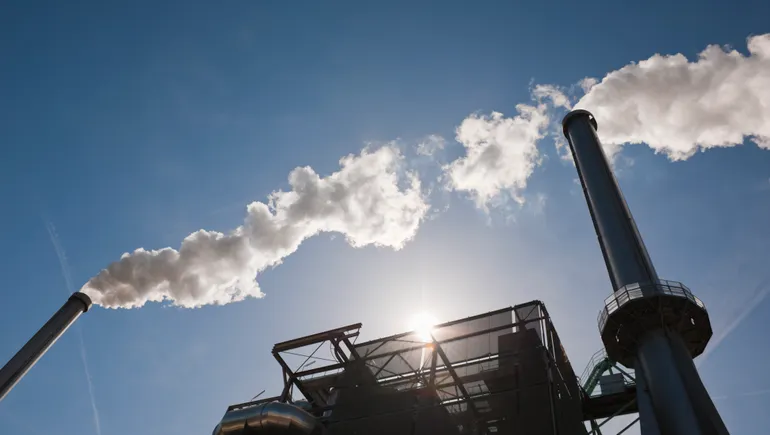
As climate change mitigation goals place stricter scrutiny on the waste management industry, European incineration facilities are testing whether carbon capture projects can ease their operational pressures.
The option of adding carbon capture, utilization, and storage systems (CCUS) to incinerators—often called "waste-to-energy facilities"—has not yet drawn significant attention in the United States. But in Europe, where incinerators give each country the capacity to burn about 170,000 metric tons of waste per year on average, progress is advancing.
Companies such as Covanta, Suez, and Veolia have recently built or announced plans to build such systems at European incineration facilities. With few real-world examples available for reference, estimates on key questions such as project financial details and how much this intervention can reduce greenhouse gas emissions often carry wide margins of error.
Meanwhile, other technologies that can reduce waste-related emissions already exist. Tools such as recycling and composting can also help clients achieve zero-waste goals and play a role in decarbonizing the industry.
"We think (carbon capture) does have a role to play," said Ann Ballinger, principal consultant at UK-based consultancy Eunomia. "But we also think it's not the only solution."
An evolving industry landscape
In 2020, European incinerators consumed about 27% of the region's waste. These high-temperature treatment activities provide a small share of electricity for several countries, with some facilities also using steam to heat nearby buildings. In Norway, such facilities provide about 3.5% of the nation's energy while generating about 32% of the carbon emissions from its power sector. In Italy, the energy contribution is about 1%, with CO2 emissions accounting for roughly 6% of total energy production emissions.
For decades, European policies and climate goals have driven incinerators to replace landfills—the 1999 Landfill Directive explicitly advocated shifting from landfilling to incineration. Incinerators avoid the generation of methane, a potent greenhouse gas produced by decomposing organic matter in landfills, and compared to other options like coal, the electricity these facilities provide is considered cleaner.
But as the energy landscape shifts with wind and solar power, Europe's attitude toward incineration is also changing.
In 2019, the EU launched the European Green Deal, committing to a 55% emissions reduction by 2030. That target and subsequent legislation are seen by Manon Roussel, circular economy policy officer at the European Suppliers of Waste-to-Energy Technology association (ESWET), as a major driver for investment in CCUS.
To curb global warming and reduce the net amount of carbon industries release into the atmosphere, countries worldwide are advancing emission capture projects. Technologies added to facilities—which can be customized or purchased directly—can collect CO2 and methane emitted from industrial sites. "There are still some gaps in policy, but now there's greater visibility for investment," she said.
In July 2020, the revised EU Taxonomy set definitions for "environmentally sustainable" economic activities, excluding incinerators. These criteria determine which projects qualify for certain EU funding and aim to guide private financial institutions toward climate-friendly investment choices.
However, if incineration operators wish to add CCUS to their facilities, the EU has recently opened new funding channels for project development. The Innovation Fund, designed to help decarbonize EU industry, will provide grants for proposals for systems that reduce or mitigate emissions, including CCUS systems on incinerators. Applicants fall into two categories—projects costing more or less than $9.4 million—and the fund will cover up to 60% of the proposed installation costs.
At the same time, the EU wants to start certifying carbon removal systems. The body has opened a public consultation on possible ways to monitor and prove the functionality of carbon capture systems. Roussel said ESWET chose to speak on behalf of incineration operators wishing to install these systems.
A CCUS project consists of two parts: capture, then utilization or storage. Most facility operators will likely opt for what is called post-combustion capture. Instead of being released directly into the air, the treated flue gas leaving the incinerator enters a closed solvent that binds with and removes about 90% of the CO2. High temperatures separate the two again, leaving pure CO2 gas. Through pressurization or cryogenic cooling, the CO2 is turned into a liquid and then transported by pipeline or truck to storage sites such as depleted oil or gas fields.
The "U" in CCUS stands for "utilization," meaning some operators choose to sell the captured carbon rather than store it. One common application is injecting CO2 into oil and gas reservoirs to push out more fossil fuel production. Roussel said that if a facility is too far from storage sites, making pipeline transport costly, other utilization options may be more attractive to operators, but it's too early to assess overall trends.
Captured carbon can also be used in building materials—Covanta has chosen this destination for two of its incinerators under construction in the UK. These facilities mix residue with CO2 to create synthetic limestone.
Critics point out that building materials made from incineration residue carry the risk of leaching pollutants into the surrounding environment. When asked for its position, ESWET relayed the view of an unnamed member, saying that converting 100% of incineration residue into synthetic limestone "does not align with our vision" and would only be acceptable "if we can demonstrate a sink principle for the most harmful pollutants."
"Our position is that as long as the composition of the synthetic limestone is similar to natural limestone, we can accept these materials," the member said.

Applications in practice
The only known operating incinerator CCUS system in Europe sends its carbon to another possible destination—greenhouses—to promote plant growth. The Duiven facility in the Netherlands, operated by waste company AVR, began running in October 2019. In 2023, another Dutch incineration operator plans to follow suit after completing a $15.3 million construction project.
As the cost of the Dutch project shows, carbon capture systems are expensive to install. Eunomia's Ballinger said costs are higher if the incinerator is older and needs retrofitting to accommodate the equipment. The electricity required to collect and transport the carbon also reduces the facility's power output. A case study by the International Energy Agency found that installing a CCUS system and subsequent processing steps at an incinerator would consume half of the energy it produces.
Even with these costs and losses, the case for incinerators may be cheaper than adding similar technology at other industrial sites. "But the amount (of carbon) they capture is also not large," Ballinger said, because their total emissions are lower than those of other facilities. In a November 2020 report, Eunomia estimated the cost of installing CCUS at an incinerator at about $83 to $138 per metric ton of CO2 avoided, though other estimates price it around $200. By comparison, costs in the glass production industry are about $139 to $189 per ton of carbon, and in cement manufacturing between $100 and $176.
The most cost-effective incinerator installations may be those that connect to carbon storage clusters—groups of industrial facilities sharing equipment. "Costs could still be quite high, but they're more likely to get off the ground because the pipelines are going to be built anyway," Ballinger said.
Some waste companies have begun exploring these forms of cluster collaboration, with only a few existing facilities currently joining hubs. Suez announced in 2020 that it would partner with BP to test the feasibility of sending carbon captured from incinerators to storage sites beneath the North Sea, as part of the Net Zero Teesside CCUS cluster. An incinerator in Norway will join another cluster of industrial sites called the Borg CO2 project, which also plans to store liquefied carbon under the same waters.
According to ESWET and industry consultants, combining incineration with CCUS can produce net-zero or net-negative carbon contributions, depending on the materials burned. This method of defining net impact stems from standards on incineration set by the UN's Intergovernmental Panel on Climate Change. These standards focus mainly on CO2 emissions, because materials after incineration do not decompose and release methane like waste in landfills. The guidelines consider carbon emissions from burning paper, food, and wood waste as net-neutral; emissions from fossil fuel-based products, however, add carbon to the atmosphere.
How CCUS changes these calculations is nuanced and open to interpretation, as results have not yet been codified by government agencies or other third parties. "I'm not aware of any document that sets this out in a transparent way," Ballinger said.
Plastics are made from extracted oil and natural gas, and their carbon returns to the earth after being burned and stored as part of a CCUS system—a shift often viewed as a net-neutral carbon outcome. Paper products are more complex. If paper comes from recently harvested trees, accounting systems may mark the carbon from burned and stored paper as net-negative, because these plants grew recently and stored atmospheric carbon, which is now prevented from re-entering the atmosphere. However, if the material burned comes from older timber, potentially representing carbon stored in wood for decades, then burning and storage would yield a net-neutral scenario, Ballinger said.
In some cases, calculations may also assume trees are replanted to replace those cut down for paper products. This accounting choice shows how carbon tracking can quickly evolve into a cross-industry issue, with robust third-party standards still lacking. For example, a system capturing carbon from paper emissions could be claimed by waste companies as a net-negative emission result.
But if forests are not replanted, "you end up not really achieving that true net-negative outcome," said Michael Walsh, an independent decarbonization strategist in the US.
Looking ahead
In June 2021, the UK's waste industry trade association—the Environmental Services Association (ESA)—published a plan to achieve net-zero emissions, which includes, alongside removing plastics from incineration feedstock, "deploying carbon capture technology across our waste-to-energy facilities by 2040 where feasible."
Ben Johnson, ESA press representative, said some sites may be too old or too costly to retrofit, or too far from offshore carbon storage options. "For inland projects far from clusters, deploying CCUS is more complex until more carbon utilization markets emerge," he wrote in an email. However, the association believes individual facilities could achieve net-negative carbon results, depending on the materials they burn.
This calculation assumes each incinerator receives the right mix of materials to make the balance work. Johnson said that if the UK meets its recycling targets and the share of plastics entering incinerators decreases, ESA expects the balance to shift toward net-neutral.
Zero-waste advocates also have their concerns about the expansion of CCUS on incinerators and its potential "lock-in effect." Even if CCUS retrofits receive funding from the EU or other sources, communities or companies still need to pay for the rest of the facility through loans or other means.
Recovering the investment or turning it into profit means the facility needs to keep running—which could sustain demand for burnable materials even as governments simultaneously work to reduce overall waste generation. Faced with costly investments aimed at mitigating waste emissions, "it becomes hard to argue for minimizing waste in the first place," said Janek Vahk, climate, energy, and air pollution project coordinator at Zero Waste Europe.
Vahk is particularly concerned about the possibility that some incinerators importing waste to meet contract demands could receive EU CCUS funding. Incinerators in parts of Europe already need to import waste to meet capacity needs, which anti-incineration groups argue supports their claim of overcapacity in the region. Government officials in some countries forced to import waste for burning have publicly stated that the practice runs counter to climate goals, and the health impacts of emissions are sometimes raised as a concern.
Opponents argue that if operators add CCUS to these "hungry" incinerators, the technology will further cement their role. "(If it's built) you have to bring in more waste to burn, rather than trying to reduce waste incineration," Vahk said. "That's exactly the situation we want to avoid."
Ultimately, Ballinger said, widespread deployment of CCUS on incinerators could weaken the drive toward a more circular economy. Products that could be recycled or reused may have their carbon stored, but the items are still burned in the end, leaving gaps in the supply chain that product manufacturers must fill with virgin materials.
Storing emissions relieves pressure to reduce production upstream, Walsh added. "Those plastic emissions are captured, yes, you don't want them back in the atmosphere. Ideally, you would have recycled some of those plastics, or even not produced them in the first place."
Ballinger said weighing the cost per pound of avoided carbon emissions would also show that, in the vast majority of applications, recycling is a cheaper option than CCUS, though the potential costs of CCUS are still evolving. Technologies for extracting materials from curbside collection points already exist and operate in efficient sorting plants, while many CCUS installations remain at the pilot stage. Meanwhile, the most profitable and most sustainable outcomes may not always align.
"If you're an incineration operator, you don't necessarily want too much material going elsewhere and being handled outside your control," Ballinger said. But she added that there are recyclable extraction systems that can be paired with the incinerators themselves.
Growing pressure around alternative energy and decarbonization goals has sparked debate within the incineration industry about whether Europe can still maintain its current capacity in the future, Roussel said. However, in a future that maximizes reuse, the residual materials that ultimately need disposal may still be sufficient for the industry to operate.
Patrick Clerens, secretary general of ESWET, said that even if materials are recycled as many times as designed, some products like plastics and paper will still eventually need a final disposal option. When that moment comes, incinerators will be able to step in, and they will still produce emissions.
"We really push for recycling, recycling, recycling, reuse and recycle as much as you can," he said. "We'll take the residue, that's fine. There's more than enough residual waste."