
Five Years After China's 'National Sword' Policy: U.S. Domestic End Markets for Recycled Paper and Plastics Continue to Expand
Since China implemented its 'National Sword' policy in 2018, the U.S. recycled paper and plastics industry has experienced a surge in domestic end-market investment, adding millions of tons of new capacity. However, industry views differ on the policy's driving force, while challenges such as feedstock supply and contamination control persist.
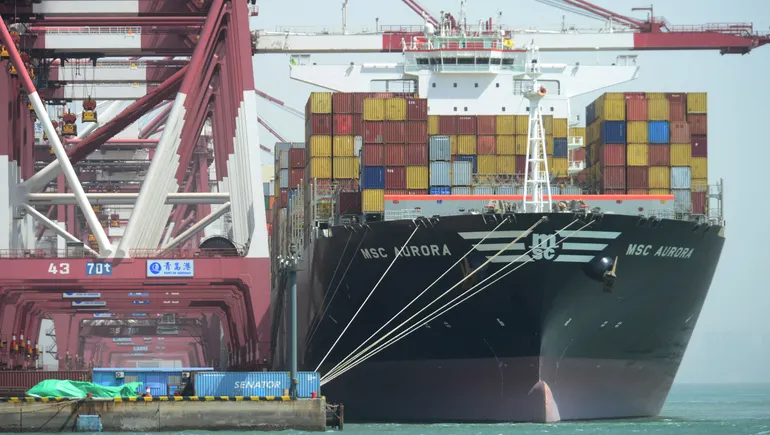
Five years after China's "National Sword" policy disrupted global flows of recyclable materials, investments in new or upgraded end-market infrastructure in the U.S. have reached a scale of millions of tons of capacity. However, debate continues over the extent to which the country's scrap import policy has influenced this wave of domestic investment. Some argue that other environmental and geopolitical factors have been more critical in improving the cleanliness of curbside recyclables and boosting domestic markets, but commodity experts agree that the industry landscape has clearly shifted.
"The National Sword policy made us clearly realize that we could no longer rely on volatile foreign markets to handle packaging solid waste," said Steve Alexander, President and CEO of the Association of Plastic Recyclers. "It reinforced the fact that we must build the corresponding infrastructure here in the U.S."
The policy took effect in 2018, banning China from importing 24 types of scrap, including mixed paper and mixed plastics, and limiting contamination in remaining imported materials to 0.5%. Other markets such as India, Indonesia, and Malaysia became strong recipients of affected materials, but no single country could fill the gap.
Investments in U.S. domestic end markets existed before "National Sword," but "looking at the trend line, it clearly accelerated after 'National Sword,'" said Resa Dimino, Managing Director at RRS and Managing Partner at Signalfire Group. "We saw considerable investment in both paper and plastics to develop domestic markets."

Paper demand rebounds
The Northeast Recycling Council (NERC) has been tracking growth in U.S. domestic recycled paper capacity since 2018. It notes that some expansion projects were planned before "National Sword" due to rising demand for cardboard boxes driven by a surge in e-commerce sales—a trend further accelerated during the pandemic—but it also acknowledges that China's scrap ban stimulated additional domestic capacity increases.
NERC's latest updated list identifies 28 new recycled paper mill projects since 2018, 17 of which have been completed, adding a total of 8 million tons per year of capacity for OCC and mixed paper. Overall, paper mills have shifted from handling declining grades like newsprint to increasing OCC processing capacity. Nine projects still in progress—including Pratt Industries' mill in Kentucky and Cascades' mill in Virginia—are scheduled for completion this year or next.
"The situation at paper mills over the past three or four years is well known," said Myles Cohen, founder of consulting firm Circular Ventures and former President of Pratt Recycling. "Especially in the containerboard sector, interest has clearly revived... We haven't seen anything like this in a long time."
Brand owners and retailers are leading increases in recycled content in their products through new or expanded sustainability commitments. Their actions are often driven by consumer demand for recycled content in packaging and by regulations in some states.
"The common thread in most new capacity projects is 100% recycled content—or a very high percentage of recycled content—because that's where the market is heading," Cohen said.
NERC's analysis points out that much of the new capacity comes from existing or previously closed paper mills that have either reopened or been upgraded.
"Using existing facilities has advantages," said Chaz Miller of Miller Recycling Services, who compiles the list for regional groups including NERC. "You don't have to worry about zoning issues, transportation routes are already planned, and basic permits are in place."
He added that if a mill produces a different product, new permits would be needed. For example, several paper mills are shifting to produce recycled brown pulp—a product with significantly increased demand. Recycled pulp is considered cleaner than curbside fiber because it undergoes processing and is not subject to the same import restrictions. In recent years, it has become a roundabout way to indirectly flow fiber into China and other Southeast Asian countries.
Both domestic and foreign companies have increased recycled pulp production at U.S. facilities. Nine Dragons has been building its network of U.S. pulp mills, including facilities in Maine and West Virginia, intending to ship most, if not all, of the pulp back to its Chinese paper mills. Last year, Celadon committed $155 million to establish a North American headquarters and recycled brown pulp production facility in Georgia. Last month, CellMark announced a partnership with Total Fiber Recovery to build an $80 million recycled pulp production facility in Chesapeake, Virginia.
Cohen said recycled pulp has traditionally "not been a big market in the U.S." but rather a niche product. Now, "hundreds of thousands of tons of new capacity are coming online to clean recycled paper so it meets the import requirements of countries that restrict 'waste paper.'"
Progress in plastics
Investment in plastics end markets has also accelerated. But compared to paper mill investments, "getting data on the plastics industry is harder because many facilities are operated by resin producers or even manufacturers of products like bottles," Miller said.
Continuus Materials, which converts recycled paper and plastics into building materials, has secured several expansion investments, including from a subsidiary of WM, a transportation and MRF operator. Thai plastics manufacturer PTT Global Chemical's U.S. subsidiary recently announced it will build a plant in Ohio to turn recycled PET and polyethylene into various products; Rumpke Waste & Recycling will supply plastic bales to the plant.
Dimino explained that many investments target specific materials, often those that previously faced export challenges. Before "National Sword," small amounts of PET and HDPE were exported, while mixed plastics were frequently exported.
"We're seeing a lot of PET investment and expansion by PET recyclers, both in capacity and throughput," Dimino said. "The same goes for HDPE, as well as new markets and sorting facilities developing around polypropylene, which was one of the main exported materials."
APR's Alexander noted that optical sorters are the leading technology driving change over the past decade, including enabling sorting of black plastics. Over the past five years, adoption of optical sorters has risen to mainstream levels.
"Over the past three years, there has been massive investment in washing lines and processing capacity—so much so that we have overcapacity—and there are even more investment plans now," Alexander said.
Industry and brand collaboration is another private investment strategy. For example, last year Dow, LyondellBasell, and NOVA Chemicals announced a $25 million investment in the Closed Loop Partners fund to promote recycling technology, infrastructure, and market development for polypropylene and polyethylene.
Companies are also investing in secondary plastics recycling facilities (PRFs). As with paper projects, some PRF investments were planned before "National Sword," but "we found that most in the first round were not successful," Miller said. For example, QRS' plastics recycling facility in Maryland opened in 2015, suspended operations in 2017, and closed completely in 2018, with sources citing unfavorable market conditions at the time as the main reason. Another PRF project in New Jersey announced in 2017 became mired in regulatory and legal disputes and has yet to materialize.
A new wave of secondary plastics recycling investments has emerged, and sources say timing and resin pricing seem more viable than during the initial PRF wave. In 2018, Chinese-owned Roy Tech Environ said it would open a plastics recycling facility in Alabama to ensure its Chinese factories received enough recycled plastics under China's import restrictions. Republic Services recently announced it will build a PRF in Las Vegas with an annual capacity of 100 million pounds of recycled plastics; it will be the first of several similar facilities, expected to begin operations next year.
Closed Loop Partners' infrastructure arm recently invested $5 million in Myplas to develop a flexible film recycling plant in Minnesota. The group is interested in making more investments in post-MRF infrastructure, focusing on addressing market gaps for hard-to-recycle plastics like LDPE and HDPE.
"From an investment perspective, how to manage more challenging formats like flexible packaging will continue to be a core focus for our team," said Jennifer Louie, Managing Director at Closed Loop Partners.
Chemical recycling (as opposed to mechanical recycling) is another area heating up—though it is highly controversial. Chemical recyclers say it offers a solution for hard-to-recycle plastics with no market, while critics argue the concept distracts from reducing the use of certain plastics and that too many projects focus on producing fuel products.
Agilyx launched a polystyrene conversion plant in Oregon in 2018, and it is still operating. In 2020, INEOS Styrolution and AmSty announced plans to build a polystyrene recycling plant in Illinois using Agilyx's pyrolysis technology. Last month, Dow and Nexus Circular announced plans to build a pyrolysis plant in Texas to process hard-to-recycle plastics collected curbside.
Alexander said plastics recyclers continue to invest in new technologies and other infrastructure, but there are problems in obtaining an adequate supply of suitable recyclable materials.
"The problem isn't recycling capacity; it's supplying materials to recyclers," he said. "Recyclers can only recycle materials that are available in their current form. Our design guides have been published to instruct the world on how to design packaging for successful recycling."
Even for commonly recycled resins like PET, supply falls short of the 2025 recycled content targets set by brands, states, and plastics advocacy organizations.
"To reach 35% or 50% recycled content, you need to collect about three times the current amount of PET," Alexander said. "This isn't a simple supply-demand equation because we rely on community recycling programs running well."

Finding and filling gaps
Despite the many changes over the past five years, Alexander said there hasn't been enough time to fully transform U.S. domestic market infrastructure.
"Now that people are paying attention, they expect the entire system to change instantly," he said. "But that's far from the case... It's extremely complex."
The failure of early PRF projects shows that factors such as supply, demand, and commodity prices all affect outcomes. Additionally, companies may slow down when weighing major capital expenditures. Such purchases are mostly funded solely by private investment; government assistance could accelerate things, but it is not widespread.
"The government does provide some support, but I don't think it's government-driven," said Signalfire's Dimino. "Private companies are capitalizing on a time when market demand for recycled materials is extremely high."
Although the U.S. EPA established recycling-focused grant programs last year under the Infrastructure Investment and Jobs Act, government assistance typically occurs at the state and local levels. Dimino said Michigan, Colorado, and Washington are leading states in dedicating resources to developing recycling businesses. She added that more states have passed mandatory minimum recycled content rules in recent years, and policymakers want materials collected in their states to go into new packaging.
"This is an important factor supporting domestic markets and infrastructure development," Dimino said. "Since 2020, we've seen quite a bit of activity, and we expect this trend to continue as policymakers pursue greater circularity."
Sources noted that the West Coast—previously a major region for exporting materials to Asia—has capacity gaps, providing opportunities for more investment.
"The West Coast definitely needs more capacity for mixed plastics and polypropylene recycling," Dimino said. "The same goes for paper. Many of the paper mill announcements and upgrades you see are concentrated in the Midwest and Northeast."
The "National Sword" policy may have highlighted the value of reducing contaminants and producing clean materials, but whether domestic investment over the past five years has significantly driven improvements in the cleanliness of curbside recyclables remains uncertain.
A major reason is the amount of non-recyclables residents place in curbside recycling bins—including masks that have appeared since the pandemic—which sources say underscores the need for education and cleanup efforts across the entire value chain. Materials collected from commercial entities like big-box retailers have always been cleaner than those from residential recycling programs.
"Everyone I talk to says contamination levels haven't changed much compared to a few years ago. Many say it's worse," Cohen said.
Investment waves ebb and flow
Like commodity prices, investment waves are cyclical. Although sources were reluctant to make definitive predictions about how long the cycle will last, they generally expect current economic conditions could slow recycling investment in the near to medium term.
Additionally, some recyclers are cautious about capital expenditures to assess supply and demand as new capacity comes online.
"You can't build a paper mill or plastics plant... and expect all the new output to sell," Cohen said. "The packaging industry—regardless of substrate—is highly dependent on consumer spending trends."
Even if investment slows in the near term, it doesn't necessarily mean the end of the post-"National Sword" recycling recovery.
"Recyclers are always updating technologies and creating solutions. It's a dynamic industry," Alexander said. "I think 'National Sword' woke many people up, but many other factors will also influence where the industry goes next."