
California Organic Waste Recycling Investment Boom: SB 1383 Policy Becomes Industry Testing Ground
California is implementing SB 1383, its most ambitious waste policy in decades, requiring a 75% reduction in organic waste disposal compared to the 2014 baseline by 2025. The policy is expected to cost approximately $20.9 billion between 2018 and 2030, while potentially generating about $17 billion in economic benefits. Local jurisdictions face double-digit rate increases to build new collection and processing systems, while businesses are investing in facilities such as composting and anaerobic digestion. The industry is divided between source-separated and mixed-waste processing approaches, with the southern region expected to require dozens of new facilities. CalRecycle officials say that if successful, the model could be replicated nationwide.
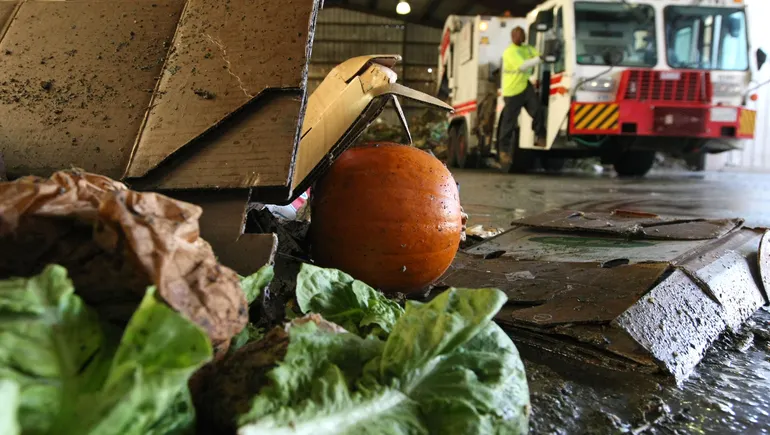
California has enacted its most ambitious waste policy in decades—SB 1383—and the results could have far-reaching implications for how organic waste is collected and managed well beyond the state's borders.
SB 1383 is a key component of the state's efforts to reduce short-lived climate pollutants like methane. To that end, CalRecycle requires a 75% reduction in organic waste disposal by 2025. The lengthy regulations underpinning these goals contain numerous complex provisions around emerging areas such as procurement and edible food recovery. But the most visible changes are happening on curbsides and in alleys across the state—local jurisdictions must now provide comprehensive organic waste collection services to all residents and businesses.
The organic waste collection and processing requirements of SB 1383 are a massive undertaking. CalRecycle estimated in 2018 (before the current inflationary environment) that the policy could cost about $20.9 billion over the 12 years through 2030. At the same time, the agency projected it could generate about $17 billion in economic benefits over the same period and create thousands of new jobs.
Overall, it is estimated that the state needs to keep 27 million tons of organic waste out of landfills annually by 2025, of which 18 million tons are not eligible for edible food recovery. The pandemic has not helped local jurisdictions' efforts, prompting Governor Gavin Newsom to sign a bill last year providing a degree of flexibility in enforcement.
The responsibility for the law falls on local governments, with hefty financial penalties for noncompliance. Many local jurisdictions have had to implement double-digit rate increases to pay for new or expanded collection programs and new infrastructure. Even Bay Area cities with more mature collection programs are still struggling to keep up with all the law's requirements. Jurisdictions are weighing collection and processing options that will have impacts for years to come. The demand for transportation and recycling solutions has also triggered significant changes in California's waste and recycling industry.
Over the past year, Waste Dive has spoken with dozens of waste and recycling professionals, state and local officials, and other stakeholders to understand what SB 1383 means to them.
Companies have invested millions of dollars in composting infrastructure, anaerobic digesters, preprocessing equipment, and more to meet the requirements of newly signed or amended contracts. Sensing a shift in the competitive landscape, some owners have sold their waste businesses to larger competitors or brought in new investors to better position themselves, while other composters and waste companies have entered the California market for the first time with new contracts.
Throughout the process, CalRecycle and supporters of the law maintain strong optimism: not only can the goals be achieved in the state, but if successful, they can be exported to other parts of the U.S. and adopted by national waste companies that have yet to fully tap their organic recycling potential.
"We will be the business case. We will be the case that proves it," said CalRecycle Director Rachel Machi Wagoner. "If they see they can make money from it, they will take it elsewhere. It has to be proven here first."
Key numbers at a glance
- 20%: Share of methane from organics in California landfills
- 2020: Target date to reduce organic waste disposal by 50% from 2014 baseline (not met)
- 2025: Target date to reduce organic waste disposal by 75% and increase edible food recovery by 20%
The climate rationale behind reducing organic waste
California waste and recycling professionals are accustomed to adapting to a steady stream of new state laws. AB 939 in 1989 set a goal of reducing waste by 50% by 2000, sparking a wave of curbside recycling and yard waste programs. More recently, AB 1826 in 2014 mandated commercial organic waste collection, while AB 1594 in 2014 eliminated the option of counting green waste used as alternative daily cover at landfills toward diversion.
Even so, SB 1383 is seen as one of the state's most significant waste policies in decades, due to the speed of its enactment, the urgency policymakers feel about climate, and the complexity of what is required. While various state and local organic recycling policy drivers already exist across the country, this is the first mandatory statewide push outside of Vermont—and Vermont has less than 2% of California's population.

The law, signed by then-Governor Jerry Brown in 2016, initially aimed to reduce methane levels by 40% from 2013 baseline by 2030, among other goals. Data collected by NASA's Jet Propulsion Laboratory (for the California Air Resources Board between 2016 and 2018) found that landfills are the state's largest source of methane emissions. While the waste industry continues to debate the most accurate ways to measure these emissions, it is increasingly clear to some state and federal policymakers that keeping organic waste out of landfills is a climate priority.
A recent report from the U.S. Environmental Protection Agency (EPA)—which has its own nonbinding food waste reduction goals—notes that with more than 15% of human-related methane emissions in 2019 coming from landfills, and methane trapping heat in the atmosphere far more effectively than carbon dioxide, excluding organic waste from landfills can have a direct impact on mitigating climate change.
Beyond potential economic benefits, CalRecycle also estimates that methane reductions driven by the law could be worth $40 million to $100 million annually by 2030, or even more. Between 2019 and 2025, overall health benefits to state residents could be worth at least $4.8 billion, or potentially higher according to a more recent report.
In California, the state estimates that "organics such as food scraps, yard trimmings, paper, and cardboard" account for about half of the volume going to landfills. The latest state report shows that of the 77.4 million tons of waste generated in 2020, an estimated 52% ended up in landfills, while an estimated 12% of the total was managed through composting, anaerobic digestion, or cover.
Therefore, to achieve the state's methane reduction goals, SB 1383 mandates the collection and recycling of organic materials, in addition to initial source reduction and food recovery efforts.
Two paths to compliance
SB 1383 regulations allow two ways to meet these organic collection requirements. The first is source-separated collection across three color-coded bins (gray for residual waste, blue for recyclables, and green for yard and food waste). The second is mixed waste collection, where organics are mixed with municipal solid waste (MSW) and possibly recyclables in one or two bins. While CalRecycle is still reviewing data on which approach jurisdictions plan to adopt, Machi Wagoner and many others say the three-bin system is by far the most common choice so far.
Nick Lapis, advocacy director for SB 1383 supporter "Californians Against Waste," said it is "no accident" that source-separated collection programs in places like San Francisco served as inspiration for the policy and are generally seen as the easiest way to comply.
"The regulations allow mixed waste, but I can't imagine any mixed waste system actually meeting the requirements," said Lapis, whose organization specifically wanted to see mixed waste collection banned. "The point of the bill is to establish source-separated composting programs statewide. There is a compliance path through mixed waste, but it deliberately sets a high bar."
Machi Wagoner and others at CalRecycle say the regulations do not favor one approach over the other, but they note that source separation is a more "mature" method with more compatible processing infrastructure and the potential to produce higher-quality commodities. However, some argue that collecting mixed waste and processing it to recover recyclables and organics is key to achieving SB 1383's macro reduction and climate goals.
"If you really want to achieve significant results, I think mixed waste processing has to be part of the equation," said Eugene Tseng, an environmental engineer, attorney, and teacher, who believes all options in the waste management hierarchy need to be utilized. "With source separation alone, they will never achieve the 75% goal."
Tseng cited the broader list of target materials in the regulations—"food, green material, landscape and pruning waste, organic textiles and carpets, lumber, wood, paper products, printing and writing paper, manure, biosolids, digestate, and sludge [from mixed waste streams]"—and argued that some form of mixed waste sorting is inevitable if the law's goals are to be fully realized.
Agencies using the mixed waste approach must send materials to a verified "high diversion organic waste processing facility," which must demonstrate a 75% recovery rate by 2025. CalRecycle says there is currently no list of designated high diversion facilities, but so far the state expects only a handful to qualify for this designation.
"What we're really looking for is to let these new technologies demonstrate success, and if they can prove success, they can become part of our system," said Zoe Heller, deputy director of policy development at CalRecycle.
Recyclers and local officials across the state hold widely differing views on the best collection and processing methods to meet the law's requirements, and this seems likely to remain an ongoing topic of discussion. Meanwhile, at least one thing is clear: achieving organic diversion goals statewide may be one of the most complex tasks the local industry has faced to date.

How much does organic processing capacity need to grow?
As California jurisdictions and haulers ramp up organic waste collection, a key question is where all this material will go.
Thanks to decades of green waste composting and several mature municipal food scrap programs, the state already has stronger organic processing infrastructure than many other states. Jurisdictions were due to submit processing capacity reports to CalRecycle in August, but existing data and interviews show mixed opinions on whether existing infrastructure can accommodate the expected significant increase in organic collection volumes and the added complexity that comes with it.
Some estimates suggest that to meet the law's goals, California may need to build or expand as many as "90 to 110 in-state recycling and remanufacturing facilities" beyond the existing network of facilities. The potential capacity gap is most severe in the southern part of the state, where dozens of new facilities may be needed.
"One of the characteristics of organic waste is that it can't be effectively exported [over long distances]. We are forced to handle it in-state. So, in terms of the changes needed statewide, it's enormous for us to successfully divert these materials and process them into these organic products," Heller said.
This expectation has driven interest and investment in a variety of new processing capacity options, with many expecting more facilities in the future, though some also anticipate that existing organic processing capacity will be sufficient.
In 2019, Matt Cotton, principal and owner of Integrated Waste Management Consulting, released a report for CalRecycle finding that there were ample processing options for the expected volume of organics SB 1383 would generate. At the time, the report found more than 160 permitted composting facilities and over a dozen anaerobic digestion facilities receiving about 6 million tons of material, with existing permitted processing capacity for an additional 4 million tons.
While demand has grown since then (as more communities have launched programs and more facilities have come online), Cotton remains optimistic about current availability. In his report and since, Cotton has tried to dispel the notion that jurisdictions cannot expand collection efforts due to a lack of processing capacity. He has found that when organic recyclers have more assured feedstock supplies, they are willing to invest in expanding permitted processing capacity, and said a key consideration is how far jurisdictions are willing to haul materials and how much effort they are willing to put into finding solutions.
"If every jurisdiction actively pursued 1383 [collection programs], we would face a processing capacity shortage," Cotton said, "but that's not how things are going to play out."
Stay tuned for Part 2, which will explore infrastructure investment trends among major organic recycling companies and their markets for materials.