
Waste-to-Aviation Fuel: Time for Takeoff?
This article explores the current status and controversies surrounding the conversion of waste into sustainable aviation fuel (SAF). Fulcrum BioEnergy's Sierra biorefinery plans to use municipal solid waste (MSW) to produce synthetic crude oil, but independent researchers question its energy efficiency and environmental friendliness. The industry faces challenges such as feedstock diversity, technical bottlenecks, and high costs, and the outcome may become clear in the next 20-30 years.
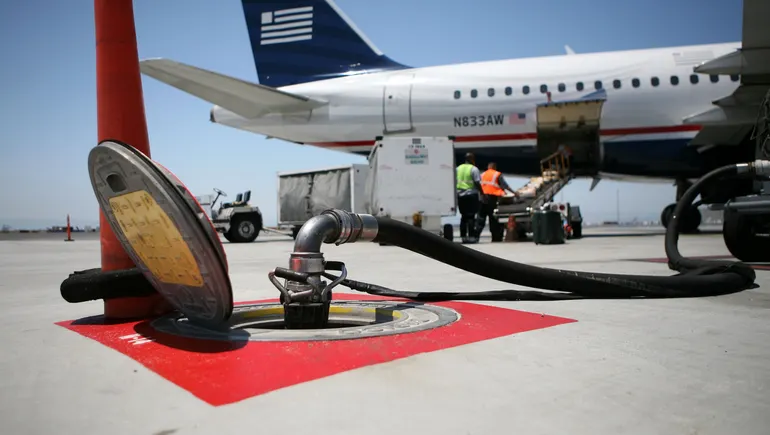
With growing environmental, social, and governance (ESG) concerns and pressures, waste-to-jet fuel has become one of the latest examples of how waste technologies can align with the aviation industry's "green" ambitions while finding a disposal outlet for municipal solid waste (MSW).
On the outskirts of Reno, Nevada, Fulcrum BioEnergy's new Sierra biorefinery is expected to produce 11 million gallons of synthetic crude oil (syncrude) annually from 175,000 tons of MSW. This syncrude will be further refined into sustainable aviation fuel (SAF).
Fulcrum is one of several companies lining up to produce SAF, as the global aviation industry seeks greener alternatives to conventional jet fuel. International air transport accounts for 65% of global aviation fuel use, and the International Civil Aviation Organization (ICAO) projects that aviation CO2 emissions will rise to between 1.1 and 1.5 billion metric tons by 2035. Late last year, the United Nations established SAF standards for this purpose.
Dallas/Fort Worth International Airport recently began a pilot program using SAF made from waste cooking oil; an Air France flight from Paris to Montreal used a 16% blend of SAF with conventional jet fuel; IAG (which owns Aer Lingus and British Airways) recently agreed to purchase nearly 300 million gallons of SAF from a Mississippi biorefinery; and the Port of Seattle is also exploring potential MSW-to-SAF projects.
Nevertheless, ongoing discussions about feedstock sourcing, the environmental impact of conversion technologies, scale, and funding ultimately point to an unresolved question: Is waste-to-jet fuel truly a sustainable alternative to conventional fuel?

The new plant in Nevada
After a decade of anticipation, Fulcrum completed construction of its Sierra biorefinery in mid-2021. The company has MSW supply contracts with WM and Waste Connections. Waste is first transported by 25-ton tractor-trailers to Fulcrum's processing facility 15 miles away. Usable waste (including textiles, wood, paper, residual plastics, and packaging materials) is separated and sized, which Fulcrum's Executive Vice President Richard Barraza describes as "a fluffy material about an inch in size that looks like confetti." This material is then transported to the Sierra biorefinery. About half of the MSW delivered is unusable and is landfilled or sent to recycling centers.
Barraza says Fulcrum's waste sorting facility has been operating for three years, and the biorefinery is expected to produce its first syncrude in the second quarter of 2022. The company has product offtake agreements with Cathay Pacific, United Airlines, Marathon Petroleum, BP, and World Fuel Services.
The biorefinery operates in three stages: a gasification unit, a gas cleaning zone, and a Fischer-Tropsch synthesis process. The treated waste enters the gasifier, where pressure, steam, and high temperatures break it down into synthesis gas, or "simple molecules primarily containing carbon monoxide and hydrogen," Barraza explains. The synthesis gas is cleaned in the second step, and the third step is a Fischer-Tropsch catalytic reaction that produces syncrude, which is subsequently refined by Marathon Petroleum. Barraza declined to disclose the specific location of this latter step.
Fulcrum is not the only company trying to profit from waste and turn it into SAF. In the UK, Altalto Immingham, a subsidiary of fuel technology company Velocys, plans to build a plant that will convert 500,000 tons of MSW and commercial waste annually into SAF through a Fischer-Tropsch catalytic process. The plant, in partnership with Shell, will produce 60 million liters of SAF (mainly synthetic paraffinic kerosene) per year, as well as "road fuels."
Aviation fuel has high quality standards, currently set by ASTM International. Currently, commercial aviation allows SAF to be blended with conventional fuel at a maximum ratio of 50%, although SAF regulations in the United States are complex.
"We are very confident that when the Sierra project begins producing fuel this year, it will meet the specifications required by the aviation industry," Barraza says. "We have demonstrated this in our testing facilities."
Depending on the method, some estimates show that diesel and aviation fuels made from waste have a greenhouse gas emission lifecycle about one-third to one-half lower than conventional fuels, according to research in the journal Environmental Science & Technology.
"Inherent flaws"
Despite continued investment and attention in the SAF sector, some researchers are far less optimistic about its potential. Independent researcher Andrew Rollinson explains that waste-to-fuel technologies typically attempt to create pyrolysis processes to produce usable chemicals, but his research published in the journal Resources, Conservation and Recycling details problems with waste-to-energy pyrolysis and calls the idea "inherently flawed." The process still uses significant amounts of high-energy fuels (such as diesel or natural gas; Fulcrum's process uses natural gas) to externally heat the system, as these systems cannot sustain themselves.
"This should never be considered green, because it is an energy-intensive process, and you cannot make it work with renewable energy," Rollinson says.
One problem with mixed waste is its high variability, he says. The result will be a "dirty black liquid" that requires significant energy to purify. While Fischer-Tropsch is a mature process, it requires very clean gas to operate. "That is the bottleneck in obtaining that quality of gas from gasification," Rollinson says. "In my experience, this has never been achieved. Nor am I optimistic that it will be."
Furthermore, opponents of waste-to-fuel argue that attention and resources should be directed toward broader transportation system transformation. "If you turn plastic or municipal waste back into fuel, then you are creating another fossil fuel source at a time when we are desperately trying to move away from fossil fuels," says Neil Tangri, Science and Policy Director at the Global Alliance for Incinerator Alternatives (GAIA). The nonprofit recently released a report on MSW-to-aviation fuel, with Rollinson as an author.
Tangri argues that aviation decarbonization requires a massive technological transformation similar to the development of electric vehicles, yet the aviation industry is looking for fuels that can use existing systems and claim to be green. "They just want to continue business as usual," Tangri says.
Challenges for waste-to-fuel include reactor design, the need for improved catalysts, and more research on catalyst additives. "Gasification technology needs further development to convert untreated residual waste, and new catalysts need to be developed to improve selectivity toward aviation fuel hydrocarbons," said researchers who published a paper in Bioresource Technology in 2020.
Fulcrum has filed multiple patents for its technology but declined to discuss details of its process or production costs. While aviation fuel does produce emissions, studies show that most of the industry's environmental damage comes not from fuel but from associated pollution. Other research points out that nitrogen oxides, carbon dioxide, and contrails account for 97% of aviation's environmental impact.
Kristala Prather, a professor of chemical engineering at MIT, says that optimistically, most existing waste conversion technologies will need 20 to 30 years to be sufficiently improved to achieve commercial viability and competitiveness with conventional fuels. Crude oil has the advantage of being very consistent, so it does not require different refining processes. But the variability of waste as a feedstock requires an "agnostic" process because it must handle various inputs. "The inputs are more diverse, and you have to understand how much diversity your process can tolerate," Prather says.

Future outlook
Like other governments around the world, the Biden administration's aviation sustainability plan includes SAF. Investors are lining up. "There is a growing global push to decarbonize high-priority sectors of the industrial economy—transportation and power are the highest priorities," says Noah Kaye, senior research analyst at Oppenheimer & Co., who sees growing opportunities for waste companies to participate in the circular economy. "Waste companies are looking for markets with higher value than existing ones."
One sign of this interest is that several traditional fuel companies are investing in SAF. BP is an equity partner in Fulcrum, investing $30 million—compared to BP's 2021 profits of nearly $7.57 billion. BP has also invested in various alternative energy projects, including solar, and is boosting its ESG credentials—though not everyone is convinced by the oil industry's efforts. The petrochemical giant has been promoting the Sierra project for years, releasing promotional segments about Fulcrum in 2017 and 2019, even before the first biorefinery was built. BP declined to comment on its investment in Fulcrum.
Prather says that for any alternative fuel technology to succeed, it must be robust, consistent, and cost-effective. Some estimates put the median price of SAF between $0.99 and $1.78 per liter, while jet fuel is about $0.71 per liter (prices fluctuate). SAF needs to compete with conventional fuels and oil costs, as well as with future energy sources, Prather says. Additionally, regulatory and compliance costs must also be factored in. "The big question associated with any alternative fuel is, regardless of the country you operate in, what will the regulatory policy be, and will it favor you producing a product that is more cost-effective than pumping oil from the ground," she says.
Amid these broader questions, Fulcrum remains one of the few active cases that can be evaluated. Steve Simmons, president of consulting firm Gershman, Brickner & Bratton (GBB), considers Fulcrum's plan reasonable. "This is a reliable solid waste management option," he says, while warning that facilities like Fulcrum's are extremely costly to build. "This makes development and financing difficult because it may require enormous capital."
Fulcrum's plant development took 10 years. In 2011, Fulcrum filed for an initial public offering, which it withdrew in 2012. In 2014, the Obama administration provided Fulcrum with a $105 million loan guarantee to help build its plant and announced public-private partnerships with three biorefineries, including Fulcrum. Part of Fulcrum's funding also came from tax-exempt municipal bonds in Nevada, underwritten by Morgan Stanley. Other investments came from SK (a subsidiary of one of South Korea's largest conglomerates), venture capital firm Rustic Canyon Partners, and WM.
Due to capital investment requirements, Simmons says he currently does not expect more MSW-to-transportation fuel projects. "This is at the high end of the cost scale, and projects are difficult because they are so large that they need scale to reduce costs."
Fulcrum's Barraza says most of the company's future biorefineries will be three times larger than the Sierra facility, producing 33 to 35 million gallons of syncrude annually. The next site will be in Gary, Indiana, with construction planned to begin in late 2022 or early 2023. Fulcrum announced financing in December, including interim financing in the form of $375 million in revenue bonds from Indiana. A third will be in Texas or Louisiana, he says, and the company is also planning a facility near Manchester Airport in the UK.
Another factor is community and market demand. Some residents of Gary are not too happy about building a biorefinery on the lakeshore and about the approximately 100 waste trucks per day coming and going to deliver processed feedstock. Simmons says landfilling may always be the cheapest option, so alternatives come down to whether communities are willing to pay more for waste disposal options that may be seen as greener. "I think the answer is yes," he says. "Then the follow-up question is, how much more or what level of better protection? We see communities struggling with this all the time."
MIT's Prather says some of these waste-to-fuel technologies may not provide sufficient environmental sustainability in the long term, and while transitional technologies have their place in moving away from fossil fuels, they do not always justify the investment. "I think this is one of the issues we increasingly have to face as we try to make the energy transition," she says. "How do you identify things that are better than the status quo but not good enough? Then the question becomes how much can you invest? Because if you soon need to do better, then the investment in the technology is not a very good proposition."
Meanwhile, due to intellectual property restrictions, the field is somewhat flying blind—many biofuel companies with the technology (such as Fulcrum) are privately held, says GAIA's Tangri. "These are all proprietary, and none of these companies disclose real data," he says. "How much energy is input? What is the carbon footprint? What are the emissions? What are the waste products? What is the yield? These are the key data we need to make rational decisions about whether these fuels are good or bad."
Until more public information is available, the true potential of converting MSW into aviation fuel—if it exists—remains unclear.