
Compost output climbs, policy and research dual drivers expand market
U.S. compost production reached approximately 5.1 million tons in 2020, but agricultural consumption accounts for only 10%. To absorb the growing compost supply, states such as California and Washington are enacting legislation requiring public projects to prioritize compost products; meanwhile, industry sales personnel and researchers are working to expand compost's market space in agriculture, landscaping, and road maintenance through customer education, application technology improvements, and carbon sequestration benefit assessments.
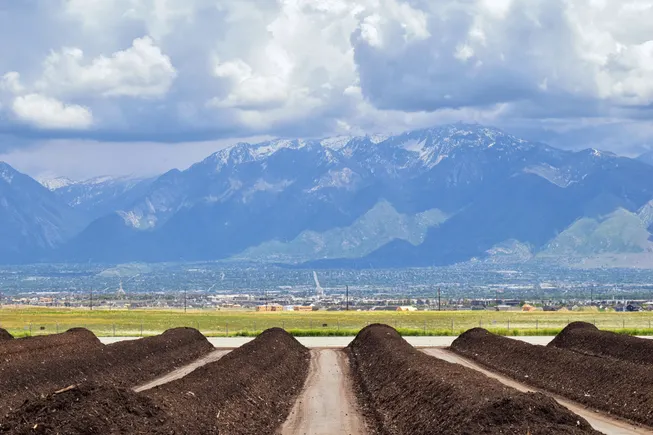
In early 2022, California initiated a major change in the food waste sector, requiring local jurisdictions to provide organic waste collection services. While this part of the law has drawn much attention, another provision regarding procurement directly addresses an equally pressing issue—how to handle the growing volume of compost production.
Pressure to reduce emissions related to organic waste is driving the expansion of compost production across the United States. According to a survey by the US Composting Council based on a 25% response rate, producers estimated producing approximately 5.1 million tons of compost in 2020. Such a large volume of soil amendment means the market must also expand in tandem. The survey showed that although landscaping customers purchased 40% of compost in 2020, agriculture used only 10% of the product, and parks and road projects accounted for only a small portion. How to expand the market in a cost-effective manner is driving ongoing surveys, reports, legislative discussions, and sales meetings across the country.
Although government initiatives are expected to boost demand, compost advocates hope that diverse educational strategies will also attract more farmers, ranchers, and landscapers to use this material. Finding new customers alone is not enough—buyers must stay and be convinced that investing time and money in this additive is worthwhile. Therefore, they need more detailed information about when and how the product delivers benefits, and when and how it does not.
"We're not composting for the sake of composting," said Emily Coleman, program manager for circular organics at King County, Washington. "We're focused on putting it in the right place, at the right application rate, so that people will want to continue using it."
Policy Drivers
Policies similar to California's have also made headlines. Vermont has banned sending food waste to landfills, and states such as New York and Connecticut are also on the list of states requiring large waste generators to recycle organics.
In some cases, states also pass legislation to make public projects reliable customers. California's new law requires local jurisdictions to procure a certain amount of recycled organic products, with compost being one of them. Since 2020, Washington State has required government-funded projects to apply compost where the material is suitable. This requirement covers transportation departments, natural resources departments, park departments, and others, and may help the state achieve its goal of halving food waste generation by 2030.
Builders or landscape architects who win construction projects—especially those involving soil improvement—are now more likely to see compost use requirements in their final contracts. Coleman of King County said that not many completed projects have been affected by Washington State law yet, but the number of proposals requiring compost in technical specifications is increasing.
The Natural Resources Defense Council (NRDC) hopes municipalities across the United States will also adopt this legislative strategy. Last August, the organization released a downloadable, modifiable model bill requiring publicly funded infrastructure projects to consider or use compost. Ideally, communities can adapt the model bill to fit local circumstances.
Part of the model bill states that compost should be selected as long as its cost is not unreasonably high. NRDC defines "excessively costly" as being 10% more expensive than alternatives. Local governments may modify this percentage, as well as details such as how much compost constitutes meeting application standards under different conditions.
Although the model legislation addresses public compost procurement and use, Darby Hoover, a senior resource specialist at NRDC who helped draft the bill, hopes contractors will also bring this habit to private projects. "If a municipal agency requires compost use, the contractors they use may also serve other private projects, and these contractors may have already established procedures and could offer them to new clients."

Closing Deals
If nonprofits like NRDC hope that one customer's compost use will eventually attract other customers, industry salespeople are the ones ensuring that goal is achieved.
Charles D. Duprey, president and founder of Naturcycle, a consulting and compost sales company, said that compost transportation and spreading are most profitable in bulk operations, so companies strive to maximize the volume of compost delivered to a site.
For example, a compost delivery to a park might prompt a salesperson to contact nearby businesses or residents in advance to see if the spreading operation can extend beyond the property boundary into the next customer's yard. This "piggyback" strategy can attract new buyers who might otherwise be difficult to integrate into the compost supply chain. Compared to conventional fertilizers, new customers are less familiar with compost options, equipment, and companies.
"Applying compost to something like a sports field is a bit more complex than fertilizer you can buy at Home Depot for $50 and spread with a spreader," Duprey said.
Salespeople often show buyers how to obtain equipment or who to contact for spreading services. When a neighboring property has already solved the logistics, new customers can avoid the same hassle.
If a potential customer is considering how to handle compost, they may have already overcome some other common perception barriers. In compost market opportunity assessments conducted for King County, Washington, and San Diego County, California, surveys of producers and potential customers found that people are often unsure what compost is, let alone why to use it and how to integrate it into their agricultural or landscaping operations.
Coleman said that streamlining lengthy educational pitches often involves discussing the compost characteristics that a specific customer is most interested in. In her experience, transportation departments responsible for building or maintaining roadside slopes are most concerned about how compost slows soil degradation. For King County's Water and Land Resources Division, the additive is most important for maintaining or enhancing soil health.
Convincing people to try compost inevitably involves discussing costs. Comparing shelf prices by unit weight, conventional fertilizers are often more expensive than compost. However, Ryan Serrato, vice president of product marketing at compost facility WeCare Denali, said the amount of compost a plot may need, along with the cost of transporting and spreading this heavy material, makes the entire operation more expensive than spreading an equivalent amount of fertilizer.
Customers served by the company can typically purchase large quantities of compost at once, such as contractors or excavators doing topsoil work for large facilities, but transportation distances should be as close to the compost source as possible—ideally within 50 miles. "If it's transported too far, many projects become too costly to participate," Serrato said.
In Washington State, financial barriers are as high as mountains: the Cascade Range separates more densely populated areas that generate food waste from farmland where large amounts of compost can be applied. Coleman said that crossing this distance is too costly, and the amount of fuel required could undermine the environmental benefits of compost.
Government-funded projects can offset some costs. Federal agencies such as the US Fish and Wildlife Service and even the Federal Emergency Management Agency support grant programs where recipients may install rain gardens or other facilities that absorb rainwater rather than draining it away. Duprey said these projects typically rely on compost during construction or maintenance. The industry-supported COMPOST Act, currently under consideration in Congress, would allocate $200 million annually through 2031 for compost infrastructure grants, potentially including market development efforts.
Experts also note that broader cost-benefit analyses can make compost prices seem more reasonable. Unlike fertilizers, compost stabilizes soil and reduces irrigation needs. This investment can reduce spending on other site management measures. Serrato pointed out that some states require licenses for those who spread fertilizer, while applying compost does not require that financial and time investment.
Coleman said that everyday value comparisons also rarely account for the extractive harms of typical fertilizers. For example, natural gas is a feedstock for synthetic fertilizer production plants. For individual buyers or communities concerned about the costs of climate change, an additive that repurposes materials that might otherwise contribute to landfill emissions may be worth the upfront investment.
"There's a cost, and there's value, and we sell value," Serrato said. "It's the environmental impact, the agency's image, and the long-term benefits compost brings."
Market Boundaries and Prospects
When potential buyers lack good answers to their questions about compost, researchers begin their work.
From a commercial perspective, this may mean designing value-added products or blends tailored to intended application scenarios.
WeCare Denali offers several such products—one is a blend specifically designed for engineered green roofs, a market the company hopes to penetrate further. The company's research team is also studying what components might be included in compost blends for hemp farms. Serrato said that indoor or outdoor facilities may benefit from different types of compost.
State transportation departments also want to conduct their own research. State agencies such as the Iowa Department of Transportation, the Minnesota Department of Transportation, and the Maryland State Highway Administration have hired Allen P. Davis and Ahmet Aydilek, professors of civil and environmental engineering at the University of Maryland, as consultants to study how different soil retention materials perform under local conditions.
Transportation agencies responsible for maintaining hundreds of miles of roadside embankments against collapse could be large compost customers—Washington State agencies do purchase some compost, Coleman said. But Aydilek said that humidity, rainfall, severe storm types, and other roadside stressors determine the costs and benefits of compost.
In their roadside maintenance reports, Davis and Aydilek have never advised agencies to avoid compost (although Davis has advised against using the material in other stormwater control scenarios). Instead, depending on departmental priorities, they may have different ideas about how compost fits into maintenance work. Aydilek said a department might want to shift from applying a layer of additive at the top of a slope to pressing the application layer deeper beneath the soil surface.
Other research can answer more fundamental questions about compost efficacy. A particularly hot research area is carbon farming—where compost on farmland or rangeland helps sequester atmospheric carbon in the soil.
States and the US Department of Agriculture have or are studying grant programs to encourage these potential carbon removal efforts. California's Healthy Soils Program helps farmers and ranchers fund projects including soil carbon sequestration, and waste and recycling companies have also participated. For example, Recology has partnered with at least 10 farms to supply the required compost. Researchers in Washington State are studying the feasibility of similar initiatives in the region.
As programs grow, there is also an increasing need to understand which strategies truly achieve the intended climate benefits. The science of how compost introduces carbon into soil is complex, said Jeff Creque, co-founder of the Marin Carbon Project and director of the Carbon Cycle Institute.
This "storage" also lacks the permanence people typically envision for carbon sequestration projects. Creque said that agricultural and rangeland projects always lose some carbon to the atmosphere. However, depending on land management practices, the cyclical flow of carbon in the environment can result in more carbon entering the land than being released, producing a net storage effect.
The success of any soil carbon storage strategy depends on how farmers till their fields, or what they plant or don't plant after harvesting main crops.
"The carbon sequestration effect of compost use (in soil) varies greatly," he said. "You can always do more research on this issue."
For now, Creque believes that advice on how to make compost application more cost-effective is a more pressing issue for farmers. Increasing plant productivity or reducing irrigation amounts remains highly attractive. Creque said that depending on the crops grown, achieving these benefits may require different application methods.
New technologies for applying compost to a wider range of scenarios can help boost the product market, but advocates, retailers, and researchers still see endless land that could use such large volumes of compost.
NRDC's Hoover said that the benefits of producing and utilizing compost—especially avoiding greenhouse gas emissions—mean market stagnation is not a concern. The bigger worry is that if valuable organic waste is not recycled, landfill-related emissions will rise.
"We're already doing things that don't work, so let's redirect more resources to what actually works," Hoover said.
Looking ahead, how to handle this "black gold" diverted from waste streams may be answered by an ever-expanding list of options.
"Compost can have an infinite number of uses," Creque said. "How can you do research on infinite possibilities?"