
Glass Recycling Revival: Specialized Drop-off Points and Dedicated Collection Programs Gain Momentum
Glass recycling in the United States is showing signs of recovery after community cutbacks. More local governments and entrepreneurial organizations are using models such as source separation, drop-off points, and dedicated collection to control costs while increasing glass purity and recycling value. According to U.S. Environmental Protection Agency data, in 2018, approximately 3.1 million tons of glass containers were recycled nationwide, with a recycling rate of 31.3%, and the industry target is to reach 50% by 2030.
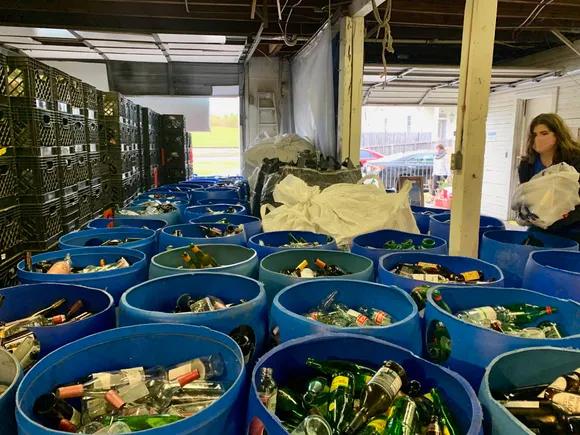
Over the past year, glass recycling advocates have seen hope: compared to previous years, fewer communities have canceled glass recycling programs. Now, some areas are not only stopping cuts but are also working to bring glass back into recycling systems. Many efforts stem from creative solutions at the local level—enhancing the value of glass through source separation, thereby boosting recycling.
"We've seen a significant shift in communities giving up glass recycling," said Scott DeFife, president of the Glass Packaging Institute (GPI). "Glass is returning in many different regions, and we've gotten better at exploring new collection methods."
According to U.S. EPA data, about 3.1 million tons of glass containers were recycled in the U.S. in 2018, a recycling rate of 31.3%, the most recent year for which data is available. The agency derived this figure by aggregating data from organizations such as GPI and state environmental agencies. According to GPI's ten-year roadmap, the glass container industry aims to increase the recycling rate to 50% by 2030.
Total recycling volumes remain below pre-pandemic levels, but GPI has noticed that more communities are proactively seeking help to restart glass recycling and produce higher-quality, cleaner glass streams.
"For us, recruiting more cities and businesses to participate has been a fairly smooth process," said Piercyn Charbonneau, commercial project manager at Ripple Glass, a recycling company based in Kansas City, Missouri. Founded in 2009, its initial drop-off program has continued to expand, and it launched curbside collection services last year.
"More and more cities outside the Kansas City metro area are contacting us, asking how to replicate our program," Charbonneau said.
Ypsilanti, Michigan, and Laconia, New Hampshire, are among the communities bringing glass back into curbside collection. Communities such as Marquette, Michigan; Gwinnett County, Georgia; and Lexington and Greensboro, North Carolina, have instead turned to or expanded glass drop-off collection rather than curbside pickup.
Some glass recycling disruptions stemmed from haulers choosing not to carry the material; others resulted from city managers quickly cutting budgets when recycling costs soared. Laconia was one of many municipalities that canceled glass recycling due to skyrocketing recycling costs and cheaper landfilling.
"Even though glass has good end markets, it was lumped into the mixed material rate," DeFife said. "It was a way to shift budget costs from recycling to landfill... The economics of landfill versus recycling had become unbalanced."
Since then, recycling costs have dropped significantly in many areas, prompting cities to explore new glass solutions. DeFife said that after deposit systems, curbside collection remains the best option for capturing large volumes of clean material. Ideally, glass should be collected separately at the curb, and he believes that extended producer responsibility schemes set to take effect in some states could fund this model.
Amid these shifts, the use of recycled glass in containers is growing as pressure to reduce plastic increases. The current challenge lies in implementing the most efficient combination of collection and transportation systems to capture supply and meet growing demand. A range of specialized local solutions is emerging to fill this gap.

Quality and Economics
Keeping collected glass processed locally reduces transportation costs for this notoriously heavy material. This is especially important at a time when labor disruptions and other supply chain issues have driven up transport costs.
Programs can only remain local when processing plants and/or end users are nearby, thereby preventing transportation costs from eroding profits and efficiency. Over the past five years, the closure of several large glass storage and processing facilities has exacerbated recycling challenges across the country, leading communities near these facilities to abandon glass recycling rather than ship it long distances. But new plants are emerging to meet demand.
A new glass storage facility at the Fergus Falls Transfer Station in Minnesota received its first materials in early January. The facility will accept materials collected from Otter Tail County glass drop-off sites, which together collect about 750 tons of glass annually.
In Connecticut, the Housatonic Resources Recovery Authority partnered with Strategic Materials and Urban Mining last year to bring glass recycling to 14 communities. Residents drop off separated food-grade glass at a dozen sites, which is processed at a newly operational plant nearby.
Glass recycling has returned to central Michigan, largely thanks to nonprofit Recycle Ann Arbor upgrading equipment at a recycling facility that closed five years ago.
New facilities and new processing capacity are part of a growing wave of investments, large and small, in glass recycling infrastructure. DeFife said these upgrades were long overdue and are crucial for launching or restarting glass recycling programs.
"The entire U.S. recycling system must do better at producing higher-quality products, but that requires investment in equipment and material collection," he said.
Some MRF operators and material processors dislike glass in single-stream recycling because it is heavy; broken shards can jam equipment or stick to other materials, while debris from other materials can adhere to glass, reducing its value. Modern glass programs are revisiting a concept from decades ago to improve quality: collecting materials separately rather than tossing everything into one bin. As material quality rises, so does its value.
"When glass is collected curbside in single-stream, it's not really collected properly; that method of material handling is very inefficient," Charbonneau said. "We're quite proud of our data. We've increased glass recycling in Kansas City from about 3% to 20%."
Ripple launched its commercial collection program in 2018 and now works with more than 300 bars, restaurants, sports venues, and event spaces. The program's success prompted the company to launch a residential curbside collection program last year.
Currently, a six-month pilot covering 650 households is halfway through, with the first participating city being Roeland Park, Kansas—a city that had eliminated glass recycling for nearly two decades.
"We believe there is strong public desire to restore this service," said Roeland Park Mayor Mike Kelly. "We want to make it as easy as possible for residents to recycle and divert waste, so we're excited to try this pilot."
Kelly said regional glass recycling faces challenges such as industry conditions and economics.
"The trash haulers currently providing recycling services do not accept glass," he said. "This is a unique problem that requires a unique solution."
Ripple's core services have expanded to regions in nine states, collecting 40,000 tons of glass last year. The company hopes to partner with a second community for a curbside pilot this year. Currently, the city funds the curbside program, though it did not specify what share of its overall material management costs the program represents, but the model may evolve. For example, future options could include direct fees to residents.
"We want to see more glass growth," Charbonneau said. "Our end users seem to have an insatiable appetite for recycled glass, so we're always looking for more ways to get more glass into our system, process it, and deliver it to them."
Kelly hopes other communities in the Kansas City area will join in, as a regional approach provides continuity of service and economies of scale.
"We're not afraid to be leaders here and see how it goes," he said. "Several cities are watching us, asking for diversion or participation rates weekly. I think this will be a great data point."

Grassroots Power
Citizen advocates are driving many new programs, whether by pressuring local governments to develop glass recycling solutions or by launching initiatives themselves.
For example, respondents to a recent survey in Cass County, Nebraska, ranked glass recycling as the top service they want the county to add but that is currently unavailable. Officials in Sewickley, Pennsylvania, are seeking a permanent glass collection site due to increasing resident requests.
In Louisiana, Franziska Trautmann said she co-founded glass collection and processing organization Glass Half Full with Max Steitz in spring 2020, "because New Orleans had no reliable glass recycling program... all our glass was going to landfills."
After learning about Louisiana's coastal erosion problem, the two came up with the idea of turning collected glass into sand that could be used for coastal restoration. They launched a crowdfunding campaign to buy their first small glass crusher and later raised $100,000 through crowdfunding as the business expanded.
Glass Half Full transitioned to a self-sustaining, revenue-generating business model by launching a glass pickup service and selling processed products. The subscription service now covers neighborhoods across New Orleans, and the company still offers free drop-off at its facility. The organization is private and does not accept government funding, but is open to working with local governments. In addition to its own crusher, the organization owns its own trucks and vans for transporting glass.
"We didn't want to ship anything too far because transportation has environmental costs," Trautmann said. "We ultimately decided to turn it into sand so we wouldn't have to ship it to a plant."
To date, the enterprise has collected over 750 tons of glass and hopes to expand to other regions. While agencies from multiple cities have made inquiries, Trautmann said the initial focus will be on expansion within Louisiana and the broader Gulf South region.

Think Globally, Act Locally
Some regional and national entities are investing in local glass recycling programs, a major sign that the concept is scaling up.
GPI provided funding last year for the "Don't Trash Glass" pilot project in Chicago. Bottles collected from bars and restaurants during the pilot were used to produce new products including bottles and fiberglass. Pilot partners also brought in help from GlassKing, which launched a similar commercial collection program in Phoenix in 2018.
DeFife said local programs are more flexible because they don't face the same level of red tape or legislative hurdles as national efforts. For example, establishing federal recycling legislation could take a decade. But local programs take shape much faster and can be tailored to the communities they serve, rather than trying to be all-encompassing.
"At the local level, when someone can demonstrate a system that works, innovation and entrepreneurship can move quickly," DeFife said. "They're easier to manage, and you have more partners willing to collaborate."
O-I Glass, one of the world's largest glass packaging manufacturers, launched its locally focused Glass4Good (G4G) program last year. The program collects glass in communities near its plants and gives back to those communities.
Residents drop off glass at collection centers, and O-I converts the material into cullet for its production. The weight of the community's recycled content is converted into a dollar amount, with 100% of the funds donated to local charitable organizations.
"We're really trying to find ways to help them create efficiencies in their local glass recycling infrastructure, with the added benefit of social engagement," said Jim Woods, public affairs manager for O-I's Northern Americas division. "In some cases, we enter these communities when they're paying to ship cullet elsewhere, even though there are local options to recycle and create efficiencies."
Transportation is not a pressure point because these programs are only 2 to 30 miles from O-I plants. The company uses its own infrastructure or facilities already available in the community. However, in some cases, communities may need to invest in items such as roll-off containers or storage bins.
"It requires case-by-case communication with communities to understand the barriers they face," Woods said. "Let's... ensure you're not only helping the environment by avoiding landfilling fully recyclable materials, but also doing good in the community through the donation program."
As of December 31, G4G had collected 80 metric tons of material, a volume expected to grow this year as new community partners join. James City County and Danville, Virginia, became the first G4G communities last year, with others in Colorado, Indiana, Ohio, and Texas planned.
Organizers of all the new glass recycling programs emphasize that understanding each community's specific needs, resources, and challenges is crucial to implementing successful programs.
Achieving higher recycling rates won't happen overnight. Total recycling volumes remain below pre-pandemic levels. Although fewer communities have suspended glass collection, such cases still occur across the country. However, leaders of these new programs believe their work is a good start toward revitalizing glass recycling.