
Bottle and Can Deposit Bill Reform Struggles: Realistic Dilemmas Amid Rising Packaging Policy Attention
Reform of bottle and can deposit bills in the United States has stalled in most states, but Connecticut recently signed a bill expanding the scope of recycling and raising the deposit to 10 cents, marking a rare breakthrough. Industry experts note that systemic issues, brand recycling commitments, and competing interests among stakeholders complicate the reform.
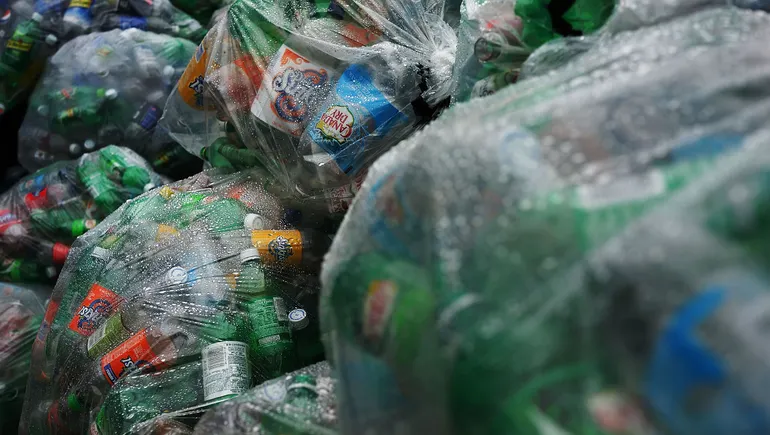
During this year's Super Bowl, viewers may have noticed a high-profile advertisement from the American Beverage Association inviting consumers to recycle their bottles so they can be made into 100% recycled containers. The ad's message seemed simple: "Please help us get every bottle back." The trade group, which represents soft drink companies like Coca-Cola and Pepsi, had an optimistic tone that masked a decades-long policy battle over bottle deposit laws across the nation.
Recycling industry experts, the beverage industry, waste haulers, and recycling center operators have long navigated high pressure and conflicting interests while trying to solve the problems these state-level systems aim to address—"getting every bottle back."
Complex Systems, Complex Problems
Building and maintaining a well-functioning container deposit system is no easy task. Although lawmakers in several states this year pushed for updates or expansions to deposit laws, as most state legislative sessions have ended, few bills have passed or are expected to pass.
A recent bill in Connecticut was a notable exception. The state, which has one of the lowest recycling rates in the nation, saw Governor Ned Lamont sign a bill on June 16 that allows the state's recycling program to accept more types of containers and doubles the bottle deposit to 10 cents—the most significant update since the state's bottle bill was first enacted in 1978.
These changes in Connecticut may signal that as brands face pressure to use more recycled materials, parties are beginning to make more compromises over system control, and the national discussion on how best to operate container deposit systems is becoming more nuanced. Stakeholders are advancing this process through bottle bill legislation or proposed extended producer responsibility (EPR) programs for packaging.
For bottle bill supporters, repeatedly introducing but failing to pass legislation is a familiar and frustrating cycle. Susan Collins, president of the Container Recycling Institute (CRI), said significant changes are needed to prevent containers from being discarded and to bring them into the recycling system to be made into products and packaging. Many states introduced deposit systems in the 1970s and have made only minor updates to the laws since then. Collins is based in California, a state that has struggled to update its container recycling system amid widespread recycling center closures and battles over program funding.
"These bottle deposit systems don't just have one small part that's broken—they have a series of systemic failures that have built up over time," she said in an interview in March. "But we're running out of time to fix them."
Container deposit laws, often called bottle bills, place a refundable deposit on beverage containers to incentivize consumers to recycle them. Depending on the state and container type, consumers typically receive a refund of 5 to 10 cents when they return empty containers to designated locations such as grocery stores or recycling centers.
Looking at the current landscape of U.S. bottle bills reveals that significant changes often take a long time. Currently, 10 states plus Guam have container deposit laws, but the most recent state to pass a new law (Hawaii) did so 16 years ago. The last major state-level update occurred in 2017, when Oregon increased its deposit from 5 cents to 10 cents.
Problems dragging down these container deposit systems include high operating costs, declining redemption rates, a shrinking number of redemption centers, and issues with how money flows through the system. Advocates argue that existing systems must be modernized by expanding the types of bottles and cans that can be redeemed, raising deposits to match inflation, modernizing collection infrastructure, adjusting participation requirements, or a combination of these measures.
"There are many beverage containers today that were almost unheard of nearly 50 years ago when the (Vermont) bottle bill was passed," Vermont State Rep. Kristi Morris said at an April hearing emphasizing the state's efforts to update its bottle bill, citing sports drinks as an example of modern products not covered by the current law. Lawmakers did not pass the bottle bill update before the session ended, but the measure is expected to be reintroduced next year.
Supporters say bottle bills help reduce litter and produce a cleaner stream of recycled materials that can be made back into bottles, and depending on the state system, may generate revenue for the state or organizations. Bottle bills are also seen as a key way to obtain enough material to meet manufacturer commitments to use more recycled content in their products.
"Post-consumer recycled content mandates are effective at driving demand for recyclables, especially when combined with deposit return systems, which can increase volume and supply while minimizing contamination or maintaining purity," said Elizabeth Balkan, director of Reloop Americas, at the Northeast Recycling Council conference in March.
In bottle bill states, container litter rates are typically significantly lower than in states without such laws. According to a report by Reloop, which tracks the effectiveness of deposit systems in the U.S. and internationally, beverage container litter in states without container deposits is roughly twice that of bottle bill states, according to another summary report by Keep America Beautiful. "Bottle bill systems help achieve or solve some of the quality and quantity issues that may hinder effective recycling of beverage containers," Balkan added.
Beverage companies, retailers, and some waste haulers and MRF operators oppose bottle bill proposals nationwide for a variety of reasons. Some argue that many bottle bills established over 40 years ago have outlived their useful life and are now too expensive or outdated to fix. Others say bottle bill systems directly compete with curbside recycling programs, removing valuable materials from MRF streams and making it harder for recyclers to cover operating costs, thereby raising the cost of curbside programs and reducing their efficiency and reliability for residents.
Even some bottle bill supporters worry it may be too late to make meaningful changes. Iowa's bottle bill update failed again this year after years of attempts. After the session ended in May, State Rep. Brian Best wrote in an op-ed that if the state cannot find a way to channel more money to the recycling centers that collect the state's cans and bottles, "the entire system will eventually collapse from within." Lawmakers said the bill will be reintroduced next year; however, "the problem is that many people have different ideas on how to solve the issue but can't agree on the details to draft a bill," Best said.
Another long-time opponent of bottle bills is the beverage industry, which generally views them as an unfair tax that funnels unclaimed deposits, known as escheats, to state governments that do not always spend the money on recycling-related efforts. Some in the beverage industry also argue that it is unfair that beverage distributors sometimes pay processing fees to handle empty containers.
The American Beverage Association has in the past been vocal in opposing bottle bills, calling container deposits "expensive, inefficient, and outdated systems" that do little to help beverage companies recover containers to make new products. The association has typically favored programs that strengthen curbside recycling, saying they are more convenient for residents.
However, the American Beverage Association is now "open to discussing any system that will help us get our bottles back," said William Dermody, vice president of media and public affairs for the association. The beverage companies it represents have committed to using more recycled content in their containers and have a vested interest in such systems. "That means recognizing that there may be hybrid systems that work together to move us toward a circular economy," Dermody said.
Supporters of the U.S. Plastics Pact, which includes several beverage companies represented by the American Beverage Association, now also say they support container deposit systems as part of a circular economy strategy.

The Driving Force Behind Brand Commitments
Stakeholders on all sides of the debate agree that more bottles need to be recycled, but one fundamental area of disagreement lies in the market demand for recycled bottles and who has the right to access these containers.
Over the past few years, several major beverage brands, including Coca-Cola, Pepsi, and BlueTriton Brands (formerly Nestle Waters North America), have set goals to use more post-consumer plastic in their containers. Coca-Cola's "World Without Waste" campaign proposes to "collect and recycle the equivalent of every bottle or can it sells globally by 2030" and has committed to increasing the use of recycled PET in its plastic bottles to 50%. Nestle Waters said in 2020 that more than 16% of its containers use rPET, with a target of 50% by 2025.
Meanwhile, two states now require beverage brands to use more recycled material in their bottles. Last year, California passed the nation's first law mandating minimum recycled content for plastic beverage containers, with a minimum of 15% starting in 2022. In May, Washington state passed a law requiring more recycled content in plastic beverage containers as well as in containers for trash bags and household and personal care products. By 2023, recycled content in many types of plastic containers must be 15% by weight, rising to 50% by 2031.
Steve Alexander, president and CEO of the Association of Plastic Recyclers, expects more states to pass such laws in the coming years, further driving demand for recycled resin. "I do see significant changes coming, with brands more focused on using recycled materials and designing packaging that is recyclable and compatible," he said.
Collins said minimum recycled content standards in places like California and Washington can steer beverage brands away from virgin resin, which is cheaper than recycled resin and requires no special handling to meet manufacturers' food-grade standards. Bottle bills also play a role in providing a clean stream of plastic that can meet these standards, because plastic collected from bottle bill programs is not mixed with other recyclables or trash as it is in curbside recycling. Making food-grade resin from plastic collected at the curb is much more difficult because reducing contamination is more time-consuming and expensive, Collins said.
Collins believes curbside recycling programs alone cannot provide enough high-quality containers to meet current demand for recycled resin, let alone future brand commitments. Currently, these manufacturers are using only a fraction of the recycled resin they need.
"The historical usage of recycled PET in food containers and beverage bottles has been very low, as low as just 5% or 6%, meaning 95% is virgin material," Collins said. She acknowledged that several companies use 100% recycled content bottles, such as BlueTriton Brands' PureLife water, but said these products are a drop in the bucket compared to the total volume of plastic beverage containers brands make each year. Collins estimates that of all PET used annually for food and beverage containers, about 8% is recycled PET.
"To recover containers at the rate these companies need to meet their goals, we also need to invest in changes to the deposit framework," she said.
Supporters of a national bottle bill provision in the broader Break Free From Plastic Pollution Act say a nationwide 10-cent deposit on every bottle would bring more containers into the market. "We need a national bottle bill to meet these future demands," said Heidi Sanborn, executive director of the National Stewardship Action Council (NSAC).
According to the Reloop report, about 140 billion beverage containers are discarded or not recycled each year, but if the U.S. implemented a national bottle bill and achieved a 90% redemption rate (similar to Oregon's program), the number of wasted beverage containers could drop to just over 22 billion annually.
AMERIPEN, which represents packaging manufacturers, has not formally endorsed the strategy, but its executive director Dan Felton acknowledged in a March discussion with the Northeast Recycling Council that a national 10-cent bottle deposit system "would be an important way to help get more bottles back into the system."
In recent years, container manufacturer trade groups such as the Glass Packaging Institute have emphasized support for bottle bills, in part because of the high quality of the material they generate. Bottle bill programs "provide a much-needed stream of high-quality recyclables for our respective manufacturing processes," the group wrote in a 2020 joint letter with the Can Manufacturers Institute, the PET Resin Association, and the Aluminum Association. The coalition urged bottle bill states not to suspend container collection during the pandemic (when many states temporarily did so), saying the reduced material volume would harm their manufacturing processes.
But the beverage brands that use these containers have been far less receptive to bottle bills, and their largest trade association, the American Beverage Association, has called such systems "outdated." The group argues these policies make it harder for people to recycle because the systems require residents to bring bottles to stores or redemption centers rather than leaving them at the curb.
Dermody of the American Beverage Association said the association has softened its stance over the past few years and now favors multiple approaches to help beverage companies achieve their primary goal—as they stated in their Super Bowl ad: getting bottles back and turning them into new bottles. The group's approach is through its "Every Bottle Back" program, which funds collection and processing infrastructure and recycling awareness campaigns.
Beverage brands need a steady source of recycled plastic to make new bottles, "and our dissatisfaction with deposit systems has been that they don't operate well and performance varies depending on how the system is set up," he said. "When it comes to deposit systems, many are broken and many are bankrupt. We want reform to help them operate better. That could mean consolidating existing systems or exploring new ways to handle recyclables."
Collins said that message sounds good, but she believes the group's investment in Every Bottle Back is hindering the expansion of national bottle bills rather than fostering long-term recycling solutions. "The bottle recycling program sends a message that they want to recycle, but the contradiction is that they are the very force lobbying against expanding container deposit laws," Collins said. "This is really an investment in a public relations campaign."
This struggle played out in Connecticut, where the final bill underwent multiple last-minute amendments and updates to accommodate the beverage industry. Changes included sharing some of the deposits with distributors and allowing them to potentially create a regulated program similar to Oregon's.
State Rep. Mary Mushinsky, one of the bill's sponsors, was unhappy with the last-minute additions but said they were key to the bill's passage. "The beverage and liquor industries are very powerful, and that's why other states can't pass bills, and it's why we had to accept some compromises I didn't like," she said.
Collins said the regulated organization model in the bill lacks "transparency and accountability," but the American Beverage Association welcomed strategies that give its members more say in how bottles are handled. Earlier this year, the group proposed replacing Connecticut's current bottle bill system with an alternative that would create a producer responsibility organization managed by bottle manufacturers and distributors.
Bree Dietly, a principal at Northbridge Environmental Management Consultants who testified at the March hearing on behalf of the American Beverage Association, said such systems are a better alternative because producers have an incentive to fund a system that helps with redemption, collection, and processing of containers.