
Biden administration prioritizes environmental issues, but recycling industry expects limited federal policy progress in 2021
After the Biden administration took office, its primary environmental agenda focused on broader climate change policies, environmental justice, and listing PFAS as hazardous substances. At the congressional level, recycling-related bills that made no progress in 2020 are expected to be reintroduced, but legislative space is limited due to the impeachment trial, the aftermath of the Capitol incident, and the pandemic crowding the agenda. Industry organizations expect that major federal recycling policy breakthroughs will be difficult in 2021, and changes at the state level may be more significant.
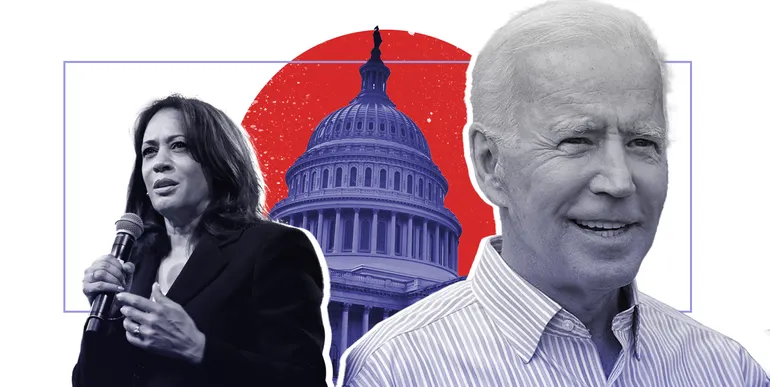
This article is part of the Waste Dive 2021 Outlook series, which explores trends expected to impact the industry in 2021. For insights on business trends affecting other industries, see the Dive 2021 Outlook.
Interest in addressing the nation's recycling challenges at the federal level remains strong, but even with new leadership in the Biden administration and Congress, the recycling industry is not expected to see major changes this year.
The Biden administration's primary environmental agenda focuses more on broader climate change policies, environmental justice, and designating per- and polyfluoroalkyl substances (PFAS, sometimes called 'forever chemicals') as hazardous substances. In Congress, recycling-related bills that did not advance in 2020 are expected to be reintroduced, but lawmakers have limited bandwidth as Congress deals with the impeachment trial of former President Donald Trump, matters related to the January 6 U.S. Capitol riot, and the ongoing COVID-19 pandemic.
"You're going to see a lot of activity (related to recycling) this year, but I'm not sure you're going to see a lot of actual action because these legislators have other priorities," said David Biderman, executive director and CEO of the Solid Waste Association of North America (SWANA).
Recycling bills expected to be reintroduced
In recent years, discussions on how to improve the domestic recycling system have entered the congressional spotlight, partly because waste import bans in China and other Southeast Asian countries significantly altered the flow and economics of U.S. materials.
These discussions have manifested in several bills that could address recycling infrastructure improvements, public education, and end-market issues. Industry groups and lawmakers hold differing views on which of these is the most important avenue to solving the problem.
The Break Free From Plastic Pollution Act, introduced in 2020 by Rep. Alan Lowenthal (D-Calif.) and then-Sen. Tom Udall (D-N.M.), would require extended producer responsibility (EPR) and product stewardship for packaging, plastic bans or reduction measures, and a nationwide 10-cent beverage container deposit program.
Heidi Sanborn, executive director of the National Stewardship Action Council, said the bill is 'likely to make a strong comeback' in 2021. The new Democratic majority in the Senate could play a role in advancing the bill through Congress, as could the multiple environmental groups that supported it last year and 'voters who voted for Biden partly because of the environment and his views on climate change.'
Judith Enck, a former EPA regional administrator and president of the nonprofit Beyond Plastics, said the bill stands out among other recently proposed recycling-related measures because it is 'the only serious bill that truly includes provisions to reduce the production, use, and disposal of plastics.'
The bill will need to find a new Senate sponsor following Udall's retirement at the end of 2020. Lowenthal, along with Rep. Katherine Clark (D-Mass.) and Sen. Jeff Merkley (D-Ore.), have announced plans to reintroduce the bill in the new Congress.

Democrats hold a slim majority in the House and are evenly split in the Senate — relying on Vice President Kamala Harris' tie-breaking vote — meaning they may need to make concessions or moderate certain provisions to win over Republicans, said Jim Riley, chief legal counsel and senior vice president of government affairs at the National Waste & Recycling Association (NWRA). However, two other bills expected to be reintroduced in 2021 previously garnered bipartisan support.
One is the RECYCLE Act, introduced last year by Sens. Rob Portman (R-Ohio) and Debbie Stabenow (D-Mich.). The bill aims to improve recycling outreach by authorizing up to $15 million annually in grants for recycling education and promotion for entities such as state and local governments, tribes, and nonprofits. It would also require the EPA to more frequently update guidelines for products containing recycled content. The Institute of Scrap Recycling Industries (ISRI), NWRA, and SWANA all supported the bill last year, saying it would help increase recycling participation rates and clean up the recycling stream.
Another bill that could return is the RECOVER Act. Introduced last year by Reps. Tony Cárdenas (D-Calif.) and Larry Bucshon (R-Ind.), it would support infrastructure projects through up to $500 million in matching grants for improvements to material recovery facilities (MRFs) and curbside collection systems. The bill also aims to establish a recycling infrastructure program within the EPA.
Industry groups had mixed reactions when the bill was introduced. Billy Johnson, ISRI's chief lobbyist, said the bill focuses too much on addressing infrastructure issues rather than working to improve end markets for materials flowing through the system or first educating the public on what should and should not go in recycling bins. On the other hand, SWANA said supporting education efforts through bills like the RECYCLE Act and the infrastructure elements outlined in the RECOVER Act are both important.
Biderman said the recycling industry expects other recycling-related legislation to be introduced this year based on discussions with stakeholders, and 'if such legislation is formally introduced, we will review it.'
Riley said some new legislation could call for increased incentives for domestic recycling capacity. He said this could come as a standalone bill or as part of a broader infrastructure package. 'I think the COVID-19 pandemic over the past year has highlighted the need for domestic supply chains. The market is naturally recovering, but there should also be incentives in place.'
Organizations like The Recycling Partnership also anticipate 'increased engagement through new legislation in Congress in 2021,' particularly around funding to expand the existing recycling system, CEO Keefe Harrison said during a December panel discussion with Axios and the American Chemistry Council.
Johnson said even if these bills do not become law by the end of the year, lawmakers have an incentive to keep recycling efforts in view because constituents care about having reliable recycling systems and will continue to pressure elected officials to achieve that goal. Public awareness of the recycling industry's importance and its issues has increased since the start of the COVID-19 pandemic, when some curbside recycling programs were suspended, and lawmakers felt pressure to assure constituents they were working to fix broken parts of the system.
Johnson said recycling workers were deemed essential workers by the federal government and many states, 'which helped people start to see recycling in a different light in terms of why it matters, and being formally designated as an essential business in the supply chain further raised awareness of recycling.'
Last year, many recycling-related bills were delayed at the state level, partly due to the pandemic, but lawmakers have the opportunity to move on these issues more quickly in this legislative session, said Anne Germain, NWRA's chief operating officer and senior vice president of technical and regulatory affairs. Several states have introduced EPR bills for packaging, or may introduce legislation to raise minimum recycled content standards.
'While there is a lot of activity on recycling at the federal level, we expect even bigger changes to happen at the state level,' she said.
Biden administration focuses on environmental justice and PFAS
The Biden administration has clearly planned to focus on climate and clean energy initiatives, including rejoining the Paris Climate Agreement.
The administration has not yet announced specific plans or strategies for recycling, though a group of community and environmental advocacy organizations recently called on Biden to implement plastic recycling-related initiatives, such as establishing an office for recycling market development and reduction and appointing a plastic pollution czar.
One pressing issue the administration plans to address is environmental justice, noting that 'communities of color and low-income communities have suffered disproportionate harm from climate change and environmental pollutants for decades.' This renewed federal focus follows recent state-level environmental justice efforts.
Industry groups such as ISRI, SWANA, and NWRA are watching this issue. NWRA added an environmental justice policy position to its 2021 federal legislative and regulatory agenda, stating it 'supports policies aimed at advancing high standards of environmental performance and fair treatment of people of all races, cultures, and incomes.'
SWANA said it is having ongoing discussions with members about the role the recycling industry can play in environmental justice discussions. 'Solid waste facilities strive to have minimal impact on the communities they serve, and we will continue to work with government officials and the industry to minimize those impacts,' Biderman said.
Johnson expects some lawmakers may also incorporate environmental justice language into climate and recycling bills to align their efforts with the new focus. 'They may be changing how they pitch the bills... to show they don't want to cause environmental injustice,' he said.
The Biden administration has also said it plans to address PFAS. Recyclers do not generate PFAS, but they may receive items containing PFAS at MRFs and other processing facilities. While the EPA's recent guidance on PFAS disposal most directly involves landfills and incinerators, Adina Renee Adler, ISRI's vice president of advocacy, said ISRI and other recycling organizations are watching what any future guidance could mean for the recycling industry.
The Biden administration has said it plans to designate these chemicals as hazardous substances and set enforceable PFAS limits under the Safe Drinking Water Act. According to the EPA, maximum contaminant levels have not yet been established for PFAS chemicals.
James Jones, former EPA assistant administrator for the Office of Chemical Safety and Pollution Prevention, said during a recent panel discussion with waste company and investment firm Jefferies that PFAS is a class of more than 2,000 chemicals, with PFOS and PFOA being the two most closely watched.
'I'm confident the EPA will determine within the next two years that (PFOS and PFOA) will become hazardous substances, making them regulated contaminants,' he said. How other chemicals in the class will be handled remains unclear.

Industry watches for new EPA leadership
Other regulatory or policy changes at the EPA could emerge after Michael Regan is confirmed as the new administrator.
Regan, who led North Carolina's Department of Environmental Quality and is known for his work chairing the Environmental Justice and Equity Advisory Board, is expected to continue supporting environmental justice efforts in his new role, Adler said. He is also known for negotiating the cleanup of the Cape Fear River, which had been contaminated with PFAS. It is too early to say what other ideas or priorities Regan might bring to the position, but 'he is highly qualified and known for being collaborative,' Adler said.
Recyclers are also watching who might be appointed as EPA's assistant administrator for the Office of Land and Emergency Management. 'Whoever holds that position will be a key role, and understanding their priorities regarding solid waste — especially recycling — will be very important,' Biderman said.
Recycling industry associations say building strong relationships with the new EPA leadership is crucial because it provides opportunities for feedback and data that could influence major federal recycling policies. The EPA's draft National Recycling Strategy is one example, Biderman said.
Biderman said SWANA had good relationships with former Assistant Administrator Peter Wright, former Administrator Andrew Wheeler, and their staffs, which allowed them to provide 'a lot of input' while the EPA was drafting the document, 'and I hope we get similar access and input with the new administrator's team.'
The EPA's draft National Recycling Strategy, which is expected to be finalized soon, includes priorities such as reducing contamination in the recycling stream, improving domestic markets for recycled materials, and increasing processing efficiency. A key goal is to increase the national recycling rate to 50% by 2030, though related metrics are not yet fully defined.
ISRI has asked the EPA to clarify wording in the draft and define key terms to better distinguish between waste and recyclable commodities, and has urged the federal government to buy more products with recycled content. The strategy has not yet been finalized, 'so we haven't received any signals yet as to whether the new administration will continue this work,' Adler said, but ISRI views the draft document as a good starting point for guiding future U.S. recycling policy. 'The new administration may also bring good ideas,' she said.
Germain said the EPA 'worked hard to create a framework that is inclusive of stakeholders,' and she does not expect too many surprises when the final plan is released. NWRA pushed for the document to include more details on how the U.S. can achieve the 50% recycling goal, 'which we don't think can be achieved on a voluntary basis,' she said. NWRA believes 'legislative intervention' could help the U.S. reach its goal, along with strategies such as mandatory minimum recycled content standards.
It is too early to tell how quickly and in what ways the recycling strategy will influence change. Jones predicted the federal government, as a 'huge purchaser of a wide range of products,' could update its federal procurement requirements during Biden's term to reflect more recycled products.
While it remains unclear how much momentum recycling legislation will gain in Congress in 2021, Germain said the recycling industry will still work to advance its goals in 2021, whether through state-level action or close collaboration with the EPA.
'The EPA under the previous administration was a strong supporter of recycling, and we expect the new administration to be as well. You'll hear that recycling is as American as apple pie,' she said. Among manufacturers, stakeholders, and lawmakers, 'you'd be hard-pressed to find someone opposed to recycling. The question is just how much attention it gets.'