
Five Years After the Pandemic: Lasting Imprints on the Waste and Recycling Industry
When the pandemic broke out in 2020, waste and recycling systems continued to operate as essential services. Five years later, industry participants say operations have largely returned to normal, but the pandemic has left varying imprints on safety protocols, workforce perceptions, recycling systems, and investment directions.
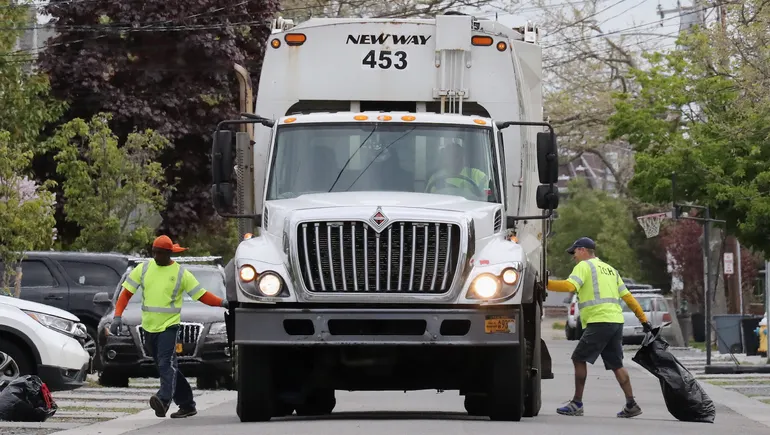
When the pandemic hit in 2020, waste and recycling systems continued operating as essential services. Five years later, industry players say business has largely returned to normal, but the pandemic has left varying marks on safety protocols, workforce perceptions, recycling systems, and investment directions.
The early pandemic dealt multiple blows to the industry: worker deaths and illnesses were unknown in number, commercial waste volumes plummeted, questions swirled about virus transmission routes, and social distancing guidelines made facility operations difficult. The labor market and supply chains took years to recover from these upheavals.
However, compared with other industries, the U.S. waste and recycling sector did not see too many permanent changes, aside from societal shifts like online meetings. Opinions vary within the industry on what exactly the five-year legacy of the pandemic is.
Safety and recognition
Even though state and federal agencies designated waste and recycling services as essential, obtaining personal protective equipment was difficult in the early pandemic. Sources say this prompted the industry to adjust procurement strategies, with some companies placing greater emphasis on health and safety.
Kristyn Oldendorf, senior director of public policy and communications at the Solid Waste Association of North America (SWANA), said in an email that enhanced protocols required during the pandemic have been permanently adopted at many waste facilities, including installing permanent hand sanitizer stations and increasing the frequency of vehicle and facility cleaning. She also noted that many facilities upgraded ventilation systems and paid more attention to employee well-being, including mental health, as tight labor conditions highlighted the need for comprehensive employee support.
Chuck Stiles, director of the solid waste and recycling division at the Teamsters union, said, "I think all companies have become more aware of the dangers of the items employees handle daily. We see companies being better equipped with the necessary supplies." He referred to items such as disinfectants, work gloves, and water.
In the early pandemic, collection workers received more attention, including recognition of their essential worker roles through commercials, but sources say this attention has largely faded.
Stiles said, "Even when waste volumes dropped, they kept working, finding ways to keep each other employed and look after one another." He added that now the employer signal seems to have become "clock in and do the job, no more talk of heroes."
The National Waste & Recycling Association (NWRA) has particularly focused on telling the industry's story and raising its visibility as an essential utility—its trucks appear on streets more frequently than any other vehicle.
Michael E. Hoffman, who became CEO in 2024, said, "We got great public visibility... because we were almost the only thing running on the streets. Those human stories of kids waving to garbage truck drivers at the curb were fantastic. We should have seized that moment and carried it forward."
Meanwhile, some believe certain attention has had lasting effects. David Biderman, who led SWANA during the pandemic and is now a consultant, said, "I think there is greater recognition of the critical role sanitation collection workers play in communities. More people have started paying attention to the waste and recyclables they generate at home."

Changes in waste volumes
Lockdown policies in the spring and summer of 2020 caused commercial waste volumes to plummet, triggering industry-wide financial concerns and layoffs at some companies. At the same time, residential collection volumes surged in both the public and private sectors.
The industry had already been working to improve the financial sustainability of residential contracts, but volume growth and labor tightness made it more urgent for some companies.
Amanda Pratt, senior vice president of communications at Ohio-based Rumpke Waste & Recycling, said, "In the early pandemic, we saw significant increases in trash and recycling volumes." Although Rumpke was able to handle the growth "seamlessly," Pratt said it prompted the company to quickly build relationships with new suppliers, "working together to overcome supply challenges before they impacted customers, while most importantly keeping our team safe. This broader supplier network is still in place today."
The pandemic's impact on inflation also pushed prices higher over a multi-year period.
Michael Vinciguerra, managing director of environmental services at financial services firm Solomon Partners, said the temporary redistribution of waste volumes led haulers to reconfigure pricing agreements. In an email, he said, "Combined with the high inflation environment, waste companies were able to significantly offset volume changes through price increases and maintain new price levels as commercial and residential volumes normalized."
New York City, an early epicenter of the pandemic, lacks precise data on this volume trend but has seen some lasting impacts—including in organics.
The Department of Sanitation (DSNY) coordinated the city's emergency food program, a role that gave workers new insight into food waste, said Josh Goodman, deputy commissioner for public affairs and customer experience. As the city emerged from pandemic restrictions, Mayor Eric Adams' administration implemented a program to remove organics from the curbside residential waste stream.
Goodman said, "It really highlighted the need for organics recycling."
Overall, total residential and commercial waste volumes in the city have declined slightly, but the specific reasons remain unclear. Over the past five years, the city has seen multiple concurrent trends, including a continued decline in office waste and a rapid rebound in retail waste.
These volume fluctuations also rippled through the nation's complex recycling system. Most notably, cardboard that was once generated in clean, baled form at retail stores shifted to smaller, different forms of e-commerce packaging at the residential level.
Myles Cohen, who worked at Pratt Industries in the early pandemic and later founded consulting firm Circular Ventures, said this shift made it harder to capture the same quantity and quality of materials. Cohen said residential recycling contamination rates had already been "deteriorating for multiple reasons" before the pandemic. During the pandemic, MRFs began seeing non-recyclable items such as masks, plastic gloves, and wipes entering the recycling stream.
Although many people have largely returned to in-store shopping habits, Cohen and others say the pandemic did have a lasting impact on e-commerce activity. E-commerce sales remain above pre-pandemic baselines, which has implications for recyclers.
Hoffman said, "There's more fiber in the home, more single-use packaging related to shipping... We've seen a permanent shift in e-commerce." MRF operators have consequently invested in different systems to capture these boxes. Cohen said the increase in OCC in the residential stream is good news, but "we currently capture only about 30% to 35% of cardboard from households," so a significant amount is still landfilled or incinerated.
Another factor in the recycling supply chain—which began with the National Sword market shock but was exacerbated by the pandemic—is the reduction of curbside recycling programs. During the pandemic, several local governments suspended or permanently terminated these programs, though some later resumed.
Biderman said in late February, "There are still communities facing pressure to reduce or eliminate curbside recycling due to perceived economic infeasibility. Recent federal funding freezes could affect several communities over the next year or so." Recent court orders and commitments from the U.S. EPA suggest some federal funding may be restored, but details remain uncertain.

Investment and long-term impacts
The pandemic also once again demonstrated the industry's resilience during difficult economic times.
Vinciguerra said, "Entering 2020, we were already seeing growing attention on essential services, and the pandemic only reinforced that. Waste is a quintessential essential service, and across the sector, we saw sustained performance during difficult times, partly due to waste companies' ability to offset inflationary pressures through pricing."
This sustained financial model has allowed companies to continue growing and investing in new technologies. But opinions differ on how much the pandemic actually played a role in recycling investment.
In the early pandemic, some communities cut recycling services, but supply chain disruptions prompted businesses to seek new sources of raw materials, and demand for recycled materials began to rise.
Tim Stuart, CEO of AMP, cited this as one of several factors driving investment in MRF technology. In an email, he wrote, "These forces accelerated the demand for and adoption of advanced technology. We now see AI addressing other long-term issues beyond labor, such as sorting in mixed waste environments, eliminating entire categories of low-reliability equipment, helping preserve landfill space, and extending landfill life."
Biderman also believes the pandemic drove this shift: "I think the pandemic promoted mechanization in MRFs. This trend had already begun, but labor shortages and health concerns about dense worker contact on sorting lines prompted MRF operators to invest in robots and technology."
Hoffman, however, believes the pandemic may have temporarily hindered the MRF automation trend due to supply chain constraints. He also said that due to the ripple effects of the partial economic shutdown and restart during the pandemic, "structural supply chain issues in categories like vehicle parts still exist today."
In Hoffman's view, a more tangible and recent trend is investment in vocational training for various frontline positions. Although this topic had been discussed before, the pandemic "helped bring urgency" amid tight labor conditions. He said, "Companies are reviving vocational training, not just large companies—smaller operators are also finding ways to restore in-house training because when you do that, retention rates for the people you've invested in are much higher."
One sign of industry resilience is that federal data shows employment in the broader waste management and remediation services category is now well above pre-pandemic levels, even though some operators have reduced staffing through automation. Goodman said DSNY has hired "thousands" of people since 2020, and the city has also established memorials for workers who died during the pandemic.
Goodman said that beyond public perception, workers themselves have gained a new understanding of the meaning of their work to the community: "The pride in the work is real. It was always there, but I'm sure the recognition during the peak of the pandemic has stuck."