
Reworld seeks to expand operations in Connecticut amid waste disposal capacity crunch
Residents in Bristol, Connecticut, continue to complain about noise from Reworld's incineration plant, and the local health district is considering fines. Meanwhile, Reworld, in the final stages of permit approval, intends to co-incinerate biomedical waste at the plant and has proposed building a new facility in Preston to double local incineration capacity. The company believes it can alleviate the state's waste disposal challenges but needs to convince a skeptical public.
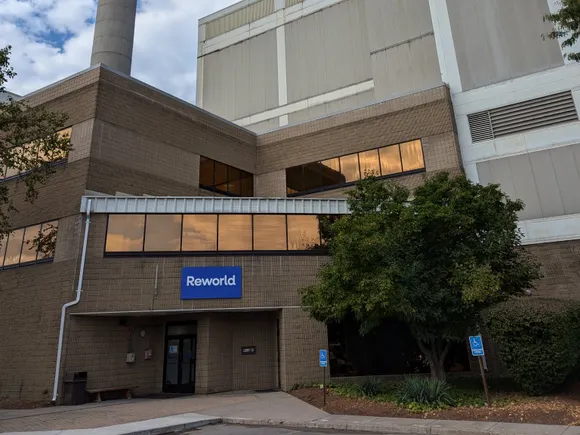
Residents of Bristol, Connecticut, say the noise never stops. For two years, residents of this suburban city west of Hartford have complained to authorities about a "low industrial hum" coming from the large-scale incineration facility in Bristol, operated by Reworld since 1998. The facility was built by a public agency.
The issue has prompted the Bristol-Burlington Health District, which regulates noise, to consider fining Reworld. Rebecca Martinez, who was recently elected for the first time to represent the Bristol district in the state House of Representatives, made one of her first actions introducing a bill targeting industrial noise.Bill, and companion legislation has been filed in the state Senate.
In recent years, the amount of waste shipped out of Connecticut has grown steadily, and officials have sought ways to reduce waste generation and find cheap disposal capacity. Reworld is adjusting its strategy,exiting some West Coast marketsand seeking to expand its portfolio in states where incinerators are aging and have no replacements.
In Bristol, the company is in the final stages of obtaining a permit to burn biomedical waste as part of its overall feedstock. Additionally, it has proposed building a new facility in Preston that would double the capacity of its existing incineration site.
Reworld believes it can provide a key solution to Connecticut's ongoing waste disposal dilemma. But to achieve its ambitious plans, it must convince incineration skeptics of the safety of its operations.
Connecticut's declining disposal capacity
Residents say the company's actions so far to address the noise issue remain insufficient. They also condemn Reworld's attempt to burn biomedical waste at the plant, as well as regulators' willingness to approve such plans.
"Our cars need emissions testing. If the emissions test isn't updated, you can't renew your vehicle registration," said Francis Pickering, a Bristol resident who lives near the plant. "But here, a facility that violates the noise pollution standards of its permit is allowed to renew its permit."
Reworld says it has taken a series of measures to address the noise issue, including upgrading equipment. Despite residents' concerns, the company insists that burning biomedical waste at the plant is safe and effective.
Tom Cortis, senior vice president of Reworld, said community residents need not worry about the medical waste permit, noting that the facility will only accept non-hazardous medical waste. He said these materials will be handled in a safe manner.
"We're receiving waste that would otherwise go to a landfill," Cortis said in an interview. "This is the most sustainable way to destroy this type of material. There's no harm in destroying these materials beyond what it would be to process municipal solid waste."
Peter Egan, a former Connecticut official, said adding biomedical waste processing to the Bristol plant could be a lucrative option for Reworld. He has worked with the state's publicly owned incinerator. He said that as long as it is safe, the state should prioritize allowing Reworld to find new revenue sources, otherwise disposal capacity may continue to decline.
"Reworld making money is crucial for the continued operation of this plant," Egan said. "If Reworld can make more money by accepting medical waste at what I consider a negligible risk, then they should be allowed to do so."
Bristol plan
The Reworld Bristol plant has two large incinerators that can process up to 716 tons of municipal solid waste per day. As of 2021, Reworld has waste acceptance contracts with 14 communities under the Bristol Resource Recovery Policy Committee.
Reworld's initial application to burn biomedical waste at the existing plant called for the capacity to process an average of 57 tons of this material per day on a weekly basis, with a maximum daily capacity of 114 tons. The plant would have a 267-cubic-yard unloading area and additional storage capacity for up to 1,040 trailers.
Under its current permit, up to 8% of the waste Reworld burns in Bristol can be non-municipal solid waste. The new permit would allow biomedical waste to be included in that category.
The company promotes its more than 30 years of experience operating biomedical waste programs, noting it has facilities handling such materials in Oregon, Florida, and Alabama. It assures regulators that such programs, through co-firing with municipal solid waste, can "eliminate pathogens and ensure no increase in emissions."
On January 16, staff of the Connecticut Department of Energy and Environmental Protection recommended that the agency's commissioner approve Reworld's permit application. The community group "Residents for Clean Air in Bristol" immediately rallied against the decision.
Jodi Marro, founder of the group, said she is concerned about increased toxic emissions from the plant due to burning new waste. Bristol is currently protected by Connecticut's environmental justice law, which requires additional community engagement for projects or permit changes like those proposed by Reworld.
While the facility is already required to continuously monitor sulfur dioxide, nitrogen oxides, and carbon monoxide, Marro hopes the state will require continuous monitoring of more pollutants.
"We don't want to see the plant forced to close, but we do want some protections, not only for our residents in Bristol, but also for our neighboring residents and all of Connecticut, against every chimney that burns trash," Marro said.


Marro's organization, as well as local health regulators, are also deeply frustrated with state officials' response to noise complaints. Marro claims that DEEP officials, during outreach last year regarding the biomedical waste permit, "didn't even know" that Reworld was actively addressing noise complaints.
DEEP officials did not address noise issues when proposing approval of Reworld's biomedical waste incineration permit, and at a recenthearingon proposed changes to incineration requirements raised by the state legislature, they also did not respond to these concerns.
Pickering, who has worked with "Residents for Clean Air in Bristol," attributes the problem in part to the long regulatory chain for handling industrial noise complaints. While state environmental regulators set minimum standards, enforcement is left to municipalities. Bristol, like other municipalities, delegates enforcement to its health district. If an entity appeals a noise violation finding, the process goes to the state health regulator, not DEEP.
In the case of the Reworld Bristol plant, the facility was found in August to be in violation of its noise permit. An acoustic engineer hired by the health district, after taking measurements in May and June of last year, found that Reworld's facility violated noise regulations. Pickering took his own readings in August at a retirement community near the plant and found noise levels still exceeded legal limits.
The health district most recently found the facility in violation of noise regulations in January. According to Keith Ainsworth, an attorney representing the district, the health district is considering fines to compel Reworld's compliance.
Reworld, for its part, says it has installed new "quiet fan technology" and new liners in two boilers to reduce noise. The company says the multi-year permitting process will ensure the plant responsibly handles medical waste.
"We remain committed to working with the town, the health district, and state elected officials to ensure we address all community concerns and continue to operate in a safe and effective manner for the benefit of Bristol and surrounding communities," Cortis said in an emailed statement.
Preston expansion
Bristol is not the only Connecticut city where Reworld hopes to expand its services. Preston, in the southeastern corner of the state, is also exploring new incineration capacity.
Reworld currently leases land from the Southeastern Connecticut Regional Resources Recovery Authority to operate its facility namedSECONN. This large-scale incineration plant can process up to 689 tons of material per day and is currently in the process of permit renewal.
In December, the local publication The Day reported that Reworld is considering adding municipal solid waste incineration capacity on the site owned by SCRRRA, which would complement aplanned full-scale composting facility.
The company has begun meeting with local officials to discuss building a new plant that could more than double Preston's incineration capacity from 230,000 tons per year to about 500,000 tons.
Cortis said Reworld plans to build the new facility without state subsidies or funding. He estimates construction costs will be at least $700 million, and the company hopes the project can come online around 2030. SCRRRA currently sends its waste to the Win Waste Innovations plant in Lisbon, but Reworld hopes to negotiate a contract to receive that waste at its Preston project. Cortis said SCRRRA manages about 120,000 tons of waste annually.
Reworld will likely need to address community concerns about emissions and face pressure to use the latest technology. The most recently built municipal solid waste incineration project in the United States, in West Palm Beach, Florida, uses selective catalytic reduction technology to reduce nitrogen oxide emissions. Cortis declined to say whether the new Preston plant would use the same technology, noting that plans are still in early stages. He said Reworld plans to submit a permit application for the new Preston site by the end of the year.
In recent years, two waste-to-energy plants in Connecticut have closed, most recently theHartford plant in 2022. The plant, operated by the quasi-public agency Materials Innovation and Recycling Authority, became increasingly economically unsustainable after filling its ash landfill and losing municipal customers that had agreed to send waste, Egan said. He oversaw the plant as MIRA's director of operations and environmental affairs. After the closure, MIRA began shipping waste from its 28 member towns to a landfill in Pennsylvania.
Egan said that for a proposed plant like the one in Preston to be financially viable, an operator like Reworld would likely need municipal customers to guarantee waste flow for at least 15 years. He also expects DEEP to require diversion measures to remove waste that could be beneficially reused (Reworld already recovers about 9,000 tons of metal annually from its Preston plant).
Egan said that because disposal capacity in the northeastern United States has already declined, new incineration plants could be economically viable. But he said the real question for whether new incinerators can be built in the Northeast is the cost of regulatory compliance.
"There are more rules. Air emission requirements are much stricter than they were 35 or 40 years ago," Egan said, when the last wave of facilities was built. "It will be more difficult and more expensive."
Correction:This article has been updated to add proper attribution to Reworld for its quotes regarding its Bristol plant.