
Dense 2025 Legislative Agenda: EPR and Deposit Return System Bills Take Center Stage
In 2025, state legislators and industry stakeholders across the U.S. are preparing a series of complex recycling bills. Extended Producer Responsibility (EPR) programs for packaging materials will continue to advance in multiple states, with Oregon set to implement its law first. Meanwhile, after California and Connecticut updated their deposit return systems, several states are considering new legislation or revising old laws to boost recycling rates. At the federal level, it remains uncertain whether the new Congress will revive the recycling bills that failed to pass in the previous session.
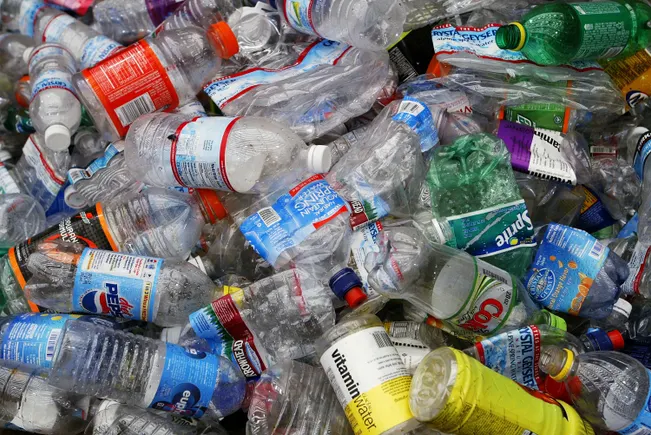
In 2025, state legislators and industry players in the United States are preparing a series of complex and detailed recycling bills that could reshape recycling strategies in states across the country. Extended producer responsibility (EPR) programs for packaging and other materials will continue to be a priority in many states, continuing the trend of recent years. Legislators and activists are also expected to continue debating the role of chemical recycling in EPR, the nation's overall recycling capacity, and priorities for recycled content.
After California and Connecticut updated their container deposit laws last year, several states are expected to consider new bills to establish new bottle deposit programs or amend existing ones to boost recycling rates. Meanwhile, Oregon will become the first state to implement a packaging EPR law this year, and other states are also developing key supporting measures for policies passed in previous years.
"2025 will be a critical year for policies that have already been implemented," said Emily Friedman, senior market editor for recycled plastics at ICIS. "The real test will be the level of investment in these issues over the next two to five years." Analysts believe that at least several states will pass significant recycling legislation in 2025, but priorities at the federal level remain unclear. With the new Trump administration issuing multiple executive orders that could affect the industry, it is uncertain whether the 119th Congress will reintroduce federal recycling-related bills left over from the previous session, including two bipartisan recycling bills that gained industry support. "I don't think recycled plastics are a priority item for this administration," Friedman said.
EPR holds a prominent place in the legislative landscape
In recent years, state-level EPR legislation has become a common item on legislative agendas, and analysts expect this trend to continue in 2025. High-profile packaging EPR bills that failed to pass in 2024 have been reintroduced in states such as New York, Tennessee, and Washington.
Kate Bailey, chief policy officer at the Plastics Recycling Association, said during a webinar in December that legislators are becoming more familiar with the complexities of passing and implementing EPR laws, especially those for packaging, thanks in part to the experience provided by five states that are implementing packaging EPR laws. Colorado, Oregon, Maine, California, and Minnesota are all at different stages of implementation, making key decisions about how these laws affect recyclers, waste operators, and producers. This work will continue in 2025, providing more real-world references for establishing brand-new EPR programs.
In 2025, EPR bills for materials beyond packaging are expected to appear across the country. Massachusetts legislators have introduced EPR bills for paint, mattresses, and batteries, and a state commission will study the feasibility of such programs in 2025. Battery EPR bills succeeded last year in places like Illinois and have support from the National Waste & Recycling Association and major haulers such as Republic Services and WM. The threat of lithium-ion batteries causing fires at waste and recycling facilities has driven industry consensus around EPR for such materials, which could make the issue easier to pass in more states.
In California, the Los Angeles County Board of Supervisors is considering EPR programs for household hazardous waste and electronic waste, though the discussion only affects the Los Angeles area. Heidi Sanborn, executive director of the National Stewardship Action Council, said the council plans to introduce similar state-level legislation. She noted that such EPR issues feel more urgent this year given recent discussions about waste management after wildfires.
The prevalence of EPR could be a help or a hindrance in a crowded bill landscape
Despite legislators' growing familiarity with EPR for various materials, this does not make new EPR laws easier to pass, said Mike O'Donnell, chief operating officer of the Mattress Recycling Council. The organization runs mattress management programs in Oregon, Rhode Island, Connecticut, and California. O'Donnell noted that in 2025, legislators may face all the usual EPR hurdles, including conflicting stakeholder motivations and debates over producer control and the business impacts of EPR. Some state legislatures may also need to allocate attention among multiple EPR bills covering different material types, such as separate bills for mattresses and packaging. This could affect the momentum of bill advancement, but it could also help keep the issue in the public eye for longer.
"Paper and packaging EPR is likely to be a top priority for many legislators because these materials make up a large portion of the solid waste stream," he said. "But being willing to negotiate a bill is one thing; getting it passed in both chambers and signed by the governor is another."
Some legislators view Minnesota's successful passage of a packaging EPR bill last year as an example of states making progress while balancing the unique interests of their stakeholders. Tennessee plans to take this path in its latest packaging EPR bill, according to state Senator Heidi Campbell, the bill's sponsor, in an interview last November. Campbell said Tennessee's bill aims to consider the state's "business-friendly" priorities, which would not only improve recycling but also support jobs and attract companies that want to use post-consumer materials. "We rely heavily on business stakeholders," she said, noting that brands like Unilever, Nestlé, and Mars, as well as companies like Kaiser Aluminum that want more post-consumer materials, support the bill. "This is an opportunity to be a market leader." This strategy goes beyond the common argument that EPR helps improve state recycling systems. However, the coalition behind the bill says environmental factors remain very prominent. According to a report by Ball and Eunomia, EPR could help reverse the state's current poor recycling performance, which ranks 48th nationally.
Deposit bill efforts continue to seek acceptance over the years
Deposit bills—whether new programs or expansions of existing laws—have historically been difficult to pass, and no major container deposit legislation succeeded last year. But according to the Plastics Recycling Association, legislators in at least 10 states introduced container deposit bills in 2024, and more states are expected to follow in 2025.
New this year is an attempt in Washington, D.C., to introduce a deposit bill aimed at reducing container-related litter in a major river near the capital. Supporters say they carefully studied deposit bills in other states to craft a policy that could gain broad support in the District. "You won't find anything revolutionary in our bill," said Councilmember Brianne Nadeau, the bill's sponsor. "We're looking at what states with high recycling rates, like Oregon and Michigan, are doing."
Massachusetts and Maryland have already reintroduced deposit bills so far this year, and states like New York are expected to follow, with advocates pushing bills that failed last year. While reducing litter remains the primary driver for legislators introducing new deposit bills, Bailey said, "Over the past few years, the conversation has really shifted, and the 'why' has changed."
Certain stakeholders, including the aluminum industry, have become more involved in the legislative process, saying container deposit systems help save energy by reusing aluminum in their manufacturing processes. Additionally, Bailey said, "Domestic security is a major concern." These organizations view aluminum recycling as a way to help the U.S. avoid importing primary aluminum and reduce dependence on other countries. The Can Manufacturers Institute is one of the groups supporting deposit bills, which it calls "recycling refunds," as a way to increase aluminum recycling rates. The association supported such bills in Illinois and Washington last year and says it plans to push for EPR laws and recycling refund policies in multiple states this year.
But one thing hasn't changed over the years: such legislation still needs the support of material recovery facility operators and haulers, who are often skeptical of the potential impacts on their businesses. For example, the National Waste & Recycling Association maintains that most deposit bills would reduce revenue for material recovery facilities. Meanwhile, the Solid Waste Association of North America updated its policy stance last year to support certain deposit systems as a key way to increase collection rates.
This article first appeared in Waste Dive's Recycling newsletter.Click here to subscribe to the weekly email。