
The Increasing Impact of Life Cycle Assessment on EPR Program Outcomes
Oregon has become the first state to use life cycle assessment (LCA) in its packaging EPR program to determine producer fees and incentivize environmentally friendly packaging. Although LCA has been criticized as flawed, it is considered the best available tool at present. The Oregon Department of Environmental Quality plans to use LCA to encourage companies to reduce environmental impacts, but experts note that its effectiveness depends on the comprehensiveness of the assessment and its influence in decision-making.
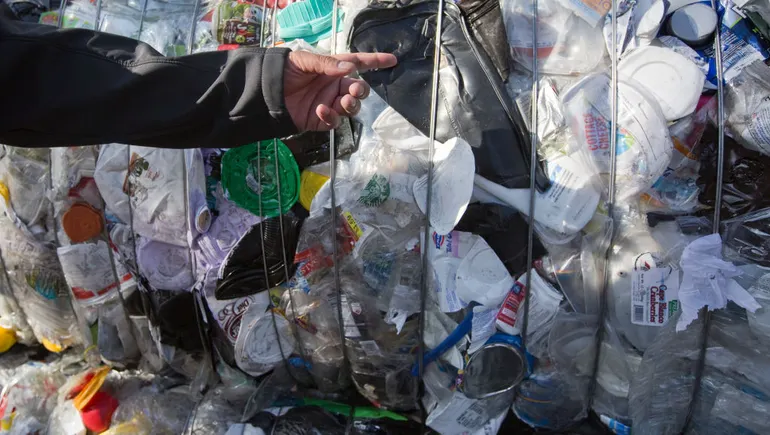
As states implement packaging extended producer responsibility (EPR) programs, how to charge producers becomes a key issue. Currently, Oregon is the only state using life cycle assessment (LCA), a common but controversial tool.
Under the draft implementation plan, these protocols for assessing products' "cradle-to-grave" impacts may determine how much the state's 25 largest producers pay into the EPR program. LCA will also serve as the pathway for all brands seeking fee discounts through the "eco-modulation" process.
The Oregon Department of Environmental Quality (DEQ) believes this approach not only shifts recycling costs to brands but also encourages the use of packaging with relatively lower environmental impacts.
Some argue that LCA is the type of report companies or industry groups release only when results align with their interests. In Oregon, submitting an LCA is sometimes mandatory, and the agency has clear protocols for businesses to follow.
But experts say LCA's ultimate effectiveness depends on how much influence these analyses have in decision-making and whether all truly important factors are included.
Regarding the method's accuracy in measuring packaging's environmental harm, Shelie Miller, a sustainability scientist at the University of Michigan, said: "I think it's completely reasonable and should be deeply thought about and criticized. LCA has flaws, but it's also the best tool we have right now."
The role of LCA
EPR systems have been active in the U.S. for decades, applying to various products, but are relatively new for packaging. As policy advisors note, governments can design these programs to shape broader management outcomes, such as reducing total material output.
Five states have now passed EPR legislation specifically for packaging. These laws require producer responsibility organizations (PROs) to charge manufacturers based on the design, type, and disposal method of materials.
Oregon's EPR program incentivizes manufacturers to reduce the environmental harm of the packaging they provide. LCA is a key part of achieving this goal.
Life cycle assessment was originally developed for Coca-Cola products in the late 1960s, and its intent has evolved over the years. These studies aim to examine a product's environmental impacts from raw material collection to its final destination, whether landfill, compost pile, or ocean depths. Creating an LCA requires collecting data and quantifying a specific product's water use, ozone depletion, pollution, and other harms.
When Oregon's system begins affecting recycling in July 2025, LCA will play a role in several ways to encourage specific corporate decisions.
The amount a company pays into the EPR system depends on the types of packaging materials it uses and the tonnage used in the state. The top 25 producers must create LCAs for 1% of their products sold or distributed in the state every two years, while smaller companies can voluntarily submit LCAs to seek fee reductions. Both types of companies can receive discounts if they further use LCAs to demonstrate they have reduced their products' environmental impact.
Lower fees for more environmentally friendly products are often called "eco-modulation." Oregon DEQ provided PROs with five factors that must be considered when deciding how to adjust fees, including LCA considerations. While these tools are intended to inform, they are not required to be actually incorporated into final fee setting.
Nicole Portley, program planning lead at Oregon DEQ, said: "We think among the five factors in the rule, this one (LCA) is most relevant to actual adjustments for environmental impact."
The rules were adopted in late November. In early December, Oregon's PRO, the Circular Action Alliance, submitted its third proposed implementation plan. Oregon DEQ has not yet approved the plan, with a comment period running through January 17.
No company in Oregon is required to prove it meets specific environmental benchmarks through LCA. Nevertheless, Oregon DEQ believes that completing an LCA and making it public yields environmental benefits, based on a study the agency commissioned about a decade ago. Portley said: "The simple act of producers conducting assessments and disclosing them is associated with actions that reduce impact."
Other researchers also see value in the process itself. Reid Lifset, a research scholar at the Yale School of the Environment, said: "In my research circles, it's often said that the real value of LCA is in the process of doing it."
While there is no exact data on the total number of LCAs or who funds the studies, it is common for them to be conducted by industry groups and packaging companies.
Supporters say requiring organizations to systematically gather more information about how their products are made may prompt companies to consider the consequences of their sourcing, manufacturing, and waste. If the goal of an EPR program is to reduce environmental harm from packaging, LCA may serve that mission better than judgments based on whether something causes disposal.
Meanwhile, Lifset said he is skeptical that LCA results (numerical scores) themselves should serve as the basis for any EPR program. Incorporating all relevant details into the assessment is too demanding. Lifset said details such as the social consequences of manufacturing certain packaging might benefit from separate evaluations.
He said: "I'm not sure we want one big tool to solve everything."
The plastic factor
In recent years, LCA has sparked debate in other areas, especially when analyzing plastics.
Anja Brandon, director of plastics policy at the Ocean Conservancy, believes LCA omits key factors about the benefits or consequences of specific packaging types.
For plastics, LCA typically does not address health impacts on communities near refineries and production plants, or the broader impacts of further rationalizing fossil fuel extraction. "Microplastic dispersion, PFAS contamination, or any other factors we struggle to include because we first struggle to measure them," Brandon said.
Brandon added that LCA results focused on emissions could become a factor in deciding which packaging to promote, especially in the plastics industry.
A 2024 analysis of over 130 LCAs focused on packaging options, some commissioned by companies or groups, showed results often favored plastic options. The analysis, conducted by Anibal Bher and Rafael Auras of Michigan State University's School of Packaging, found that 92% of LCAs reported emissions for different packaging options, and plastic bottles and cartons had lower greenhouse gas values than glass bottles or cans.
Oregon's protocol for producers to earn fee reductions by demonstrating improved performance specifies that in LCA scoring, climate impact is weighted more heavily than mineral and metal use, plastic harm to wildlife, or material impacts on water nutrient pollution. Brands must also report toxicity scores for human and environmental health, but these results are independent of LCA values.
Oregon DEQ is aware of other concerning impacts—and the lack of data on how they affect the environment. Part of its LCA protocol cites modules from organizations that continuously update best assessment methods to address evolving science.
MariLCA (Marine Impacts LCA) is one of these modules. A hybrid of academic, nonprofit, and industry groups, funded by the Life Cycle Initiative and Plastics Europe, is building a more robust way for LCA to incorporate the harm of plastic waste to organisms, ecosystems, and human health. For aquatic life, for example, some considerations include plastic entanglement or ingestion.
Anne-Marie Boulay, a chemical engineer at Polytechnique Montréal and co-chair of MariLCA, first organized a similar initiative covering water use, a now-common but previously often-missed life cycle impact factor. She said plastic dispersion in the environment is another missing piece that could lead those conducting LCAs to draw misleading conclusions.
"If emissions of plastic waste to the environment are not included in the method, then most questions about packaging cannot be correctly answered," Boulay said. "When we don't have the full picture, how do we know if this is actually worsening another problem or shifting the problem elsewhere?"
Some MariLCA collaborators study how different plastic types, shapes, and fragment sizes behave in freshwater, saltwater, or soil. Others like Boulay use existing research to build characterization factors, the part of LCA that translates scientific understanding into measurable environmental impacts.
MariLCA offers several conversion methods. One approach translates science into the percentage of species a specific plastic might affect annually. Currently, MariLCA only provides guidelines for calculating impacts on marine systems. As more data emerges, MariLCA will revise its tools. Boulay and colleagues are already drafting a second update, which she expects to release later in 2025.
Even as LCA becomes more comprehensive and includes concerns like harm to wildlife, Brandon still hopes states adopt approaches different from Oregon's.
Brandon prefers EPR programs to design backward from the recycling system they want, rather than setting fees or incentives based on LCA results. If the goal is to maximize reuse, have easy-to-operate recycling systems, and reduce plastic packaging—goals the Ocean Conservancy wants to see in EPR programs—then policies can be crafted to support these changes.
Other states are taking this approach. For example, California's EPR law requires that by 2032, the amount of single-use plastic packaging and food service ware sold in the state be reduced by at least 25%. In the same year, all such items must be recyclable—and 65% must actually be recycled through the system.
The draft implementation plan requires the PRO to determine producers' fees based on the amount and weight of plastic materials they place in the state. The PRO is also expected to give discounts to producers using "renewable" plastics, materials "derived entirely from natural resources that are not mineral or fossil fuel sources and do not cause net depletion of any resource."
California's program does not require producers to conduct life cycle assessments. According to CalRecycle, it is up to them to decide.
Information officer Patrick Coyne wrote via email: "The law does incentivize producers to consider the life cycle of their products by ensuring they pay costs associated with end-of-life management. Under EPR programs, products that are difficult to reuse and recycle will bear higher costs. Producers need to consider the product's life cycle, including design for easy recyclability, compostability, or reuse, and the product's recycling rate."
Shane Buckingham, EPR program planning lead at the Circular Action Alliance (CAA), the PRO for both Oregon and California programs, wrote via email: "CAA currently does not plan to introduce LCA in states where EPR legislation or regulations do not require its use."

Future issues
If many producers choose—or in Oregon's case, are required—to submit LCAs due to regulations, comparing one company's assessment to another's could become tricky.
Miller of the University of Michigan said: "The real problem arises when we try to use LCA for legislation and lawmaking. How do we ensure that various LCA practitioners handle the same matters consistently and consider factors in the same way?"
Oregon's EPR program prescribes some LCA protocols for manufacturers. The entire process is based on guidelines issued by the standards organization ISO, a choice many—but not all—LCA practitioners make. Oregon DEQ added extra specifications to ensure brands use the same inputs as much as possible.
But Miller said every set of LCAs comparing similar products faces the same dilemma. Either everyone can use the same baseline data—industry averages or even figures from a single study—and agree that none is a perfect fit for their own operations. Or, they can use site-specific information for more accurate LCAs, but this makes results harder to compare.
An example of these trade-offs frequently appears in Miller's work and conversations with other LCA practitioners. LCAs targeting U.S. manufacturing include energy use data, particularly the amount of carbon dioxide emitted per kilowatt-hour of electricity. There is a national average everyone can use, but facilities in states like California or Vermont, which are below the typical level, might object.
Miller said: "If my facility is in a region below the U.S. average, that means you're penalizing a study about my specific facility." She added that there is no single right decision on these trade-offs, but they are unavoidable.
Oregon DEQ wants the information in brand LCAs to reflect as specifically as possible the manufacturing processes companies currently use to produce goods that will reach Oregon consumers.
Peter Canepa, LCA expert at Oregon DEQ, said: "Producers are asked to represent their specific products and supply chains as much as possible and prioritize primary data."
Even if these requirements make comparing one company's results to another's more difficult, site-specific information serves another DEQ goal: providing more information about manufacturing practices. Canepa added that, aside from some proprietary details, LCAs and their inputs must be made public. The first mandatory reports will be released in 2026.
Yale's Lifset said more information about how packaging is made and where it ends up could be useful for government staff, policy researchers, and advocacy groups. Over the years, all the information generated by Oregon's LCAs could show how production protocols can be changed in various ways to reduce emissions, improve recyclability, or reduce material use.
The LCAs produced for Oregon's EPR program will join what Miller calls an existing list of assessments that is already ripe for its own analysis.
There are already enough LCAs examining similar products and systems to step back and see which results are consistent or inconsistent. Miller said that while the pros and cons of specific packaging will always vary by where and how it is made, there is one reliable way to reduce any environmental harm that is constant.
"The only way to guarantee no trade-offs is to reduce consumption."
Interested in more packaging news?Sign up for Packaging Dive's newsletter now。