
Renewable natural gas industry expected to see project launches and trading growth in 2024, with voluntary agreements and new credit mechanisms as key drivers
The renewable natural gas (RNG) industry is expected to see stronger project launches and trading growth in 2024, continuing the market momentum from 2023. The U.S. Environmental Protection Agency set multi-year biogas production targets under the Renewable Fuel Standard for the first time, and Vanguard Renewables and AstraZeneca reached the largest public-market RNG agreement to date. The industry expects market growth of 10% to 40% in 2024, with continued influx of large institutional capital, such as Ares Management's acquisition of Burnham RNG. However, challenges to project advancement remain, including permitting delays, supply chain bottlenecks, and the exclusion of gas upgrading equipment from the U.S. Internal Revenue Service's proposed tax credit rules. The voluntary purchase agreement market is emerging as a new growth engine and is expected to potentially account for nearly two-thirds of total RNG consumption by 2040.
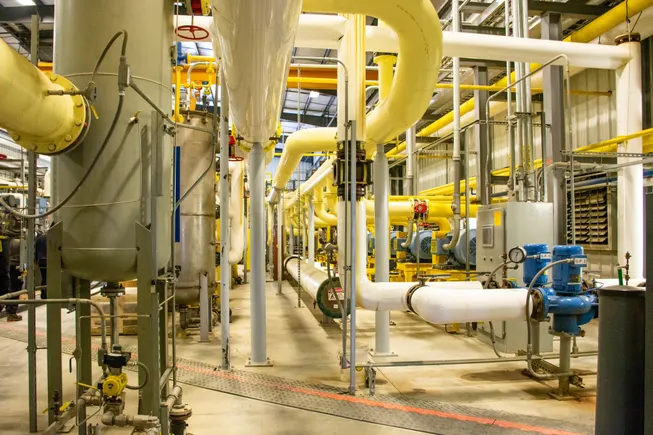
The renewable natural gas (RNG) industry is expected to see stronger project starts and transaction activity in 2024, building on multiple market milestones in 2023.
Last year, regulators and the private sector together laid the groundwork for industry growth in the coming years. The U.S. Environmental Protection Agency (EPA) set multi-year biogas production targets under the Renewable Fuel Standard (RFS) for the first time; Vanguard Renewables and AstraZeneca reached the largest RNG offtake agreement in the public market to date.
According to data collected by the American Biogas Council (ABC), excluding wastewater treatment plants, more than 60 new projects came online in the U.S. in 2023, bringing the total to about 350. The organization also estimates that biogas producers and developers invested approximately $1.8 billion in projects last year.
ABC Executive Director Patrick Serfass said the market is expected to grow 10% to 40% in 2024, and is likely to land at the upper end of that range. This growth is attracting large institutional capital. In December 2023, Ares Management acquired Burnham RNG, a developer of RNG from municipal wastewater, following private equity deals such as BlackRock's acquisition of Vanguard Renewables for approximately $700 million in 2022.
Strong financial backing can make a significant difference, said John Hanselman, founder and chief strategy officer of anaerobic digestion company Vanguard Renewables. He said that after the deal with BlackRock, the company returned to basics and improved its digester design. Now, the support of the world's largest asset manager enables Vanguard to advance projects at "lightning speed" and makes it smoother when seeking voluntary RNG offtake agreements.
He revealed that the company plans to start construction on one project every two months in the first half of 2024, accelerating to one per month by summer.
"The next five years will be a wild ride," Hanselman said.
Archaea, the largest RNG producer in the U.S., also benefits from the support of a larger parent company. After energy company BP acquired Archaea in December 2022, it positioned Archaea as a driver of BP's transition to bioenergy. After BP appointed Starlee Sykes as CEO of Archaea last year, the company now plans to deliver 15 projects annually over the next several years.
In October 2023, Archaea debuted its redesigned modular system at the Rumpke landfill and plans to deploy dozens more, including through a landfill gas-to-RNG joint venture with Republic Services.
"We view Archaea as a key lever to help us transition from an international oil company to an integrated energy company," Sykes said in an interview in January, mentioning the goal of scaling bioenergy and ultimately achieving $500 million in adjusted EBITDA in that segment.
Such deals are likely to continue because landfill gas-to-RNG projects have relatively low production costs compared to other types of biogas, but strong demand, said Noah Kaye, senior research analyst at Oppenheimer & Co. He also expects some consolidation among developers as the RNG industry develops economies of scale like other emerging industries. "This reflects the maturity of the industry," Kaye said.
Still, 2024 is not without challenges. Despite ambitious growth targets, permitting and supply chains remain difficult. The regulatory environment will also continue to present both challenges and opportunities for developers, leading some to expect a very active voluntary RNG offtake market in 2024.
Projects face delays
In 2023, large waste management companies set aggressive timelines for landfill gas-to-RNG facilities, but encountered challenges that slowed progress.
Kaye noted that state and local environmental permits are particularly difficult. Project permits typically take 12 to 24 months, and the industry is currently experiencing six- to eight-month delays awaiting regulatory approval. "I think this is widespread across the industry and well known," Kaye said.
On third-quarter earnings calls, GFL Environmental executives mentioned that some of its landfill gas projects faced permitting and technical delays, pushing projects back three to six months.
WM also deferred more than $200 million in planned capital expenditures for its 2023 sustainability projects, including RNG. The company initially expected to spend $980 million on such projects for the year, but due to delays, it now expects to defer some of its previously provided high-end profit guidance.
On WM's third-quarter earnings call, executives said construction and supply chain delays on RNG projects were partly responsible. The company's largest RNG project in its portfolio—the Fairless project in Pennsylvania—was delayed "a few months" to the end of June due to these challenges, CEO Jim Fish said.
However, waste companies do not plan to cancel any spending, but rather defer it to 2024 and beyond. WM executives said on the call that they still expect to meet the goal of building 20 RNG facilities by the end of 2026.
ABC's Serfass said some common obstacles to project commissioning are beginning to dissipate. Gas utilities "are now more encouraging of RNG interconnection" to meet their own sustainability goals, whereas in previous years they viewed RNG as a competitor to traditional natural gas.
Regulatory pressure
2023 was a turbulent year for RNG regulation. The EPA finalized the Renewable Fuel Standard in June, but according to S&P Global, the timing of the announcement indirectly caused cellulosic (D3) Renewable Identification Number (RIN) credit prices to spike. This was good news for landfill operators, wastewater treatment plants, and anaerobic digesters selling high-margin RINs, but created a difficult environment for petroleum fuel producers that must purchase credits.
Despite strong RIN prices, tax credits that industry experts had expected to be beneficial have been difficult to implement. Driven by the Inflation Reduction Act, the IRS issued draft rules in November for the Section 48 investment tax credit. The rule would make eligible biogas projects, including landfill gas-to-RNG, anaerobic digesters, and others, eligible for the credit. But the draft also excludes gas upgrading equipment, a key component of most biogas-to-RNG facilities today.
This issue has drawn strong criticism from members of the biogas industry, including BP, Vanguard, Burnham RNG, as well as the American Biogas Council and the RNG Coalition.
Burnham founder and CEO Chris Tynan said the proposed language itself would not change the company's decisions on individual projects, but it does limit the financial returns the company can offer municipal partners. "Congress intended to create additional value, and the IRS may take it off the table. That's unfortunate," Tynan said.
The U.S. Treasury Department, which oversees the IRS, has scheduled a hearing on February 20 to discuss the language. Several industry figures are expected to testify, urging the agency to revise the language so that all equipment in a typical biogas-to-RNG facility can be included in the credit.
"It's like having an investment tax credit for building a wind turbine but not including any of the cables that connect it to the grid," Serfass said. "This feels like a major oversight by the Treasury that must be corrected."
The industry also plans to actively push other federal policies. In November 2023, a coalition of automakers and biogas groups formed the "Partnership for Electric Pathways" to urge the EPA to adopt eRINs. The proposal, which had been expected to be adopted in last year's RFS update, would allow biogas producers to earn additional credits through electricity generation to support the electric vehicle market.
"We need a new pathway to use landfill RNG for power generation, and eRINs will help us achieve that and are valuable to the overall market and RNG as a whole," BP's Sykes said.

Voluntary and compliance markets
Although tax credits and RINs have long supported the RNG market, some industry insiders predict the voluntary offtake market is becoming a larger driver of expansion. In recent years, Divert announced a $175 million, 10-year offtake agreement with BP; Anaergia announced a long-term offtake agreement with Irving Oil.
Burnham RNG also secured a voluntary agreement for its Pasco, Washington project. The facility is expected to be completed by the end of this year and has signed a 20-year offtake agreement with Cascade Energy.
Tynan said the company will continue to pursue projects that may sell RIN credits, but noted that some municipal partners are cautious about the volatility of the credit market. "We love the voluntary market, but the choice between entering the voluntary market or the compliance market is a decision we make together with our partners, namely municipalities," Tynan said.
Hanselman said last year's 650,000 mmBtu per year deal between Vanguard and AstraZeneca shows the voluntary market is "very hot," and he expects the company to announce several other deals in 2024. He believes part of the reason for voluntary market growth is that investors view the compliance market, made up of RINs and Low Carbon Fuel Standard credits, as more volatile than long-term offtake agreements because credit prices can fluctuate year to year.
Kaye said historically most RNG entered the transportation fuel market through credits, but the voluntary market is 440 times larger. He expects the much larger voluntary market to surpass the transportation fuel market in the medium to long term, citing recent analysis that by 2040 the voluntary market "could account for nearly two-thirds of total RNG consumption."
In 2024, the voluntary market is expected to grow, partly due to increased commitments by energy producers to decarbonize. This especially includes utilities—Hanselman estimates that 13 gas utilities in North America are finalizing policies requiring them to procure RNG on the open market. Vanguard has experience with such deals, with its 2019 agreement with Vermont Gas being the first to sell RNG to end customers.
"You see this all over the country because if you're in the carbon sales business, you have to start decarbonizing quickly," Hanselman said. "This year, next year, and every year after that, you'll see hockey-stick growth in demand, and I think that's the reason."