
Renovare's Prospects Uncertain After West Virginia Facility Closure and Merger Reversal
Renovare Environmental once touted its West Virginia mechanical-biological treatment facility and small food waste digesters as the future model for the industry, but now faces multiple crises including indefinite plant closure, merger reversal, stock delisting, and debt default. The company is in talks for a reverse merger with Harp Renewables, but the outlook remains uncertain.
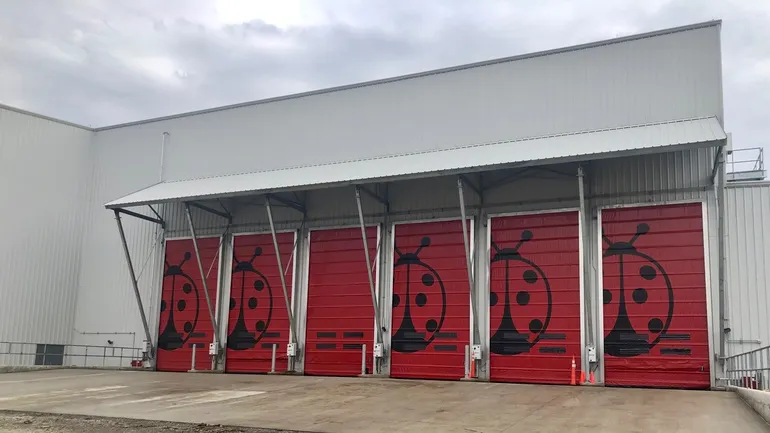
Renovare Environmental, a company that once touted its West Virginia mechanical biological treatment (MBT) facility and small food waste digesters as the future model for the waste industry, now faces two possibilities: collapse or rescue through acquisition.
The publicly traded company (formerly BioHiTech Global) announced plans in March to acquire Ireland's Harp Renewables, which sells aerobic digesters that produce fertilizer products, for $20 million. Since then, Renovare has notified local officials that its West Virginia plant will close indefinitely, lost representation in a lawsuit against former technology partner Entsorga (an Italian company), and laid off multiple employees. The company also missed its most recent loan payment, was delisted from Nasdaq with shares falling below $0.05, stopped servicing digester customers, and largely ceased communication with the public and some investors.
Last Friday, Renovare announced it is currently in discussions to be acquired by Harp and its affiliate Harp Electric Engineering through a reverse merger. Multiple requests for comment sent to company executives and employees over the past month have gone unanswered. Harp's U.S. leadership declined to comment.
Since going public via a reverse merger in 2015, Renovare has consistently reported net losses, totaling $24.3 million last year. Its latest annual report states the company "has no history of profitability"—across both its digester and MBT business lines. For those familiar with the company, the recent problems are not entirely surprising.
Iain Milnes, president of California-based Power Knot, said his company is often underbid by Renovare on local food waste digester projects, noting that "customers buy from a company that is not profitable at unrealistically low prices." Power Knot recently reported receiving requests from multiple Renovare customers for help with the microbes and spare parts needed for their digesters.
"We know of a large customer that prepaid for BioHiTech's product—we believe over $500,000—but the product was never delivered to the customer," Milnes said.
As for the three-year-old MBT facility in Martinsburg, West Virginia, its designer and financier see a brighter future. The $33 million plant can process 110,000 tons of mixed waste annually, producing solid recovered fuel (SRF) after recovering some recyclables, for use in facilities such as cement kilns.
"The Martinsburg facility remains a cornerstone of our North American strategy to deploy large-scale commercial solid waste-to-SRF facilities supporting the U.S. and Canadian cement industry's plans to reduce fossil fuel use in kilns," said Christopher Maloney, CEO of Entsorga's North American division, in a statement. "Our technology is proven over decades, and we support its process design and performance just as we do for all installed projects. We firmly believe that with the right commercial partners, Martinsburg can successfully restart and become the industry showcase it was designed to be, and equally importantly, make money for investors."
Background story
Renovare, known as BioHiTech until last December, initially focused on small aerobic digesters for commercial applications. That business has historically been its largest revenue source, but the potential of a new network of MBT facilities was seen as a way to disrupt the waste industry on a larger scale.
While MBT is more common in European countries, it has not been deployed on a large scale in the U.S. Years ago, the Entsorga Group set out to bring its proprietary High Efficiency Biological Treatment (HEBioT) to America as an alternative to landfilling. The company eventually settled on Berkeley County, West Virginia, and formed a joint venture with Apple Valley Waste Services in 2014 to begin construction of the plant.
The plan was to recover recyclable metals, produce SRF (recognized by the U.S. EPA as "engineered fuel"), and supply it to nearby Argos Cement to replace coal. The facility was financed through investor capital and $25 million in tax-exempt bonds issued by the West Virginia Economic Development Authority, which Entsorga says were later purchased by pension funds.
BioHiTech stepped in in 2016, announcing an agreement to manage a subsidiary with exclusive rights to promote HEBioT technology in the Northeast. Over the following years, through a series of complex transactions, BioHiTech acquired and expanded its stake in the Entsorga West Virginia project. Meanwhile, a 2018 deal saw it partner with private equity firm Kinderhook Industries to acquire transportation company Gold Medal Services, which subsequently acquired Apple Valley.
At the time, BioHiTech said the plans would "help change the industry paradigm," targeting multiple new sites in Pennsylvania and New York. Some plans fell through, and construction in West Virginia faced delays, but the company eventually opened its first plant in 2019. That year, it became the largest owner of the Martinsburg operation and sold its minority stake in Gold Medal.
Kinderhook did not respond to requests for clarification on whether it still has any financial relationship with Renovare. Gold Medal has recently been using the facility to process local waste but says it no longer has any financial ties to the company.
Around this time, according to the Italian company, BioHiTech "systematically began restricting Entsorga's access to the plant and operational data," while still cooperating on publicity. According to P. Cella Mazzariol, president of parent company EntsorgaFin, more than 300 delegations toured the facility during 2019 and 2020 to learn about the European technology.
The pandemic outbreak in 2020 affected BioHiTech's digester customers (such as Carnival Cruise Line), and records show the company received a $421,300 loan through the Paycheck Protection Program, but bigger problems were brewing.
That year, the permit for a second plant in Rensselaer, New York, was ultimately denied by the state Department of Environmental Conservation, despite the company's appeal. According to comments made by then-Vice President of R&D Emily Dyson (no longer at Renovare) during a WasteExpo 2021 panel, the company was "two hours away" from obtaining the permit when the governor's office intervened. In Q4 2021, the company decided to abandon plans for the site.
At the time, Dyson expressed optimism about finding another location in New York or West Virginia because "they now realize coal is not going to be what sustains them." The company lobbied West Virginia to pass a law that year (SB 368) exempting mixed waste processing facilities from solid waste fees, and state officials expressed hope of building more such facilities.
The pandemic affected Martinsburg operations, with waste volumes fluctuating. The Argos facility also reduced demand, including shutdowns for various maintenance reasons, impacting revenue. Argos did not respond to requests for comment. In summer 2021, BioHiTech signed an agreement with Lone Cypress Energy Services to evaluate uses for the SRF product and other potential HEBioT projects. Lone Cypress did not respond to requests for comment.
BioHiTech had previously said it was exploring options such as using the fuel for hydrogen production, coal ash blending, or as a bioplastics feedstock, but problems continued to mount. In August 2021, during BioHiTech's last known earnings call, CEO Anthony Fuller (a former Walmart executive) said "we could not convey that we are satisfied with the plant's financial performance." The company soon recorded an impairment charge of nearly $10.73 million due to expiring technology licenses with no projects to deploy, Martinsburg issues, and the abandoned Rensselaer project.
Renovare reported a working capital deficit of nearly $41.82 million in 2021, including state bonds for the Martinsburg facility (with certain covenants unmet), senior secured notes (with certain covenants unmet), and subordinated unsecured notes to Entsorga (in default for missed payments). The company raised nearly $9.68 million in external funds at the time but still fell behind.
Entsorga says it continued to provide remote technical assistance and deferred several construction payments, but by early this year, the Renovare team cut off communication and suspended Martinsburg operations as part of a strategic review.
EntsorgaFin sued the company in federal court on February 25 of this year, claiming it is owed more than $1.1 million, and has been working to have its name removed from the facility. The case is ongoing. The law firm representing Renovare recently withdrew for unspecified reasons and did not respond to requests for comment. Renovare recently settled another lawsuit filed by a New York electrical company involving $175,000 in unpaid bills.
Along the way, Renovare received Nasdaq warnings for failing to pay listing fees or maintain a minimum $1 share price, and recently moved to a tier of OTC Markets. The company also missed additional loan payments and reported a net loss of $3.37 million in Q1 of this year on revenue of $1.1 million.
In April, the company wrote to the Berkeley County Solid Waste Authority (which owns the land for the Martinsburg plant), saying it was exploring multiple ways to restart the site, including "obtaining additional financing from third parties." Authority Chairman Clint Hogbin said communication has been very limited since the closure. The county has other disposal options—including a nearby transfer station and WM landfill at comparable prices—but hopes to see the plant reopen.
Future outlook
In recent years, market activity in organics recycling or alternative disposal technologies has surged with more state and local policies and rising interest in sustainable investments. Several companies are also seeking market share through on-site solutions that reduce trucking needs. Given heightened concern over methane emissions from landfills, many experts still see the MBT concept as promising.
However, whether Renovare's financial track record can attract further interest remains to be seen.
Aside from discussing the Harp merger, Renovare has revealed little about its financial strategy. Given that LinkedIn and other sources show multiple layoffs at Renovare in recent weeks (some West Virginia plant employees reportedly let go months ago), it is unclear how many of the company's 30-plus employees remain. Fuller and CFO Brian Essman are still signing recent financial documents.
Two external consultants from Climate Commodities (now serving as interim board chair and transition advisor, believed to play key roles in current discussions) did not respond to requests for comment. Financial analysts listed as covering Renovare over the past year declined or did not respond to requests for comment.
In a March presentation, Renovare said acquiring Harp could help expand the company's geographic coverage and product range, bringing "significant revenue and cash flow growth," but no similar update has been issued since the reverse merger announcement. The company previously estimated the potential market for its digesters at up to 200,000 units globally—including customers in the "maritime industry as well as retail, healthcare, government, hospitality, education, and food service."
Under the newly announced terms (involving a reverse stock split), Harp shareholders would own 84% of the company. The deal could close on September 2, with a termination fee of $850,000.
On June 30, Renovare released its delayed quarterly report, disclosing a new forbearance agreement deferring some debt payments to 2023 and a new private placement raising a small amount from "several investors."
As for the West Virginia facility (which seems less aligned with the Harp model), Entsorga still holds a 10% stake in the joint venture and is "currently in discussions with several investors and other interested parties about acquiring the asset." Maloney said he fully believes the facility can become profitable by securing more diverse offtake partners for the SRF product.
"We have all the elements needed to start over," Maloney said. "It makes no sense to continue burying solid waste in landfills when we have the means to sustainably recover and reuse it while reducing our carbon footprint." He cited major concrete and cement manufacturers' 2021 commitments to achieve "net zero" emissions by 2050 as a key market driver, as the industry's greenhouse gas emissions have grown sharply in recent decades.
Whatever happens next, time is limited. On May 26, the West Virginia Department of Environmental Protection notified the operator that it "must resume operations by October 4, 2022, or begin permanent closure of the facility."
This article has been updated to include information from Renovare's newly released Q1 report.