
Circular Services 评估电池探测技术,以强化火灾主动防控
电池火灾长期困扰废物与回收行业。Circular Services 近期在两天内遭遇三起事故,其首席商务官 Joaquin Mariel 表示,公司正测试 CP Group 的 Sentry 系统,利用 X 射线、RGB 相机与 AI 图像分析在传送带上实时探测并自动移除电池等隐患。行业层面,NWRA 关注联邦《电池回收美国竞争力法案》及 EPA 关于锂电池通用废物分类的规则进展,同时多个州已通过电池 EPR 法律,以改善收集与回收体系。
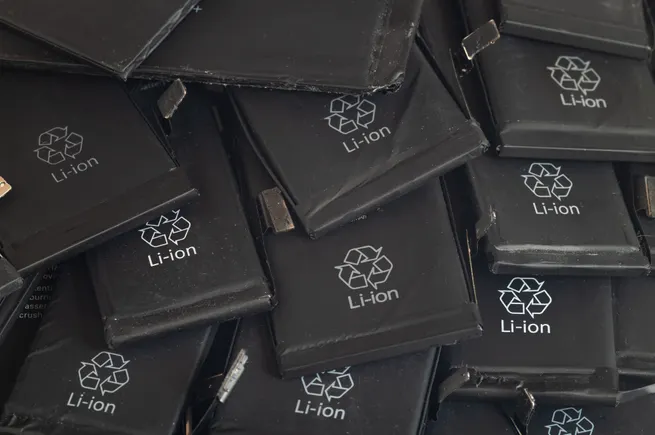
Battery fires have become so common in the waste and recycling industry that after Circular Services experienced three incidents in two days, its Chief Commercial Officer Joaquin Mariel was not shy about sharing the information. He said: "What I'm saying here wouldn't surprise anyone in the industry. They'd say: 'Yes, we've had the same experience.'"
Mariel believes the industry needs to invest in more proactive solutions to prevent battery-related fires that have long plagued the sector. During a webinar co-hosted by Waste Today and the National Waste & Recycling Association (NWRA) on Thursday, speakers discussed new technologies, policy updates, and educational approaches companies are exploring to reduce the risk of battery-caused fires.
Sean Finney, Regional Program Manager at The Battery Network, noted that watching for early warning signs of thermal runaway can help control a fire before it spreads. This includes listening for popping sounds, identifying strong chemical odors, and observing smoke. He advised isolating the battery if it is safe to do so; otherwise, follow the building's established fire emergency procedures.
Moving to New Technologies
Testing and adopting new technologies is a key approach for many recycling and waste processing facility operators to prevent battery fires. Applications include preventing batteries from entering trucks, transfer stations, or material recovery facilities (MRFs).
Mariel said Circular Services' proactive strategy includes installing and testing a new system designed to detect batteries and other hazardous items. Technology can be an important tool, helping operators focus on their daily tasks rather than "becoming firefighters—that's not our job."
The equipment Circular Services will adopt is called Sentry, manufactured by CP Group. According to Felix Hottenstein, Sales Director at MSS, CP Group's optical sorting division, the system uses X-ray, RGB cameras, and AI-based image analysis components to identify hazardous items such as batteries or propane tanks on the conveyor belt. The system then automatically separates the hazardous items, rather than relying on operators to stop the line and manually pick out batteries.
Other companies have also recently launched battery detection and removal solutions. Some manufacturers offer sorting systems equipped with X-ray technology to identify hazards like batteries; others offer vehicle-mounted devices that can identify such hazardous items from trash bins during curbside collection.
Mariel hopes the Sentry technology will integrate smoothly into Circular Services' operations and benefit the broader industry. He said: "We don't want to pass the problem on to our landfill partners who manage the residuals from these facilities. We're very excited to work with CP to be the first to test this technology and see if it can become a tool in everyone's toolbox, like many other tools we've added through automation."
Federal and State Legislation Moving Forward Together
Sara Bixby, Director of Regulatory and Environmental Affairs at NWRA, said the industry is also pushing for battery safety and recycling-related policies at the federal level.
She highlighted the recently introduced Battery Recycling for America's Competitive Economy Act, led by Republican Representative Mariannette Miller-Meeks. This bipartisan bill aims to update storage requirements for certain recycled batteries. Sponsors say it would help ease the permitting burden on some recyclers and could make it easier for critical minerals derived from batteries to stay in the U.S. rather than being shipped overseas.
The point of contention is how lithium-ion batteries are regulated under the Resource Conservation and Recovery Act. EPA notes that the diverse chemical compositions of lithium batteries make it difficult for recyclers to determine whether they should be regulated as hazardous waste or under the federal "universal waste" category.
In 2023, EPA announced plans to create a separate universal waste category for lithium-ion batteries, but has not yet finalized the rule. The Battery Recycling Act requires EPA to complete the rulemaking within 18 months after the bill's passage.
NWRA is also monitoring EPA's 2026 Unified Agenda, which mentions establishing a separate universal waste category for lithium batteries. Bixby said: "A few weeks ago we learned that progress has been delayed, and the proposed rule text may be submitted to the Office of Management and Budget by the end of this year."
At the state level, webinar speakers also promoted battery extended producer responsibility (EPR) legislation, arguing it could lead to more efficient battery collection. NWRA generally supports battery EPR. The District of Columbia and 13 states have passed some form of small and medium battery EPR legislation, most recently Kentucky and Wisconsin this year.
The Battery Network typically operates as a producer responsibility organization in various states. Finney said the specific arrangements of state laws vary slightly, but they generally require battery manufacturers to fund recycling, collection, and educational outreach efforts, "which is significant." He said: "For these EPR states, whether it's private businesses or public collection points, these solutions will be provided free of charge, including shipping. That's very helpful for building collection systems."
The Battery Network and NWRA, along with its affiliate the National Waste & Recycling Foundation, announced on Thursday that they will establish a strategic partnership to better support battery safety education and promote responsible recycling efforts.